Wednesday, May 6, 2026
Home Blog

Key Points: Budget 2026-27

Key Points of the 2026-27 Budgetary Proposals and Financial Statement as delivered by Minister of Finance Ryan Straughn on March 16, 2026.

  • This is the first Budget being presented by this Government while not in an IMF programme. Barbados has regained control of its economic future. The country is on a stronger economic footing.
  • Barbados remains in a stand-by arrangement with the IMF.
  • Debt to GDP ratio was at 99.8% at October 2025; at January 2026 now 93.3%.
  • Barbados is now off everybody’s lists – it meets international standards for transparency and financial regulation.
  • Adjustments were made to Budget to respond to current global challenges – for example, corporation tax assumptions reduced by $200 million.
  • Unemployment rate at all-time low of 6.1% at end of December 2025.
  • Central Bank expected to report next month 19th consecutive quarters of growth.
  • $728.5 million spent in fuel imported last year.
  • In past two weeks Brent crude has risen from US$64 per barrel to just under US$106.
  • Over next 3 months, hedge for Bajans with oil price locked in at US$92 per barrel – 80 000 barrels per month.
  • From April 1, Government will absorb 50% of increase in Fuel Clause Adjustment for next 3 months. It will cost Government $7.9 million.
  • Government cutting VAT and excise tax caps on fuel. From April 1, cumulative reduction of 15 cents per litre at the pump.
  • They are not permanent but to deal with the current crisis.
  • To businesses: Identify your energy wastage and fix it.
  • During COVID-19 in 2020, country imported $519m in fuel. Last year it imported $728.5m.
    • From April 1 to March 31, 2027:
  • To extend Excise and CAT holiday on electric vehicles
  • Cost of replacement batteries for electric and hybrid vehicles will be eligible for the five-year personal income tax deduction
    • Shipping bunker surcharges:
  • For 20-foot containers – from US$200 per container to US$700
  • For 40-foot containers – from US$400 per container to US$1400
  • From April 1, Customs and Excise Department to cap value of 20-foot container at US$3000 and US$6000 for 40-foot container.
  • Reverse tax credit to increase from $1300 to $1700 from April 1 for those earning up to $25000 per year.
  • Eligibility threshold to increase to $35000 and those beneficiaries will receive $750 in reverse tax credit.
  • Two dedicated Gun Courts coming – one dealing with offences committed in the last year and the other with the backlog of cases.
  • All purchases of GPS and dashcams systems for vehicles to be duty- and VAT-free on importation to Barbados for one year.
  • Customs duties and VAT to be removed for one year from importation of CCTV/security systems.
    • Goods imported for personal use through registered couriers:
  • • Tax-free amount raised from $60 to $150
  • • From $150.01 to $199.99, duty-free and only VAT payable
  • • Anything over $200 in value, Customs duty and VAT apply
  • Excludes items like alcohol, cannabis products, cigars and cigarettes
  • A $500 fine for false declarations or under-invoicing
  • Government announced the launch of the Green Industrial Gateway Advantage (GIGA) – to create thousands of new, high-value jobs.
  • This is projected to raise the country’s foreign earnings from US$700m to between US$4-6 billion annually within a decade.
    • Multi-birth cash grant:
  • • $300 per month for twins (up to age five)
  • • $600 per month for triplets and more (up to age five)
    • Barbados Republic Child Wealth Fund
  • • $5000 in trust per child born after November 30, 2021.
  • • The just-concluded Estimates have set aside $52.1m to cover current amounts. It is estimated to cost $10m-$12m per year going forward
DLP General Council suspends Steve Blackett

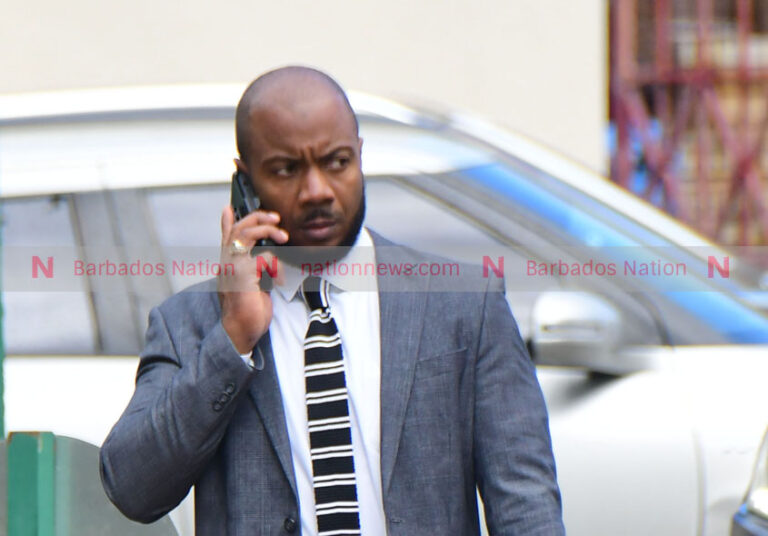
The General Council of the Democratic Labour Party (DLP) tonight voted unanimously to suspend general secretary Steve Blackett.

The announcement was made by assistant general secretary, Pedro Shepherd, whose elevation to fill the post, was also confirmed at the same meeting.

In a statement issued from the George Street, St Michael headquarters, Shepherd said the General Council “unanimously moved and adopted a motion to refer complaints regarding the general secretary Mr Steve Blackett to the Disciplinary Committee of the party. Mr Blackett has been suspended from his office of General Secretary, pending the conclusion of the investigation”.

A call to political leader, Ralph Thorne, who is also Opposition Leader, was unanswered. 

On April 21, Blackett moved a motion of no-confidence in Thorne and one of confidence in president Dr Ronnie Yearwood.

“This party existed and was making good way for the past six years and we did not have a political leader. This party can exist without a political leader but it can’t exist without a president, or I dare say, a general secretary,” Blackett said at the time.

“I will not stand idly by and allow Mister Ralph Anthony Thorne to continue to drag our party down. His presence here has brought nothing positive to this party. All it has brought to this party is confusion, destruction, turmoil and conflict.”

The Nation understands Blackett did not attend the meeting, while Yearwood reportedly left and it was suspended without completion of the other items on the agenda. Yearwood also did not answer a call after

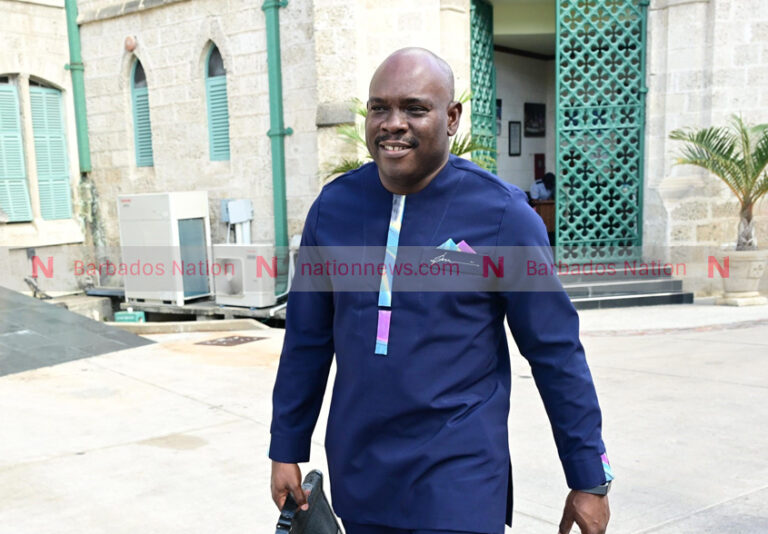
Ralph Thorne crosses the floor and is new Opposition Leader

Government backbencher Ralph Thorne has crossed the floor to become Leader of the Opposition in a stunning move.

The Christ Church South Member of Parliament visited the President of Barbados yesterday and declared his intention in a development that comes two years after the Barbados Labour Party (BLP) was returned to office in another clean sweep of the 30 parliamentary seats.

Reacting to questions from this newspaper on the development, Prime Minister Mia Amor Mottley, who was at the helm of the BLP’s historic wins in 2018 and 2022, simply stated: “Easy come, easy go.”

She confirmed what reliable sources had told the Saturday Sun, saying that the President had written her indicating that Thorne visited her and informed her he was no longer sitting with the Government and would become the Opposition Leader. (AC)

Subscribe now to our eNATION edition for the full story.

For the latest stories and breaking news updates download the Nationnews apps for iOS and Android.

Rowe removed as Deputy Speaker

0

Member of Parliament for St Michael North West, Neil Rowe, has been removed as Deputy Speaker.

Deputy Prime Minister and Leader of Government Business, Santia Bradshaw, moved the motion moments ago in the House of Assembly.

It was passed and he was replaced by MP for St Thomas, Cynthia Forde.

MP for St Philip North, Dr Sonia Browne, rose to query the motion, saying they had “all of 0.2 seconds to respond”.

However, Speaker Arthur Holder said the only thing up for consideration was the selection of Forde.

Rowe is before the courts, charged with rape. He has been committed to stand trial. (SAT)

Nursery School closed for counselling

0

The Ministry of Education Transformation says Eden Lodge Nursery School will be closed on Wednesday and reopen on Thursday.

Counselling will be provided for staff and students after today’s shooting incident near the school at Sorrel Lane, Eden Lodge St Michael.

Man remanded on theft and gun charges

0

Police arrested and charged Jevon Shaquan Tyrese Archer with one count each of robbery and use of firearm, both alleged to have occurred on April 14.

Archer, 23, of Browns Gap, Sargeant’s Village, Christ Church, was remanded to Barbados Prison Service (Dodds) until June 2, when he appeared before acting Magistrate Bernadette John in the District ‘C’ Magistrate Court today.

He was not required to plead to the indictable charges.

The matter was transferred to the Oistins Magistrate Court. (PR/SAT)

Tipsy J’ouvert no longer clashing with Foreday Morning Jam

The Tipsy event which was clashing with Foreday Morning Jam has been pushed back by a day.

The change was announced in a press release today.

It said that Twisted Entertainment, producers of the Tipsy J’ouvert Party Experience, confirmed that the event would now take place on Sunday, August 2, 2026, from 3 a.m.

This followed a strategic adjustment to the Crop Over calendar over the event, which was originally scheduled for August 1.

“However, as planning progressed and in continued consultation with stakeholders and the wider Crop Over landscape, the team made the deliberate decision to move the event out of the Foreday Morning window in order to preserve the integrity of one of Barbados’ most important cultural traditions. The adjustment reflects the natural evolution of the 2026 Crop Over calendar, ensuring that Foreday Morning continues to hold its dedicated space within the festival while also allowing for the introduction of Tipsy J’ouvert as a distinct and complementary experience within the season,” the release stated.

“From day one, our intention has always been to celebrate J’ouvert culture, not compete with it. As the event evolved, it became clear that the right move was to create space for Foreday Morning to stand on its own, while positioning Tipsy J’ouvert as a complementary experience within the Crop Over season,” the release quoted a spokesman from the entertainment group.

All previously sold tickets remain valid for the new date.

The clash of the two events led to band leaders for the Foreday event to protest the Tipsy’s being staged the same day, stating that it was one of the largest events with spectator viewing and they called for its viability and cultural significance to be protected. (AC/PR)

MISSING: Keimone Donica Speede

0

Police are seeking the public’s assistance in locating missing girl Keimone Donica Speede, 14 years, of Upper Carters Gap, Enterprise B, Christ Church.

She was last seen around 2:37 p.m. on Monday, May 4, 2026.

Speede is about five feet five inches (5’ 5”) in height, with a slim build, dark complexion, protruding forehead and small nose. She speaks with a soft voice and walks with a slumped appearance.

She was last seen wearing a black shirt, long black and white pants and white slippers, and was carrying a blue and pink haversack. She is known to frequent the area of Silver Sands, Christ Church and is in the habit of running away.

Anyone knowing the whereabouts of Keimone Donica Speede, is asked to contact the Oistins Police Station at 430-2612 or 430-2604, Police Emergency at 211, Crime Stoppers at 1-800-TIPS (8477), or any police station.  (PR/SAT)

Man on three kidnapping charges remanded

0

A man charged with three counts of kidnapping was remanded to Barbados Prison service (Dodds) when he appeared in court today.

Kishmar Shaquille Alleyne, 32 years, of no fixed place of abode, was charged with kidnapping on March 9, 12 and 18. He is also facing three separate robbery charges – corresponding to the same dates – as well as theft on October 20, 2025.

Alleyne was not allowed to plead to the indictable offences and Chief Magistrate Douglas Frederick, sitting in the District ‘A’ Criminal Court #1, remanded him until June 2. The matter was also transferred to District ‘A’ Traffic Court. (PR/SAT)

Police refute claims of gunmen at Eden Lodge Nursery

0

There is no evidence to support claims that gunmen ran through Eden Lodge Nursery School during this morning’s incident at Sorrel Lane, Eden Lodge, St Michael.

The Barbados Police refuted these claims in light of information circulating in the country.

“Initial investigations have shown that a male was in the vicinity of an educational institution sitting in a motor car, when he was approached by a lone assailant who discharged several gunshots, causing the male to flee from the scene in that motor car,” a media release said.

“The Barbados Police Service is aware of reports circulating suggesting that gunmen ran through the nursery school. Those reports, based on our investigations, are not accurate.

“The Police Service wishes to make it absolutely clear that any discharge of a firearm in the vicinity of a school or around children is a matter of the gravest concern. Schools, nurseries and spaces where children are gathered must never become areas where violent offenders believe they can operate without consequence.”

Lawmen said, especially where children were concerned, members of the public should avoid circulating unverified information.

“Speculation can create unnecessary panic, compromise investigations and cause further distress to parents, teachers, and the wider school community. The safety of our children, school staff, parents, and communities remains a priority,” the release added.

Police also made another appeal for assistance. Anyone who may have witnessed this incident or has any information that could help, is asked to contact the Crime Stoppers Hotline at 1800-8477, Police Emergency at 211 or the District ‘A’ Police Station at 430-7242 or 430-7246. (PR/SAT)

Rihanna, Beyoncé close out Met Gala red carpet

Rihanna and A$AP Rocky were last to enter the red carpet at the Met Gala Monday in New York City. The singer wore Maison Margiela by Glenn Martens.

Also, entering later in the evening were Beyoncé, Jay-Z and their 14-year-old daughter Blue Ivy Carter. Beyoncé wore an ensemble by Olivier Rousteing.

The Met Gala this year celebrated the opening of the Metropolitan Museum of Art’s exhibit “Costume Art,” exploring the relationship between clothing and the body. The exhibit opens Sunday and runs through January 10.

The co-chairs of this year’s event were Grammy-winning singer Beyoncé, Oscar-winning actor Nicole Kidman, tennis legend Venus Williams and Vogue editor-in-chief Anna Wintour. Amazon founder Jeff Bezos and his wife, Lauren Sanchez Bezos, were honorary chairs.

Emma Chamberlain, who was Vogue’s special correspondent on the red carpet Monday, arrived early to the event wearing a custom Mugler gown by Miguel Castro Freitas. She told Vogue ahead of the event she was inspired by her artist father and wanted her multi-colored gown to feel like a painting.

Williams, who attended the gala with her husband, Andrea Preti, wore a Swarovski crystal mesh gown inspired by a painting at the National Portrait Gallery, Venus Williams, Double Portrait by Robert Pruitt. The gallery in Washington, D.C., commissioned the portrait of her in 2002.

Beyoncé attended the 2026 Met Gala. (Internet image)

Kidman wore a bold red Chanel gown from the label’s 2027 Cruise collection. The sequined dress featured a drop waist, feathered peplum and a small train. She was accompanied by her daughter, Sunday Rose Kidman Urban, who wore a feathery pink, strapless top with hues of burgundy and purple with matching earrings and a flow skirt.

Heated Rivalry stars Connor Storrie and Hudson Williams made their first Met Gala appearances. Storrie wore a black suit from Saint Laurent by Anthony Vaccarello paired with a black-and-white polka-dotted top with a train.

Williams donned a Balenciaga baby blue suit with crystal embroidery and tassels. He wore Black Swan-inspired makeup, as he told La La Anthony on Vogue’s livestream, “We love that movie and we wanted to reference cinema.”

Pop star Sabrina Carpenter also made a reference to cinema as her gown was made entirely of film showing scenes from the Audrey Hepburn film “Sabrina.”

Euphoria actor Hunter Schafer wore an off-white cut-out Prada dress inspired by a Gustav Klimt painting. Always a Met Gala favorite, actor-singer Janelle Monae wore Christian Siriano featuring animatronics by Cameron Hughes.

Singer Joshua Henry opened the red carpet event with a rendition of Whitney Houston’s “I Wanna Dance with Somebody (Who Loves Me)” on the steps of the Met. (UPI)

Rihanna attended the 2026 Met Gala. (Internet image)

A budding Bajan scientist

0

by TONY BEST 

It is a case of a young Bajan graduate student up north and her great leap forward in education, health research, plus a firm belief in the Christian faith.

These qualities are among the key elements of the story of 33-year-old Danielle Rouse, who is set to receive a doctorate in pharmacology next week awarded by one of America’s leading Roman Catholic tertiary schools, St John’s University in Queens, New York.

If things go according to Rouse’s chart, the May 15 commencement or graduation ceremony will bring her to a highwater mark in her pursuit of a career as a top-notched science researcher and pharmacologist, whose work can lead to longer lives for cancer survivors.

In addition, it would also trigger smiles on the faces of her Bajan parents, Samuel and Darenda Rouse, siblings and other close relatives, including Dr Edward Alleyne, an uncle in New York. Her father grew up in Cheshire (Smalltown) in St John and her mum in Balls Land, Providence, Christ Church, where Danielle was born.

Just as important, she would be on course to eventually return to Barbados to “give back” to her birthplace.

“Yes, I do plan, with the grace of God, to return home to a country which has given me so much,” Rouse said.

“I am committed to a life in the service of Christ, and I can do that at home (in the Caribbean).”

Pharmacology is routinely defined as “a branch of medicine” which deals with the interaction of medications or therapies in living organisms. It is the study of the behaviour of drugs in biological systems. Few people in the Caribbean have been awarded PhDs in pharmacology.

“She is an excellent student, committed to her work and was always on time in the completion of assignments,” said Dr Saurabh Agarwal, associate professor in the Department of Pharmaceutical Sciences at St John’s College of Pharmacy and Health Sciences.

“She has an exciting future ahead of her, wherever she goes.”

Agarwal, a scholar from India, was the Bajan’s mentor during her academic pursuit of the doctorate. He told the DAILY NATION that Rouse would “do extremely well at any of the international or national pharmaceutical firms or institutions in the US. She will be an asset wherever she goes”.

A former pupil of Erdiston Primary School, she blazed a trail of strong educational performances in the classrooms of The Ellerslie School where she gained 11 CXCs in 2010, and at the Barbados Community College which awarded her an associate degree in chemistry, biology and mathematics in 2012.

Faced with the choice of pursuing her lifetime dream of being a forensic scientist, she sought and gained admission to the famous John J. College of Criminal Justice of the City University of New York, entering the school in 2012 as a 19-yearold. She immediately plunged into studies, academic exercises and other activities, including her Christian commitment.

Four years later, she gained a bachelor of science degree with a concentration in toxicology.

Among other things, she recalled, “John Jay College taught me to be a fierce advocate for justice while Changing Lives Christian Centre, my home church, spiritually supported me then and still does today.”

The next stop on her academic, spiritual and science-based journey was St John’s University, a school with a national reputation for training lawyers, judges, natural scientists and economists for the world outside of university campuses. In addition, its basketball teams have sent elite, highly-recruited players into the professional ranks of National Basketball Association.

Rouse said she “kept my head down” in the books, laboratories and other areas of academic life, graduating with a master of science degree in pharmacology in 2021. “I also honed my leadership skills as a peer ambassador for the college by providing support at prestigious events for the president of John Jay College, Jeremy Travis, and for new and prospective students.”

“I mastered it,” she added.

The Barbadian became such an outstanding student that she was awarded several grants and scholarships from St John’s that enabled her to move onto the doctoral programme. At every step, she explained, her parents back home and extended family members in New York provided essential helping hands.

Her PhD dissertation is entitled Characterising the role of DNA methyltransferase 1 in paediatric cancer neuroblastoma: an epigenetic study using invitro and in-vivo models. It was presented before an audience of over 50 people, including relatives, church and family members, students and a panel of six professors, including Agarwal, she said.

“I continue to dedicate my life to the work of the Lord and look forward to a fruitful future as a senior scientist in research and development at a competent industry-leading pharmaceutical company,” said Rouse, whose home church in Barbados is the Mount of Praise Wesleyan Holiness Church in Tudor Bridge, St Michael.

“My career goal is to be a renowned scientist by discovering cures, including, but not limited to, the oncology field, thereby providing hope, healing and wholeness for patients and their families.”

Guyana: Spain, Venezuela never administered Essequibo

HAGUE – Guyana has told the International Court of Justice (ICJ) that neither Spain nor Venezuela ever administered the Essequibo region being claimed by the South American country.

The Essequibo comprises roughly the western two-thirds of Guyana spanning 61 600 square miles. It is a resource-rich region bordered by the Essequibo River to the east and Venezuela to the west.

Director of the Frontiers Division of the Ministry of Foreign Affairs, Ambassador Donnette Streete and Carl Greenidge, Guyana’s Agent to the ICJ in its case on the validity of the 1899 Arbitral Tribunal Award, said that Dutch settlers were the first Europeans to occupy the territory.

They said that the region was later occupied by descendants of Africans and Asians brought to Guyana as slaves and indentured servants by Dutch and British colonisers between the 17th and 19th centuries.

Streete also told the World Court that Guyana collects taxes, administers Essequibo, elects nine parliamentary representatives from that region and protects its environment which is rich in biodiversity.

She said that Guyana’s most recent census conducting conducted in 2022 records that the Essequibo region has a population of 313 175 or more than 1/3 of Guyana’s entire population. These include members of nine indigenous groups, the first inhabitants of that land.

Greenidge, a former foreign affairs minister, during his presentation before the ICCJ panel of judges, presented maps showing the western-most presence of Spanish outposts outside of the Essequibo region located then about 650 kilometres from Venezuela, and a list of 35 places in the Essequibo region that until today still bear Dutch names.

He said the post Colombian history of Guyana begins with the arrival of the Dutch in 1598, who were the first Europeans to establish themselves in what is now Guyana. Greenidge said by 1616, they had founded the colony of Essequibo, erected Fort Kykoveral along the Mazaruni River west of the Essequibo as their seat of government, and begun to settle and administer the territories stretching westward toward the Orinoco.

He said five years later, in 1621 the Dutch West India Company took charge of running the colony, and in 1744 the seat of Dutch administration was moved to Fort Zealandia.

“The Spanish, they were nowhere to be found, not east of the Orinoco, at any rate. Their nearest outpost was San Tome on the banks of the Orinoco. This was the easternmost Spanish settlement. The Spanish Governor there was candid about his predicament. The settlement, he wrote, was so far distant from other Spanish positions,” Greenidge added.

One of Guyana’s lawyers, Pierre d’Argent, a globally respected expert in public international law, relied on decisions already made by the ICJ in 2020 and 2023 on matters related to the border controversy case.

He said Venezuela never directly challenges the principle of res judicata, and it has not filed an application for review under Article 61 of the ICJ’s statute, the only procedure allowing the principle of res judicata to be challenged.

“It must be concluded therefore that Venezuela has not discovered any new fact of such a nature had it been known as to be a decisive factor on the conclusions reached by the court in its judgments of 2020 and 2023 and in these conditions, theses judgments remain res judicata for the parties in the court itself,” he said.

Another of Guyana’s lawyers, Paul Reichler, reminded the court that Venezuela accepted, respected and complied with the 1899 Arbitral award for more than 60 years. He said Venezuela for the first time formally challenged the validity of the award in a letter from its Permanent Representative to the United Nations Secretary General in February 1962.

Reichler said at that time, Venezuela had made clear that although it had changed its position on the award of 1899 it continued to regard the 1897 treaty as a valid treaty. He said it was not until 1963, 66 years after it ratified the treaty that Venezuela first began to find fault with it.

The ICJ said that in the first round of oral presentations lasting two sessions of three hours, both Guyana and Venezuela will make presentations and it will continue on Friday ending on Monday next week. (CMC)

Junior Sealy’s Portrait Of A Nation

For photographer and fashion designer Junior Sealy, creativity isn’t just about what you make, it’s about who you see.

That philosophy sits at the heart of his latest project, The Fabric of Our Society, a deeply personal and quietly powerful body of work that turns the lens toward everyday Barbadians and asks a simple question: Who are we, really?

Sealy doesn’t answer it in words. He lets the people do that.

The project grew out of his Made in Bathsheba series, where he first began documenting the faces and energy of a community that shaped him. But this time, the vision is broader.

“It’s less about a moment and more about a living archive. A kind of visual census of who’s here, who’s rising and who’s preparing to move on,” he explains. “It’s about people . . . because when you really think about it, people are the only true infrastructure of any society.”

In Barbados, that idea carries weight. The island is often praised for its warmth, its culture, its spirit,but Sealy is more interested in preserving that essence than describing it. Through portraits that feel both intimate and unforced, he captures individuals as they choose to be seen, stripping away performance and replacing it with presence.

“There’s something powerful about letting people control how they’re seen, especially in a place where being in front of a camera can feel intimidating.”

There’s no heavy styling, no rigid narrative. Instead, there’s space for identity to breathe.

Fashion, in this world, becomes subtle but significant. Not the focus, but the timestamp. A marker of how we dressed, how we carried ourselves, how we existed in this moment. Years from now, Sealy believes, these images will speak louder than any caption.

“Fashion becomes documentation. Years from now, these images will tell us exactly how we were presenting ourselves in this moment.

“People will remember a face, a feeling . . . maybe even someone who’s no longer here. The real storytelling happens after the fact.”

That sense of preservation runs through everything he does. While storytelling has long been central to his work, here he steps back, allowing meaning to emerge over time, in memory, in conversation, in connection.

“Connection is the thread and that thread builds the larger fabric.”

Sealy’s ability to execute such a vision, he admits, was strengthened by support from Supernova Lab, which gave him both the resources and, more importantly, the freedom to create without constraint.

“A lot of spaces encourage vision, but very few back it with trust and resource. This gave me the ability to dream – and actually execute that dream.

“It’s hands-off support. It respects creative control and that allows the work to be more honest.”

But Sealy’s perspective isn’t shaped by Barbados alone. A recent trip to Ghana left a lasting imprint, deepening his understanding of heritage and belonging. The connection, he describes, felt immediate.

“Ghana feels like home, just in a different form. It’s familiar in a way that’s hard to explain but impossible to ignore.”

That experience has shifted his creative direction, pulling him closer to African roots that he believes Caribbean expression has always carried.

“For too long, we’ve been conditioned to look outward for validation,” he said. “Reconnecting with what’s inherently ours, our textures, our colour language, our way of building and expressing, feels like reclaiming something.

“There’s a natural richness in Caribbean expression that traces directly back to Africa. Leaning into that is where the next wave comes from.”

It’s a philosophy that shows up not just in his photography, but in his design work as well. As both artist and designer, Sealy moves fluidly between disciplines, blending structure with instinct.

“They’re not separate to me. The designer structures things. The artist pushes boundaries.

Together, they create something that feels both intentional and instinctive.”

His signature touches – appliqué in fashion, ombré wooden slats in spatial design – are less about trends and more about texture, balance and evolution.

“Nature mixes materials effortlessly. The key is knowing where the line is. There’s a very fine balance between something feeling elevated and something feeling off.” And evolution is exactly where he is now.

His upcoming coffee table book promises to bring all of these elements together – fashion, architecture, photography, everyday life into a single, layered expression of how he sees the world.

“It’s a collection of everything I’ve loved, everything I didn’t realise I loved, and everything I’m about to love even more.

“It’s not about categorising the work. It’s about showing the full range of how I see and experience the world.”

At its core, though, the mission remains simple: to remind people of their value.

“No matter who they are, if it leads to more connection, more pride in where people are, then it’s done its job.

“For younger creatives, it’s proof that scale doesn’t define impact. You can come from a small place and still shift something meaningful.”

Whether through a portrait, a garment, or a space, Sealy is constantly building connections, between past and present, Africa and the Caribbean, the individual and the collective.

Success, for him, no longer looks like scale or recognition. It’s quieter than that.

“Peace. Selectivity. Time. Being able to work on what matters and exist within my own rhythm, that’s success.”

And as The Fabric of Our Society continues to grow, so too does that vision, stretching beyond Barbados, toward Africa, but always rooted in the same idea: that the true beauty of a place is and always has been, its people.