Home Blog Page 115

CMO: Hantavirus not a threat to Barbados

0

Barbados is not at risk of a hantavirus outbreak, says Chief Medical Officer, Dr The Most Honourable Kenneth George.

He gave the assurance that the Ministry of Health and Wellness continues to monitor the situation on board the Dutch vessel, MV Hondious, currently located in the central Atlantic with eight cases of hantavirus and reportedly three deaths.

Hantavirus is an infectious disease transmitted by being in close contact with the urine, faeces or saliva of infected rodents such as mice and rats.

George explained that while Barbados gets one or two reported hantavirus cases annually, they are managed successfully.

“Human-to-human spread can occur but it is unusual. Hantavirus does not have pandemic potential and there is no cause for concern for Barbadians. It is, however, appropriate to remind persons of measures they can use to eliminate rodents in their homes and communities.

‘Avoid sweeping droppings’

“These include securing all refuse and garbage, avoiding sweeping dry rodent droppings as the dust may carry infectious particles, and using rat bait for control,” he advised.

The disease is spread by the aerosolisation (where particles are small enough to be carried in the air or a gas stream) of rat urine and excrement. In a susceptible host this can cause respiratory illness, presenting with cough, shortness of breath and hypoxia (low levels of oxygen in body tissues).

Additionally, in a few cases, haemorrhagic symptoms have been described, George explained.

The World Health Organisation currently assesses the risk to the global population from the event on board the cruise ship as low, saying it will continue to monitor the epidemiological situation and give updates on the risk assessment. (BGIS)

Putin denounces Nato at scaled back Victory Day parade

0

Vladimir Putin has used his annual Victory Day speech in Moscow’s Red Square to justify his war in Ukraine and denounce Nato.

Speaking in front of hundreds of military personnel and flanked by a few world leaders, the Russian president said he was fighting a “just” war and called Ukraine an “aggressive force” that is being “armed and supported by the whole bloc of Nato”.

His remarks come amid muted celebrations across parts of Russia to mark the nation’s biggest national holiday, which commemorates the Soviet Union’s victory over Nazi Germany.

Ahead of the celebrations, Russia and Ukraine agreed to observe a three-day ceasefire, which was announced by US President Donald Trump on Friday.

For the first time in years,no armoured vehicles or ballistic missiles featured in Moscow’s Victory Day parade.

But under tightened security, military personnel marched in droves across Red Square.

Addressing the crowd, Putin started his speech by commemorating the sacrifices of USSR soldiers during World War Two.

“The great feat of the generation of victors inspires the soldiers carrying out the goals of the special military operation today,” he said, referring to the war in Ukraine.

“They are confronting an aggressive force armed and supported by the whole bloc of Nato. And despite this, our heroes move forward.”

The Russian leader went on to celebrate the citizens of Russia, making reference to the contributions of workers to its war effort, including scientists, inventors, military correspondents, doctors and teachers.

“No matter how military tactics change, the future of the country is being provided for by the people,” he said.

Immediately after the speech, cannons fired successive rounds before music was played by a military brass band.

Behind Putin was Belarusian leader Alexander Lukashenko.

Also in attendance at the event were Laos President Thongloun Sisoulith, Malaysia’s King, Sultan Ibrahim, Kazakhstan’s President Kassym-Jomart Tokayev, and Uzbekistan’s President Shavkat Mirziyoyev.

Slovak Prime Minister Robert Fico was also pictured meeting Putin at the Kremlin ahead of the parade.

Markedly fewer world leaders turned up compared to last year’s 80th anniversary parade, which featured 27 leaders including China’s President Xi Jinping and Brazil’s Luiz Inácio Lula da Silva.

Russian TV viewers were also shown a broadcast of soldiers on the front lines after Putin’s speech.

Following the ceremony in Red Square, Putin laid flowers at the Tomb of the Unknown Soldier alongside other leaders, before attending a reception at the Kremlin.

Ahead of the parade in Moscow, other celebrations had already taken place in cities in Russia’s east.

They included celebrations in far-eastern Vladivostok, where people participated in a march commemorating war veterans, known as the Immortal Regiment march.

Some parades taking place across the country were expected to include military vehicles, though most were reported to be from World War Two rather than modern, according to Russian state media.

Other parades and public celebrations were called off altogether.

Russia’s full-scale invasion of Ukraine was launched in 2022 and has been going on for more than four years.

Despite the movement of troops and military equipment to the front lines, Russia had continued to feature military hardware such as tanks, missiles and other weapons in its annual Moscow parade up until now.

But last week officials announced this year’s parade would be scaled back, citing the “current operational situation”.

“Our tanks are busy right now,” Russian MP Yevgeny Popov told the BBC earlier this week. “They are fighting. We need them more on the battlefield than on Red Square.”

Security measures have also been tightened, with threats of Ukrainian drones used to justify the paring back of this year’s parade.

A three-day ceasefire between Russia and Ukraine appeared to hold as the parades took place across parts of Russia.

Putin had earlier announced a ceasefire for 8-9 May, while Kyiv had called for an indefinite truce, starting 6 May.

Since those announcements, the two countries had accused each other of extensive battlefield ceasefire violations. (BBC News)


University moves to lead Caribbean AI revolution

0

The University of the West Indies is positioning itself to become the Caribbean’s leading force in artificial intelligence (AI), with new plans to build a regional AI institute, create specialised industry hubs, and prepare governments and businesses for what administrators describe as the biggest technological shift in modern history.

That declaration came yesterday from principal of the Five Islands Campus, Professor Justin Robinson, during the Vice-Chancellor’s Annual Council Meeting Report and media question-and-answer session at the Sagicor Cave Hill School of Business and Management.

He said the university was determined not to repeat the region’s historical pattern of reacting late to global technological change.

“One of the certainties is that artificial intelligence, or AI, is going to change almost all aspects of human life,” Robinson said. “It’s going to be one of the most important and significant developments in human history.”

He warned that while AI would create enormous opportunities, it would also generate significant risks for small developing countries if they failed to adapt quickly enough.

“The UWI, as the leading Caribbean university, is determined to be ahead of the curve on this AI revolution. We want to make sure that the Caribbean is well positioned to maximise the opportunities and minimise the risks,” Robinson said.

Central to that strategy is the creation of a UWIwide AI institute known as INSIGHT – the Institute

for Intelligent Systems, Governance and Human-Centred Technology.

Robinson explained that the initiative would operate across all campuses and eventually expand into multiple sectors, including tourism, agriculture, health care, climate resilience and public administration.

“We are very pleased to be able to roll out the first part of that programme, which is the Sagicor UWI AI and Financial Services Hub,” he announced.

The project is being launched in partnership with Sagicor Financial Corporation.

Robinson stressed that the region could no longer afford to remain dependent on imported technologies that often failed to reflect Caribbean realities.

He revealed that about $5 million in initial funding would begin rolling out from August as part of the project’s first implementation phase.

“This is what regional self-reliance actually looks like in 2026. Not a slogan, but a balance sheet, real money, a research agenda, a talent pipeline, a governance framework and coordination through the UWI,” he said. (CLM)

UWI ‘thriving’ despite financial squeeze

0

The University of the West Indies (UWI) has been forced to “do more with less” as Government contributions to the institution’s operational budget continue to decline proportionally, even while campuses expand and student enrolment grows across the region.

That assessment came yesterday from Vice-Chancellor Professor Sir Hilary Beckles, who defended the university’s strategy of continued expansion despite persistent fiscal pressures facing Caribbean governments.

Delivering the Vice-Chancellor’s Annual Council Meeting Report and speaking during a media questionand- answer session at the Sagicor Cave Hill School of Business and Management, he said UWI had deliberately rejected calls to shrink its operations simply to remain financially comfortable.

“We do not allow our university to shrink down to fit our pocket. We don’t do that. We could comfortably manage this university with 20 000 students, balance budget surpluses on our balance sheet and all of that we could do with 20 000 students with the money available to us. But how would that help the region? How would that help the people?” he asked.

Sir Hilary revealed that while UWI had expanded from about 30 000 students to nearly 50 000 over the past three decades, the percentage contribution from regional governments toward its operational budget had fallen from 68 per cent to 48 per cent.

“What does that tell you? That we have had to do more with less,” he said.

He stressed, however, that Caribbean governments were not contributing less money in absolute terms.

Increasing

“On the contrary, we are getting more each year from our governments, but the operations have grown to such a level that even that percentage now looks a bit smaller than it was before.”

The veteran academic said the university had responded by aggressively cutting administrative costs and seeking external funding partnerships to support expansion projects and academic development.

“We have reduced our expenditure. We are now managing a budget in which less than ten per cent of our operational budget is assigned to administration. The budget is for teaching, learning, research and advocacy,” he explained.

Sir Hilary even pointed to his own personal sacrifices as part of the costcutting exercise.

“When my driver retired, I instructed the bursar

not to advertise that position. I have been living in Jamaica for 20 years. I know the streets of Jamaica. I will drive myself all over Jamaica. So I am probably the only CEO in the world who doesn’t have a driver,” he said, drawing laughter from the audience.

“A driver is not part of our productive output. It’s a comfort, so we forego these things.”

Sir Hilary defended the university’s expansion strategy, arguing that limiting access to higher education would undermine Caribbean development.

“The idea of living within your means while sabotaging your people is a serious concern,” he said.

Among the university’s major expansion initiatives is the rapid development of the Five Islands Campus in Antigua and Barbuda, which the vice-chancellor described as a transformational investment for the Organisation of Eastern Caribbean States (OECS). “We’ve given the people of the Eastern Caribbean a campus, bringing an end to the underperformance of UWI and the OECS.”

He disclosed that the Saudi Development Fund had committed around US$80 million toward expanding the Five Islands Campus.

“The bulldozers are ready now to begin the construction – dormitories, sporting complex, laboratories, libraries. So this time next year, we probably will not recognise that space,” Sir Hilary said.

He maintained that despite the financial pressures, UWI had strengthened its global reputation and now ranked among the top universities worldwide. “Our last rankings in Times Higher Education, of the 35 000 universities in the world, we are ranked in the top 3.6 per cent.” (CLM)

Bradshaw calls for practical climate support at regional workshop

Acting Prime Minister Santia Bradshaw has stressed the need for practical and accessible technical assistance to help Caribbean countries address climate-related loss and damage.

Bradshaw was addressing a regional workshop hosted under the Santiago Network initiative, where representatives discussed strengthening support systems and improving access to climate finance for vulnerable countries.

The sessions included contributions from the Caribbean Disaster Emergency Management Agency and the Caribbean Community Climate Change Centre, as well as experts from the Green Climate Fund, the Adaptation Fund and the Caribbean Development Bank. Discussions focused on how technical assistance could help countries access financing for climate loss and damage priorities.

Bradshaw said platforms such as the Santiago Network must continue to provide “practical, accessible, and responsive technical assistance”, while emphasising the importance of strengthening capacity, improving coordination and sharing knowledge across the region.

She said she hoped the workshop provided “a valuable opportunity to exchange experiences, identify solutions, and strengthen collaboration,” while encouraging participants to focus on outcomes that would bring tangible benefits to communities and countries.

Vice-President (Operations) at the Caribbean Development Bank, Isaac Solomon, said the bank was pleased to support the initiative and help member states connect global climate commitments with national priorities.

“At a time of escalating risks, CDB plays a vital role in convening governments and partners, identifying urgent technical needs, and turning Santiago Network support into concrete reforms and bankable investments that safeguard lives and livelihoods,” Solomon said.

Organisers said the Santiago Network Secretariat would continue working with participating countries to refine technical assistance requests and strengthen coordination across the climate loss and damage framework. (PR)

St. Lucia hosting Caribbean Investment Summit

The St. Lucia government says it regards the four-day 2026 Caribbean Investment Summit (CIS26) as representing a strategic platform to strengthen regional cooperation, reinforce international credibility and ensure that investment migration continues to support sustainable national development.

The CIS26 ends on Saturday and has brought together regional leaders whose countries operate a Citizenship by Investment (CBI) programme, as well as CBI chief executive officers and representatives of the banking sector, global investors and industry leaders.

A government statement issued Friday said that the summit places St. Lucia at the centre of critical conversations on CBI as small island developing states strengthen their position within a changing global regulatory environment.

Under the CBI programe, foreign investors are provided with citizenship in return for making a substantial investment in the socio-economic development of that island.

The statement said Prime Minister Phillip J Pierre and his Minister of Tourism, Commerce, Investment, Creative Industries, Culture and Heritage,  Dr. Ernest Hilaire, addressed the delegates setting “a deliberate and strategic tone, positioning CBI as a key instrument for sustainable development and economic diversification”.

It said that Prime MInister Pierre made it clear that the CBI must continue to deliver for the people by supporting jobs, strengthening infrastructure, and expanding opportunity across communities.

He also emphasised the importance of maintaining strong regulatory standards while ensuring that small island developing states can effectively access development financing, reinforcing St. Lucia’s credibility in the evolving global landscape.

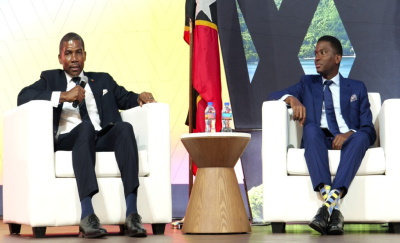
Pierre later joined his colleague leaders from Grenada and St. Kitts and Nevis, for a high-level panel discussion that was moderated by the Director General of the Organisation of Eastern Caribbean States, Dr. Didicus Jules.

The statement said that the under the theme “The Convergence Advantage in Global Capital and Mobility,” CIS26 explores the intersection of capital, compliance and competitiveness, including the harmonisation of regional frameworks and alignment with regulatory standards in major markets such as the United States, United Kingdom and European Union.

The summit is also examining the evolution of investment migration beyond single-passport transactions, with increased focus on integrated wealth management strategies, including estate planning, asset protection and multi-jurisdictional portfolio structuring.

The summit will conclude with a closing ceremony featuring industry reflections, awards and the announcement of the host country for CIS27, the statement added. (CMC)

Benefit concert for Mother’s Day

The Cancer Support Services is continuing to mark its 30th anniversary this year with the staging of a special benefit concert – Hymns My Mother Taught Me on Mother’s Day.

The event will not only celebrate mothers and the lessons of navigating life that they passed down through generations, but it will also signify a milestone for the organisation, of providing care, comfort, and community to individuals and families navigating the cancer journey.

The benefit concert will be held at Covenant Life Teaching Centre, Green Hill, St Michael, from 4 p.m. and, according to executive director, Jan Lynton, promises to be an uplifting afternoon of music, memories, gratitude and praise.

Cancer support

She said: “Reaching 30 years is not just about longevity – it is about the number of lives touched, comfort given, and hope restored. This concert is both a celebration and a call to action because with the financial and volunteer support of the community, Cancer Support Services can continue to ensure that no one has to face cancer alone.”

Hymns My Mother Taught Me will pay tribute not only to mothers and the role of faith and endurance that they played, but also to the traditions that shaped the lives of many Bajan women and communities in times of challenge and healing.

“Attendees can expect a rich musical experience rooted in the hymns that

have comforted generations,” Lynton said. While the admission is free, patrons are invited to make a donation of at least $30 – one dollar for each year of the organisation’s service.

The contributions will directly assist Cancer Support Services in continuing its mission to help those affected by cancer in Barbados. ( PR/AC)

‘Went home after hearing scream’

A witness yesterday recalled hearing a scream coming from the house owned by Samantha Bristol.

This Content Is Only For Subscribers

Please subscribe to unlock this content. Enter your email to get access.
Your email address is 100% safe from spam!

13 schools closing for repairs

0

Thirteen schools will close a month early this term as the Ministry of Education Transformation attempts to get a jump-start on school repairs.

However, the Democratic Labour Party (DLP) is questioning the effectiveness and efficiency of the ministry’s comprehensive maintenance plan.

In a release Tuesday under the subject “Early Closure of Schools”, from the office of the ministry’s permanent secretary to the affected principals and signed by Deputy Chief Education Officer Julia Beckles, the schools in eight parishes were identified for infrastructural work next month.

“The Ministry of Education Transformation informs you that term three, 2025-2026, will end for the students on June 11 and for staff on June 12, 2026. This early closure of the school is to allow for infrastructural work to commence at the school in late June 2026.

“The Ministry of Education Transformation thanks you for your usual cooperation and requests that you inform staff and parents accordingly. Additionally, you are to ensure that all items are stored securely.”

A check on the ministry’s website shows term three, the Trinity Term, ends on July 2 for students and July 3.

Some of the schools marked for repair next month include Blackman and Gollop Primary School in Christ Church, A. Dacosta Edwards Primary School in St Andrew, Hillaby Turners Hall Primary School in St Thomas and St George Primary School.

DLP spokesman on education Quincy Jones said: “[Government’s] maintenance plan was announced in 2024, then talked about in June last year and was again brought to public attention as recent as in the Estimates Debate earlier this year. It was reported in the media that the ministry had rolled out ‘an aggressive, year-round school repair programme and intensified safety and security standards to ensure that classrooms remain safe, resilient and fit for purpose for students, teachers and staff’.

“Then Minister of Education Kay McConney announced a significant shift in repairs to the island’s schools, moving from a summer-only programme to a year-round system. Her exact words: ‘The change is to address the growing infrastructural needs of schools whilst reducing disruption to the academic year. The new programme will extend throughout the academic year, with work being done on weekends and after school hours to avoid disruption.’

“In light of the above, the DLP wants to know why we are now faced with the early closure of 13 primary schools to facilitate urgent infrastructural repairs,” he said.

Jones said while the initiative may be viewed as both “necessary and proactive” in addressing long-standing maintenance concerns, “it is also

highly disruptive to teaching and learning at a critical stage of the academic year”.

“Any measure that removes instructional time from students must be carefully balanced against its wider impact on education delivery and family stability.

“The party notes with concern that earlier reports from the Education Technical Management Unit indicated that only four schools were scheduled for maintenance during the Easter period due to limited funding, namely Christ Church Girls’, Grantley Prescod, Workman’s Primary, and Deacons Primary. Yet, several of these institutions are now again listed for summer works, alongside additional schools being added to the list,” he said.

The education spokesman asked for answers to two questions: “Were the Easter repairs completed as originally planned and what changed between Easter and now to justify such widespread disruption?”

He added: “One can only hope that parents are not left to make sudden and unexpected arrangements, with limited time to adjust work schedules, child care and summer planning which might place unnecessary strain on families already navigating multiple responsibilities.”

The DLP said that while infrastructure upgrades were important, they must be executed within a “well-communicated, properly sequenced, and transparent framework”.

“Decisions that affect nearly 20 per cent of the island’s primary school system must be carefully planned to avoid unnecessary disruption to teaching, learning and family life,” Jones said.

General secretary of the Barbados National Council of Parent-Teacher Associations, Nicole Brathwaite, said she had not received any complaints as yet.

“A parent at one of the schools told me the work on her daughter’s school is definitely welcomed despite some dislocation. Principals and teachers are pivoting to bring forward plans for the term to ensure they can meet the revised end of term,” she said.

President of the Barbados Union of Teachers, Rudy Lovell, declined to comment. (CA)

Nicholls: Govt committed to safe, orderly migration

0

Barbados has reaffirmed its commitment to safe, orderly and regular migration while urging stronger international cooperation and climate financing during the Second International Migration Review Forum at the United Nations headquarters in New York City.

Addressing delegates yesterday, Gregory Nicholls, Minister of Home Affairs and Information, said migration was critical to the sustainability, economic development and identity of small island developing states such as Barbados.

“Barbados comes to this forum with one purpose – to turn commitment into progress,” Nicholls said during the general debate on the Global Compact For Safe, Orderly And Regular Migration.

He described Government’s commitment to the migration compact as “unwavering”, while stressing that migration and sustainable development were closely linked.

Nicholls highlighted the launch of the CARICOM Full Free Movement arrangement on October 1, 2025, involving Barbados, Belize, Dominica and St Vincent and the Grenadines, which allows nationals of those countries to live and work indefinitely across participating states.

The arrangement also guarantees access to health care and education for children.

“This is not generosity. It is obligation built on political will, regional solidarity and human rights,” Nicholls said, adding that Barbados viewed the initiative as a model for regional cooperation.

He also revealed that Barbados was developing a comprehensive National Migration Policy guided by CARICOM frameworks and the Global Compact, aimed at modernising migration pathways, strengthening border systems and supporting economic growth.

Nicholls warned that for small island states, climate change and migration could no longer be treated as separate issues.

“Displacement is already here: straining borders, threatening food security and eroding the stability that safe migration depends on,” he said.

Financing systems

Referencing the Bridgetown Initiative, the minister renewed Barbados’ call for reform of international climate financing systems, arguing that migration should remain a choice rather than an act of survival forced by climate impacts.

He also called for greater support for the Migration Multi-Partner Trust Fund and stronger cross-border cooperation.

Nicholls further outlined efforts to strengthen ties with the Barbadian diaspora in the United Kingdom, Canada and United States through investment opportunities, skills transfer and return migration initiatives.

“Migration, managed well, is not a burden. It is an engine for creativity, innovation and growth,” he said.

The minister added that Barbados remained committed to building partnerships that supported safe and dignified migration globally.

(NS/PR)