Experienced banker Victor Boyce will be CIBC Caribbean’s new Barbados country head from February 1, subject to regulatory approval.
Chief executive officer Mark St Hill recently named him to succeed now holder of that office, Kemar Polius.
St Hill also announced Polius is moving to the post of senior director, head of corporate banking and sustainable finance, following the retirement of Gillian Charles-Gollop, who previously led the bank’s business in that area.
“Victor is a career banker with 25 years of experience in the industry, primarily in corporate and investment banking, retail banking, operations, risk management, treasury, international corporate banking and wealth management. This makes him an excellent fit for the demands of the role of head of country for a mature and complex market like Barbados,” St Hill said.
Boyce began his banking career as a teller in 1994 and progressed to more senior positions, ultimately achieving the position of director and team lead, corporate and commercial banking for that financial services entity in Barbados.
He subsequently served as the director of corporate business development for the Organisation of Eastern Caribbean States and the country head for St Lucia at CIBC Caribbean for three years. During this time, he played a significant role in the company’s expansion.
Boyce also spent three years as managing director of another financial institution in Barbados, where he oversaw substantial transformations, including that bank’s rebranding, the introduction of innovative products to the market, and the expansion of the business. (SC/PR)
The Ministry of Labour, Social Security and Third Sector will soon launch the National Career Advisory Network (NCAN), a key initiative designed to empower Barbadians through enhanced access to career guidance and opportunities.
The official launch of NCAN will take place tomorrow from 9 a.m. to 10:30 a.m., at the Lloyd Erskine Sandiford Centre, Two Mile Hill, St Michael.
The National Career Advisory Network is intended to equip citizens with the tools, information, and support needed to pursue fulfilling careers, improve employment outcomes, and enhance overall life satisfaction.
Through this initiative, the Ministry aims to strengthen career development services across the island and promote informed career planning at all stages of life.
NCAN will function as a dynamic community of practice, bringing together active career counselling practitioners and other key stakeholders. Members of the network will support one another, share ideas, and participate in ongoing professional development.
The peer-based structure is also expected to foster collaboration, encourage the sharing of best practices, and provide an effective platform for the Ministry to disseminate important labour market information and insights.
The overarching goal of the National Career Advisory Network is to make career planning support accessible to everyone in Barbados. This includes extending services beyond the formal education system and into communities, through targeted outreach activities and expanded career counselling services.
One person has died following a fatal collision this morning along Fitts Village, St James.
Inspector Ryan Brathwaite, police public affairs and communications officer, said the accident involved a public service vehicle.
“Police responded to the area and on arrival they saw the body of a male along the roadway,” he explained.
“Our initial investigations have shown that a public service vehicle was travelling from Bridgetown to Speightstown when a person on board collided with a pole while the vehicle was in motion; that person succumbed to injuries at the scene.”
A medical doctor subsequently pronounced the victim dead.
Brathwaite appealed to motorists and pedestrians to exercise caution.
“We ought to drive with caution. We ought to pay attention while on the roadway. We must be compliant with the traffic laws… This will save lives,” he said.
He also urged pedestrians travelling in low-light conditions to wear reflective or fluorescent clothing to ensure visibility.
This marks the seventh fatality on Barbadian roads this year.
The victim’s father, George Collymore, said he was at Massy getting medication from the pharmacy when he learned the news.
“My niece called me. She told me she got some bad news…,” he said.
The victim’s twin sister, Danielle Griffith, shared her grief at the scene. She said while people might be inclined to think her brother was a bad person because he worked on a minivan, that was not the case.
“Honestly, he’s not a van man… He’s not one of them fellas that you can think about. He stick to himself and has very few friends. That van only came back out last week Friday. He was home for a very long time, he was not working.”
Both of them were preparing to celebrate another birthday on January 31.
Police continue to investigate the collision and are appealing to anyone who witnessed the incident to contact the Holetown Police Station at 419-1700. (AM)
****
Earlier Story
There are reports reaching The Nation of a fatal accident in the area of Fitts Village, St James.
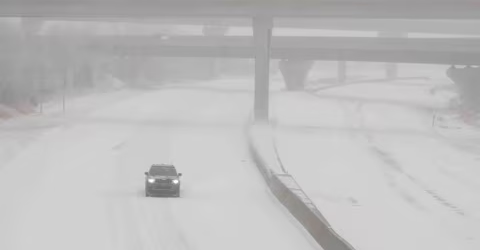
A powerful blast of cold air from the Arctic is expected to sweep through much of the United States over the coming days, bringing snow and ice to nearly 30 states and affecting nearly 160 million people, forecasters warn.
The National Weather Service (NWS) expects “life-threatening cold air” to slowly track from the High Plains and Rockies in an eastward direction from Friday.
Meteorologists say temperatures could plunge well below freezing in some areas.
Separately, snow showers are already affecting an area of the US downwind of the Great Lakes, which span the US-Canada border, according to the NWS.
US transportation officials, including airport authorities in several major cities, are warning travellers to brace for significant as the severe weather system moves across the US over the weekend.
That weather system is expected to take shape in Texas and New Mexico before moving eastward, blanketing cities including Memphis, Nashville, Washington DC, Baltimore, Philadelphia and New York with snow.
The NWS says the coldest wind chills may fall below -50F (-46C) across the Northern Plains, with a much wider area of the south-eastern US also experiencing sub-zero chills.
“These wind chills will pose life-threatening risk of hypothermia and frostbite to exposed skin,” the NWS warned.
While it remains too early to predict exact snowfall totals in urban areas, some places are expected to see over 12in (30cm), weather experts have said.
States further south may experience freezing rain, which could coat trees with ice and weigh them down, possibly leading to power outages.
Hazardous travel conditions, tree damage and reduced visibility are all expected as well.
Canada is experiencing freezing temperatures of its own, and eastern and Atlantic regions could experience snowfall, meteorologist Geoff Coulson told CBC News. But Coulson said it was too soon to say how big the impacts could be .
Governors in several US states, including Texas, North Carolina and South Carolina, have declared states of emergency, allowing emergency officials – including National Guard troops – to begin mobilising response efforts.
“Based on current forecasts, the State of Texas is acting to ensure Texans have the resources they need before severe winter weather impacts communities across Texas,” Texas Governor Greg Abbott said in a statement on Tuesday.
The warnings come amid memories of the bitterly cold winter storm that struck Texas in 2021, causing the energy grid to fail and leaving millions of residents without power for several days.
Officials caution the cold temperatures could again cause pipes to freeze and then burst.
Roadways could also be blocked for days, especially in southern states with limited de-icing equipment.
Cold temperatures are expected to persist into next week. (BBC)
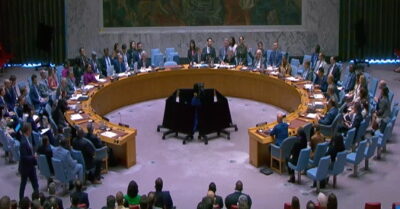
The United Nations Security Council Wednesday has been told that Haitian stakeholders remain divided over the transitional governance architecture that is to lead the country to elections.
The Security Council is holding an open briefing on Haiti with the Special Representative and Head of the UN Integrated Office in Haiti (BINUH), Carlos Ruiz Massieu, briefing members on recent developments in the French-speaking Caribbean Community (CARICOM) country.
The acting Executive Director of the UN Office on Drugs and Crime (UNODC) John Brandolino is also expected to brief the Security Council, with Massieu noting that the Transitional Presidential Council (TPC) in Haiti being unable to organise elections to complete the political transition before February 7, the date on which, according to a May 2024 decree, the TPC’s non-renewable mandate expires.
Massieu has acknowledged the steps taken by the Haitian authorities to advance this process, such as the TPC’s approval on December 1, last year of an electoral decree establishing the rules for the general elections and the December 23, 2025 publication of the electoral calendar by the Provisional Electoral Council, which sets the first round of presidential and legislative elections for August, 30.
But in his report to the Security Council, UN Secretary General, Antonio Guterres, notes however that Haitian stakeholders “remain divided over the transitional governance architecture that is to lead the country to elections”
Among other things, the Secretary-General’s report notes the expansion in 2025 of the areas affected by gang violence beyond the Port-au-Prince metropolitan area and the use by gangs of heavy-calibre weapons.
The report states that, between September 1 and November 30, last year, BINUH recorded 1,991 victims of intentional homicide, including 142 women, 12 girls, and 44 boys.
It also describes the continued use of sexual violence as a punitive tactic by gangs, as well as of kidnapping, extortion, destruction of property, and obstruction of essential services such as health and education.
Additionally, the report notes the reported increase in trafficking of children and the ongoing use of children by gangs in multiple roles, including in violent attacks.
The Secretary-General’s report also notes that police operations conducted mainly in the Port-au-Prince area between October and November 2025, which involved “a private military contractor in some instances”, resulted in at least 199 deaths, including gang members as well as 12 children recruited by gangs.
The report also provides casualty figures related to “drone strikes by a private military contractor” in the country, saying that, between March 1 and December 30 last year, these resulted in at least 973 people killed, of whom 934 were suspected gang members and 39 residents, including 16 children.
The Secretary-General’s report describes several steps taken by the UN to establish the UN Support Office in Haiti (UNSOH) by March 31. These include the identification of locations, procurement activities, establishment of key host country agreements, and confirmation of the GSF’s operational requirements for the provision of logistical support by UNSOH.
Regarding the Gang Suppression Force (GSF), the Secretary General’s report notes the appointment in December 2025 of Jack Christofides, who has held several leadership roles in the UN, as GSF Special Representative.
It also mentions the delivery of equipment that enabled the GSF to dispatch additional supplies and reinforce patrols.
Massieu is encouraging UN member states to support the GSF through personnel, equipment, and financial contributions. (CMC)
With Barbadians preparing to go to the polls on February 11, the spiralling cost of living will be a central concern for voters, according to Maureen Holder, executive director of the Barbados Consumer Empowerment Network (BCEN).
She said explanations for rising prices have failed to deliver meaningful relief for households already under strain.
Holder told the CAMPAIGN EXPRESS that consumers were facing “high prices everywhere”, with food, household goods, utilities, transport and basic services now consuming an ever-growing share of household income, even as wages struggled to keep pace.
She pointed to official figures showing that food inflation remained elevated, with prices still about 1.2 per cent higher year-on-year in October 2025, a burden magnified by Barbados’ heavy reliance on imported goods.
“While headline inflation may appear modest, the reality for households is stark,” she said, noting that staple food items in Barbados often cost 30 to 50 per cent more than comparable goods overseas. She added that average monthly grocery bills now exceeded $460 for many families, with larger households facing significantly higher costs where spending power allowed.
Against that backdrop, the consumer rights activist contended that Barbadians were increasingly frustrated by a steady stream of explanations from retailers and business groups, ranging from global shipping disruptions and freight costs to currency pressures, geopolitical tensions and, more recently, the increase in the minimum wage.
“These narratives may describe causes, but they do nothing to reduce prices at the checkout, which is what consumers actually care about,” she said.
Holder added that while business organisations were quick to defend pricing pressures, there had been little public discussion about concrete measures to shield households from the impact of global cost shocks.
The BCEN head also questioned the effectiveness of Government-led price transparency initiatives, such as online price-checking tools, arguing that in a small and highly concentrated market, information alone did not translate into affordability.
“In a market like ours, knowing that another retailer charges marginally less does not provide real relief when all prices are high,” she said, stressing that consumer choice remained limited when import channels were tightly controlled and cost increases were passed swiftly down the supply chains.
She said the issue was not whether costs had risen, but how those costs were managed and shared. According to BCEN, nearly every increase along the import chain – including freight, port charges, insurance, exchange costs and wholesale mark-ups – was ultimately borne by consumers, with little evidence of buffering or cost absorption elsewhere in the system.
Particularly troubling to Holder was the growing tendency to blame the recent minimum wage increase for higher prices. She recalled public warnings from sections of the retail sector that the adjustment from $8.50 to $10.50 per hour would trigger a “domino effect” on costs, an argument she said ignored the fact that prices were already rising well before the wage change took effect.
“The minimum wage adjustment was long overdue and aimed at helping low-paid workers meet basic living costs that had already risen sharply,” she said, adding that even after the increase, wages still lagged behind the real cost of living. To suggest that improved wages were driving inflation, she argued, risked shifting blame onto workers who were already struggling .
She stressed that people were increasingly looking for more than explanations, calling instead for clear policy commitments that addressed affordability. Holder noted that Barbados urgently needed a coordinated approach to food price shocks, one that set out how the burden of rising global costs would be shared between Government, businesses and households.
Among the measures proposed by BCEN were temporary, targeted tax relief on essential imports during periods of acute price pressure, greater scrutiny of pricing practices, voluntary restraint on margins for staple goods, and more active enforcement of competition and consumer protection laws.
“Barbadians have heard enough justifications,” Holder said. “What is now required is leadership that turns understanding into relief.”
More than a decade after Grand Barbados Resort closed its doors, dozens of former employees say they remain trapped in “limbo” – still waiting for severance and other entitlements, still facing postponed hearings and still watching colleagues die without seeing a cent.
That frustration spilled out at Queen’s Park, The City, recently where disaffected workers of the former hotel at Aquatic Gap, Bay Street, St Michael, gathered to publicly recount what they described as a long-running failure of the system meant to protect them.
The dispute dates back to the hotel’s closure in early 2012, following extended periods of short-time work and repeated layoffs. Former employees claimed that they were kept off the job well beyond the statutory period that should have triggered severance payments, only to be intermittently recalled and sent home again.
The former workers maintained that the matter – understood to involve about 26 former employees – has moved through the Employment Rights Tribunal, but has been repeatedly deferred and delayed, leaving them without clarity or closure.
Among those speaking was Winifred Burnham, who said she devoted 41 years to the resort and was due to retire around the time it closed.
“I was supposed to retire in the same month and instead of retiring they call me back to work,” she said.
“I went back and worked, helped clean up and prepare for when the hotel was supposed to open back. I worked there 41 years and I haven’t got a cent yet. From then till now, nothing.
“This is hard times. About three or four of the workers dead and gone already. We worked real hard – holidays and all them times – and right now we would really like to get we money,” Burnham complained.
Former porter Cecil Francis, who put in more than 40 years, said many workers were pushed into early retirement, leaving them on reduced pensions.
“I sitting here in 2026 and we still waiting. They tell us there was supposed to be a hearing in December, and up to now nothing happen.
Still waiting like everybody else.
“We had to take early pension, so we still short. We still at the bottom of the scale right now,” Francis said.
Rodney Waithe, a former banquet porter with 19 years’ service, said the financial pain began long before the final closure.
“There was a time I was laid off for 12 whole weeks straight. My water and my lights would turn off. I had to eat rice and sardines on Saturdays and Sundays. It was unfair,” he said.
Former pastry chef Victor Ford, who worked 21 years at Grand Barbados, charged that staff were laid off beyond the legal threshold without compensation.
“After you work a certain amount of time and you go over the weeks, you supposed to be compensated,” he said. “That didn’t happen. We were told lawyers say they didn’t have to pay us, and now we here 14 years later still waiting.”
Several workers said the repeated postponements at the tribunal had been the most demoralising.
“We just in limbo,” one said.
“Every time we think something will come, they . . . put it back.”
The former employees said gathering at Queen’s Park and speaking publicly again was a last resort after years of waiting.
“We feel putting it in the public is the only way we might get help,” one said. “If we don’t talk, nothing happen.”
The MIDWEEK NATION tried to get an update on the workers’ case from the Barbados Workers’ Union, but up to press time deputy general secretary Dwaine Paul could not be reached. (CLM)
It’s been more than two days since Kaleb Ottley was last seen at his Waverley Cot, Ellerton, St George home.
Police are seeking the public’s assistance in locating the 18 year old, who was last seen around 6:50 a.m. on Monday, January 19.
He suffers from a psychological disorder and is in the habit of walking away from home.
Ottley is about five feet seven inches (5’7”) in height, with a slim build. He has a dark complexion, small eyes, bulbous nose and thin lips. He has a small scar on the left side of his neck and was last seen wearing a short blue beach pants and a grey T-shirt. He walks with an erect appearance and speaks with a Vincentian accent.
Anyone knowing the whereabouts of Kaleb Ottley, is asked to contact the District ‘B’ Police Station at 437-4311 or 430-7625, Police Emergency 211, Crime Stoppers at 1-800-TIPS (8477), or any police station. (PR/SAT)
Police at have launched an investigation into a fatal shooting, which occurred around 1:35 p.m. today at Pegwell Boggs, Christ Church.
According to lawmen, a group of people were gathered in the area when a vehicle approached, an occupant of the vehicles exited and discharged a number of gunshots at the gathering before fleeing the scene.
The injured man collapsed a short distance away, outside of a residence.
A medical doctor visited the scene, examined the body and pronounced death.
A resident told The Nation she was relaxing on the patio when she heard the gunshots.
“I saw everyone scattering, and then I put down the phone and I ran over there to see what is going on. I don’t know why, but I went to see what was happening, and when I went up there, I saw somebody lying on the floor. I saw the other guys just standing up around the tree and persons obviously were in chaos and crying and shouting,” she said.
The woman said she did not know the deceased personally, but often saw him and his girlfriend as they walked through the community.
Police are appealing to anyone who may have witnessed the incident or have any information that might assist them to please contact the Crime Stoppers Hotline at 1800-8477, Police Emergency 211 or the Oistins Police Station at 418-2612 or 418-2608. (PR/SAT)