

Friday, May 29, 2026
Home Blog Page 185

New date for Breakout League to be announced

0

Cricket West Indies (CWI) has taken the decision to put next year’s Breakout League on hold due to a packed international and domestic schedule.

Hosted by CWI in collaboration with the Caribbean Premier League (CPL), the inaugural six-team Breakout League was held in Trinidad and Tobago from April 25 to May 10, 2025.

However, in a CWI release on Saturday, the organisation said a hectic schedule meant the 2026 edition could not be held during that period.

“CWI, in collaboration with the CPL, has completed a review of the proposed window for the Breakout T20 League in 2026.

“Given the increasingly congested international and domestic cricket calendar, coupled with preparations for the ICC Men’s T20 World Cup, it has been determined that the tournament cannot be staged in its originally planned window,” the release stated.

While no new dates were given, CWI’s chief executive officer, Chris Dehring said the competition, which was won by the Trinidad and Tobago Legions, remained a key component of the region’s player development pathway and a critical bridge to regional, franchise, and international cricket.

“While we have not yet identified a suitable window for the Breakout League in 2026, it remains an important pillar of our domestic tournament strategy.

“This pause, particularly during a stringent fiscal period, provides an opportunity to assess the league’s structure and to determine whether it is optimally positioned within the World Cup cycle to deliver the best possible developmental outcomes,” Dehring said.

“We must cast a wider net across the Caribbean to ensure we are identifying players with the skill, athleticism, and mindset required for the modern game, including those who may emerge later or who have not yet had sustained exposure to elite environments.

“That requires stronger scouting, improved data capture, and clearer alignment between the Breakout League and our high-performance systems, so that progression to the senior international level is intentional and measurable.

“With the Under-19 Men’s and Senior Men’s teams focused on upcoming World Cups, this is an especially demanding period for our players. While the Breakout League remains part of our forward planning, it will not be staged in the same window.

“Both CWI and CPL agree that the tournament must have sufficient space to make a meaningful developmental impact and to truly engage our fans. We will continue to look for a space for this event in 2026,” he added.

Meanwhile, chief executive officer of the CPL, Pete Russell said it was important to ensure the competition’s long-term viability and developmental value.

“The CPL fully supports the Breakout League and its role within Caribbean cricket.

“Although we have not yet been able to secure a suitable window for 2026, our commitment to the competition remains unchanged. This period will allow us to refine the format, timing, and supporting structures to ensure the league fulfils its intended role within the regional development system, both now and in the future,” Russell said. (CMC)

Trinidad PM says Caricom has ‘lost its way’

1

 Trinidad and Tobago Prime Minister Kamla Persad-Bissessar on Saturday said the 15-member regional integration grouping, Caricom, will not determine the future of her twin island republic and that it “is not a reliable partner at this time”.

“An organisation that chooses to disparage our greatest ally the United States but lends support to the Maduro narco-government headed by a dictator who has imprisoned and killed thousands of civilians and opposition members as well as threatened two Caricom members is one that has clearly lost its way,” Persad-Bissessar said in a statement.

She said that on December 16, the US government issued a fact sheet outlining the decision by President Donald Trump to further restrict and limit the entry of certain foreign nationals in the interest of United States national security.

“The fact sheet detailed the justification for the partial suspension of entry for immigrants and nonimmigrants under the B-1, B-2, B-1/B-2, F, M, and J visa categories, and referenced the historical operation of Citizenship by Investment programmes without residency requirements in both Dominica and Antigua and Barbuda.

“I have taken note of a subsequent statement issued by the Bureau of the Conference of Heads of Government of the Caribbean Community (Caricom). In its statement, the Bureau expressed concern about the restrictions that the US government announced on December 16, 2025.”

Persad-Bissessar said that she was advising citizens of Trinidad and Tobago that Port of Spain “is not a party to the statement issued by the Bureau of the Conference of Heads of Government.

“I acknowledge the right of the Bureau of the Conference to express its views. However, the Trinidad and Tobago government maintains its own position on the matter and recognises the sovereign right of the United States to make decisions in furtherance of its best interests.

“I hold the view that every sovereign state is responsible for its foreign and domestic policy choices and must be prepared to accept the concomitant consequences. The exercise of power by the United States of America to advance their best interests must therefore be seen as a measured response to the conduct of other nations in the realities of the current environments that they place themselves in”.

In its statement, the Caricom Bureau, made up of the prime ministers of Jamaica, Barbados and Grenada, said it had taken note of the visa situation and that while it ”recognises the right of countries to implement policies regulating entry to their borders, nevertheless, the Bureau expresses concern that this decision was taken without prior consultation, especially in circumstances of its potential adverse effects on legitimate travel, people-to-people exchanges, and the social and economic well-being of these small states”.

The Caricom Bureau said it is also concerned about the lack of clarity regarding the status of existing visas after 1 January 2026.

”The Bureau urges an early engagement by the United States with the Governments of Antigua and Barbuda and Dominica to clarify the proclamation and address outstanding concerns, consistent with the strong and longstanding partnership between the United States of America and CARICOM.

”Caricom remains committed to dialogue and cooperation based on mutual respect, shared interests and the rule of law as we seek to secure the prosperity of the region and its citizens,” it added.

But Antigua and Barbuda Prime Minister Gaston Browne has been critical of the Bureau’s statement, saying despite being advised by him “that the issue was resolved and that it would be superfluous circulating this statement after the fact,” Caricom still went ahead and issued a statement.

He said the Caricom position came “especially in consideration of their inertia and initial luke warm support”.

Prime Minister Browne also took the opportunity to criticise an unnamed Caricom leader saying that it had been “brought to my attention, that one of our colleague heads, instead of standing in solidarity, publicly accused us of cursing the US administration. I challenge that leader to back her statement with facts.

“The inertia and insularity within Caricom continue to undermine the effectiveness of our integration movement,” Browne wrote, adding that “however, as a hardcore integrationist and an eternal optimist, I remain hopeful for a stronger and more effective integration movement”.

In her statement, Prime Minister Persad-Bissessar her government “does not bind itself to the political ideologies or foreign, economic and security policies of any other Caricom member government.

“Member governments are free to make decisions in the best interests of their citizens,” she said, adding “Caricom is not a reliable partner at this time.

“The fact is that beneath the thin mask of unity, there are many widening fissures that if left unaddressed will lead to its implosion. The organisation is deteriorating rapidly due to poor management, lax accountability, factional divisions, destabilising policies, private conflicts between regional leaders and political parties and the inappropriate meddling in the domestic politics of member states. That’s the plain truth. ”

Persad-Bissessar said that Caricom cannot continue to operate in “this dysfunctional and self-destructive manner as it is a grave disservice to the people of the Caribbean.

“The Caribbean community must face the rot within the organisation with transparency and honesty. Hiding behind the glibness of diplomacy, fake sophistication and false narratives is self-defeating”.

She warned of “repercussions” for supporting supporting Maduro, adding “we must all live with the consequences of our actions.

“Our citizens can rest assured that I will always make decisions that put Trinidad and Tobago first,” she added. (CMC)

Photo of Andrew lying on laps at Sandringham in new Epstein files

0

A photo of Andrew Mountbatten-Windsor lying on the laps of women is among the thousands of Epstein files which have been released by the US Department of Justice.

In the picture, convicted sex trafficker Ghislaine Maxwell hovers in the background smiling at the former prince. The photo appears to have been taken in the saloon room at Sandringham, the royal estate in Norfolk.

The emergence of the photo will add to scrutiny on Mr Mountbatten-Windsor, after he was stripped of his remaining titles and honours over his links to the late sex offender Jeffrey Epstein.

Andrew has always denied any wrongdoing.

Two of the photos also show Andrew’s ex-wife, Sarah Ferguson, in the company of women whose faces are covered by black squares.

Ms Ferguson’s representatives declined to comment.

Simply appearing in the photos or documents is not evidence of wrongdoing.

The heavily-redacted tranche of some of the so-called Epstein files – the long-awaited documents relating to the US Department of Justice’s investigations into Epstein – were released on Friday night.

The documents were highly anticipated after Congress passed a law mandating the files be released in their entirety by 19 December.

They contain photos of the interiors of Epstein’s homes, his overseas travels and celebrities including US President Bill Clinton, Mr Mountbatten-Windsor and Michael Jackson. President Donald Trump was hardly mentioned in the files.

Many of those identified in other releases, including President Trump, have denied any wrongdoing in relation to Epstein.

In the undated picture of Andrew, the former prince – now 65 – looks much younger. He is smiling with his eyes closed.

The faces of those with him, who are sitting in front of a grand fireplace, have been redacted with black squares. The photo appears to be at Sandringham, King Charles’s private estate in Norfolk.

In another picture, he appears to be at Royal Ascot with Epstein and Maxwell.

Also among the files are undated photos of Maxwell standing outside the door of 10 Downing Street.

In the picture she is alone and no context was provided with the photo about why she is there or when the image was taken.

The issue over Andrew’s friendship with Epstein has continued to dog the royals.

The King stripped his younger brother of his prince title following weeks of intense pressure over his links to the paedophile financier.

He is also expected to shortly move out of his Windsor mansion, Royal Lodge.

It came after Andrew Mountbatten-Windsor – as he is now known – gave up his other royal titles, including the Duke of York, after more questions and allegations about his private life.

At the start of this year, emails showed that he had stayed in contact with Epstein for longer than he had previously admitted.

In a posthumous memoir published in October, Virginia Giuffre – a prominent accuser of Epstein – repeated allegations that, as a teenager, she had sex with Andrew on three separate occasions. Andrew has always strenuously denied the claims.

Andrew has also faced calls from Democrat members of the US Congress to give evidence to a committee investigating Epstein’s activities. He had not replied to the request by the end of their deadline last month.

Separately, two photos of Ms Ferguson – then the Duchess of York – have emerged in the document dump.

One shows her standing on a pavement next to an unidentified woman holding a shopping bag. In the other, she is sitting cross legged on a green sofa.

Ms Ferguson has also faced her own Epstein controversy earlier this year, after an email from 2011 revealed she called him her “supreme friend”.

Multiple charities dropped the then-Duchess of York as a patron or ambassador after the emergence of that email, in which she also seemed to apologise for her public criticism of him.

The extensive redactions have been criticised by Democrats for violating the transparency law.

But the White House says the Trump administration is the “most transparent in history”, as the DoJ says it has “erred on the side of redacting to protect victims”. (BBC News)

Mia to faithful: Get red, ready

0

Recent political messaging from Prime Minister Mia Amor Mottley suggests Barbados should be prepared for a General Election well before it is constitutionally due in 2027.

Some political analysts said yesterday Barbados has already entered a natural election window, noting that prevailing economic, political and regional conditions favour an earlier call rather than a wait.

Their comments come in the wake of what some observers have interpreted as subtle hints from Mottley as she addressed individuals across all 30 constituencies who were invited to a Christmas reception at her official residence Ilaro Court on Thursday night.

Renewed effort

Mottley urged supporters to be “ready” and suggested that she would soon be calling on them for a renewed effort.

“When I call you, I don’t want you to tell me you are tired. And when I start to call on you, I don’t want you to tell me any other thing than ‘Prime Minister, we are ready’.

“We are ready. We are ready, red, red, ready,” she chanted as she addressed the hundreds of guests.

Political scientist Dr George Belle and political analyst Devaron Bruce, speaking separately, said the Prime Minister’s remarks fit neatly into a broader pattern of political signalling, constituency activity and administrative preparation that points to elections being imminent, rather than unusually early.

Bruce told the Saturday Sun that with Barbados now less than a year away from the constitutional end of the parliamentary term, heightened political messaging should be expected.

Normal practice

He said it was misleading to treat speculation about elections as surprising, noting that the country was already well within what is traditionally regarded as an election period.

He suggested that an election within the next two to three months would fall squarely within normal practice, particularly when viewed against the timing of the national Budget.

Bruce noted that governments generally preferred not to go to the polls immediately after a Budget, especially if fiscal tightening is anticipated, making an election before March strategically plausible.

He also pointed to seasonal economic conditions, stating that the peak tourism period tended to boost employment and disposable income, particularly through temporary work in hotels, supermarkets and related sectors. That economic buoyancy, he said, often creates a more favourable electoral climate.

Bruce added that the governing Barbados Labour Party appeared organisationally ready, with most candidates selected and actively canvassing and nomination processes largely completed. Against that backdrop, he said an election in the near term would align with political preparedness rather than disrupt governance.

Meanwhile, Belle, placed the timing question within a wider regional and international context, contending that prolonged political uncertainty in Barbados could be unhelpful at a time of global instability and shifting regional dynamics.

He noted that elections have already been held in Jamaica and Trinidad and Tobago, and suggested that Barbados and Guyana now carry particular responsibility for reinforcing stability and leadership within the Caribbean.

In his view, a decisive electoral outcome in Barbados could help reduce uncertainty across the region.

Still struggling

The retired University of the West Indies lecturer said the Opposition Democratic Labour Party was still struggling to recover from successive defeats and unresolved leadership questions. Those circumstances, he argued, significantly reduce the political risk for the governing party in calling elections sooner rather than later.

He cautioned that delaying an election could expose the Government to unpredictable external shocks, including economic deterioration or regional instability, factors that no administration could fully control. (CLM)

Kettle Appeal $420 000 short

0

The Salvation Army is $420 000 short of its Christmas Kettle Appeal target of $850 000.

Speaking during yesterday’s annual Christmas luncheon at its headquarters in Reed Street, The City, Divisional Commander Major Robert Pyle said their main fundraising drive was slightly behind what it was around this time last year.

“That could be attributed to a number of reasons. It could be the economic situation because the cost of living has gone up since last year. It could be also because quite a few of the donors have given to Jamaica [hurricane] relief, or it could also be that people decided to give less this year for other personal interests.

“Nevertheless, we’re about six per cent behind from this time last year, which is not bad,” he said.

Pyle added that each year comes with its own set of challenges and circumstances that may prevent a person from contributing in the same way. Nevertheless, he offered thanks to anyone who donated what they could, noting that every penny and dollar counts.

“Five dollars, ten or $100 . . . the money is handy and it will be used for the less fortunate and most vulnerable in our communities, so we’re grateful. The mail appeal goes into next year January so we still have time to combine, because the kettle target is a combination of the kettle stands in locations in The City and also mail appeal, so there’s still hope.”

Yesterday, meals were prepared for 400 people, with jug jug, macaroni pie, baked chicken, turkey, ham and other delights on the menu.

The major said the numbers indicated an increase from last year, signalling the public’s growing pleas for help in light of the increasing cost of living.

“Last year around this time we started, all the tables weren’t taken up, but as we started all the tables were taken up. Either we were very good in promoting this event and we got more people coming, or it’s just an indication of the economic situation in the country that people are responding to.

“We offer this luncheon and perhaps this may be the best or the only Christmas meal that many of them will partake in for the season,” he said. (JRN)

Wanted Man: Anthony Bishop

0

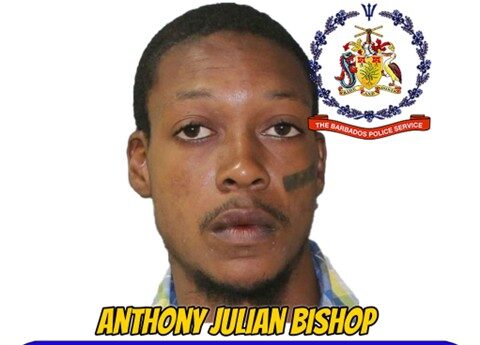
Police are seeking the assistance of the public in locating Anthony Julian Bishop, who is wanted for questioning in connection with serious criminal matters.

Bishop’s last known address is Chapman Village, St Thomas. He is described as being about 5 feet 7 inches tall, of brown complexion and slim build. He has a rectangular-shaped tattoo under his left eye and the letters “MOB” tattooed on his right wrist.

Police have advised that Bishop may present himself to the Criminal Investigations Department (Central), Pinfold Street, Bridgetown, St Michael, accompanied by an attorney-at-law of his choice.

Anyone with information on the whereabouts of Anthony Julian Bishop is asked to contact the Criminal Investigations Department (Central) at 430-7189 or 430-7190, Police Emergency at 211, Crime Stoppers at 1-800-8477, or the nearest police station.

Members of the public are also reminded that it is a serious offence to harbour or assist a wanted person, and anyone found doing so can be prosecuted.

Hodge’s dogged century leads WI resistance against New Zealand

0

Kavem Hodge scored a resilient, unbeaten century as West Indies made New Zealand toil for the entire day in a rare show of commitment by their batsmen, to leave the third Test interestingly poised after three days.

Hodge ended the day on 109 not out, his second Test century and first in over 17 months, to help propel the visitors to 381 for six at the Bay Oval, still some 194 runs in arrears of New Zealand’s massive first innings total of 575 for eight declared.

However, what is worrisome for the Windies is the fact that they may be without the services of both the inspirational Shai Hope and Kemar Roach.

There has been no sign of Hope yet, their best batter, who is reportedly unwell and holed up in the team’s hotel since Friday, while Roach’s availability for the remainder of the match is questionable after he suffered a hamstring injury on the opening day while bowling.

If they are unable to bat, it would mean only Jayden Seales remains.

Luckily for the Windies, Hodge’s efforts along with those of the top and middle order, ensured they avoided the follow-on, although they will be hoping to make further inroads when play resumes on Sunday’s fourth day.

Despite their commendable performance with the bat thus far, several West Indies batsmen would have been disappointed not to have pushed on after getting promising starts.

Resuming the day in a strong position of 110 without loss, New Zealand struck early when pacer Jacob Duffy had John Campbell caught at second slip in the day’s third over, with the left-hander failing to add to his overnight score of 45.

Hodge joined Brandon King at the crease, and the pair looked comfortable until Duffy bowled the latter off his pads with an inswinger for 63 to reduce the visitors to 140 for two.

Hodge, who started nervously, began to find his rhythm and when pacer Michael Rae served up three poor deliveries, he was hit for three successive boundaries, the last, a crunching pull that raced away to the midwicket boundary in the blink of an eye.

He brought up his half century just before lunch, and together with Tevin Imlach, shared a 66-run partnership to take the score to 206 for two at the break.

But as has been the case throughout the entire series, the West Indies lost a wicket almost immediately after the restart, with Imlach being caught behind chasing a wide delivery from Rae to be out for 27.

Alick Athanaze looked in superb nick in his knock of 45 off 57 balls, dominating a 61-run stand for the fourth wicket with Hodge.

However, with a half century imminent, Athanaze was unlucky to be bowled by spinner Ajaz Patel by a wide delivery down the leg side that ricocheted off his leg and onto the stumps, to leave the score 267 for four.

Hodge all the while continued to trudge on, and by the tea interval he had reached 83, with the Windies 310 for four.

Similar to Athanaze, Justin Greaves look untroubled during his innings of 43, combining with Hodge to add 81 crucial runs for the fifth wicket.

In search of a bowler to break the partnership, New Zealand captain Tom Latham turned to part-time spinner Daryl Mitchell, and he responded by trapping Greaves lbw with a full, straight delivery that the batsman played all around.

And when skipper Roston Chase’s nightmare tour continued when he was trapped lbw by Patel for just two, the West Indies were in danger of not avoiding the follow on at 351 for six.

Hodge. who survived some nervous moments in the 90s, including being hit in the groin and having to seek medical attention, eventually reached three figures with an audacious pull of Rae for four.

His unbroken 30-run partnership with Phillip took the Windies past the follow-on score of 375, but they will be hoping for much more come Sunday, including the services of Hope and Roach to carry on the fight.

Hodge has so far faced 254 balls and hit 14 boundaries in his unbeaten knock. (CMC)

CARICOM urges quick resolution to visa issue with United States

0

Caribbean Community (CARICOM) leaders Friday night uregd a quick resolution to the decision by the United States preventing or limiting the entry of nationals from three CARICOM countries from entering the North American country.

“ The Bureau of the Conference of Heads of Government of the Caribbean Community (CARICOM) has noted with concern the proclamation issued by the Government of the United States on 16 December 2025 imposing partial entry restrictions on nationals of Antigua and Barbuda and the Commonwealth of Dominica,” the leaders said in a statement late Friday night.

The Bureau, comprising the prime ministers of Barbados, Grenada, and Jamaica, with the CARICOM Secretary-General serving as an ex-officio member, said it  recognises the right of countries to implement policies regulating entry to their borders.

“Nevertheless, the Bureau expresses concern that this decision was taken without prior consultation, especially in circumstances of its potential adverse effects on legitimate travel, people-to-people exchanges, and the social and economic well-being of these small states.”

On Tuesday, President Trump in his latest executive order said that apart from Antigua and Barbuda, nationals from Dominica and Haiti would also be affected by the immigration policy.

Trump  said some of these countries identified in an earlier proclamation, had offered Citizenship by Investment (CBI) without residency, which poses challenges for screening and vetting purposes.

Under the CBI programme,  several Caribbean countries including Antigua and Barbuda and Dominica offer  citizenship  to  foreign investors in return for  making a substantial investment in the socio-economic development of these countries.

Trump said both Antigua and Barbuda and Dominica have “historically had CBI without residency”  and that the entry into the United States of nationals of these two countries as immigrants, and as nonimmigrants on B-1, B-2, B-1/B-2, F, M, and J visas, is hereby suspended.

He said consular officers shall reduce the validity for any other nonimmigrant visa issued to nationals of Antigua and Barbuda and Dominica “to the extent permitted by law.

Trump said in its latest executive order justifying the action taken against the Caribbean countries that “as an example, a foreign national from a country that is subject to travel restrictions could purchase CBI from a second country that is not subject to travel restrictions, obtain a passport in the citizenship of that second country, and subsequently apply for a United States visa for travel to the United States, thus evading the travel restrictions on his or her first country.

“ Additionally, United States law enforcement and the Department of State have found that, historically, CBI programmes have been susceptible to several risks.  These risks include allowing an individual to conceal his or her identity and assets to circumvent travel restrictions or financial or banking restrictions,”  he said.

In its statement, the CARICOM Bureau said it is concerned about the lack of clarity regarding the status of existing visas after 1 January 2026.

”The Bureau urges an early engagement by the United States with the Governments of Antigua and Barbuda and Dominica to clarify the proclamation and address outstanding concerns, consistent with the strong and longstanding partnership between the United States of America and CARICOM.

”CARICOM remains committed to dialogue and cooperation based on mutual respect, shared interests and the rule of law as we seek to secure the prosperity of the region and its citizens.”

On Friday, both Dominica and Antigua and Barbuda said that Washington had agreed to suspend the implementation of the proclamation following discussions between them and the United States.

“This applies to all visa categories, including B-1, B-2, J, and M visas,”  said Antigua and Barbuda Ambassador to the United States, Sir Ronald Sanders, adding that “for the avoidance of doubt, this includes tourist, business, student, and other valid United States-issued visas.

“Second, there will be no revocation of any existing visas issued to nationals of Antigua and Barbuda prior to 31 December 2025,”  he said in a statement.

He said with regard to new visa applications submitted after January 1, 2026 “these will be subject to new arrangements that are still to be worked out with several Caribbean countries, including Antigua and Barbuda.

“These arrangements relate specifically to the collection of biometric information of Antigua and Barbuda passport holders to ensure full compatibility with United States biometric systems.” (CMC)

Father must pay for beating

A father, who beat his son’s mother after he tried to talk to her about the child’s maintenance, was fined and placed on a bond when he reappeared in the No. 5 Supreme Court yesterday.

This Content Is Only For Subscribers

Please subscribe to unlock this content. Enter your email to get access.
Your email address is 100% safe from spam!

Franklyn defends new appointments

0

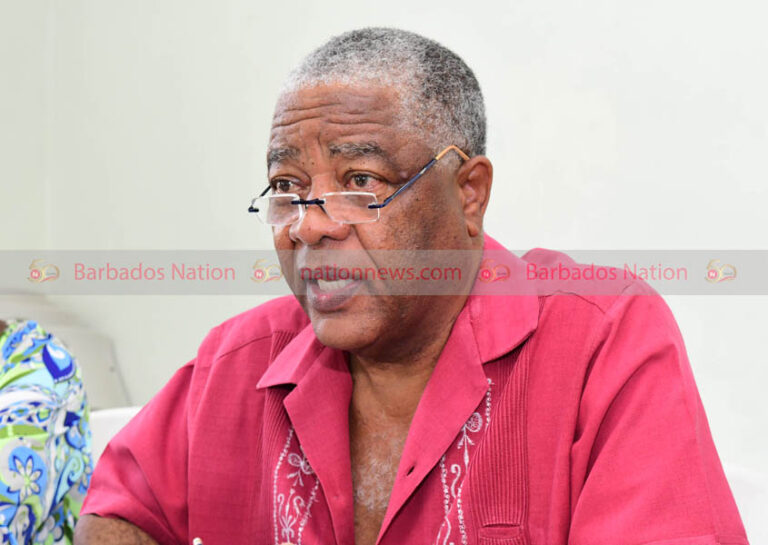
Trade unionist and former senator Caswell Franklyn has defended the legislation passed to regularise the appointment of more than 2 000 public officers.

He said while critics question the Prime Minister’s motives, the law is a practical response to decades of administrative failure in the Public Service and a problem created long before the current administration took office.

Franklyn, in a media statement in the wake of Parliament’s approval of legislation to appoint temporary and acting public officers who have served for three years or more prior to January 1, 2026, said the move should be viewed against the long and troubled history of Public Service appointments in Barbados.

“On the face of it, the goal of the legislation appears laudable,” he noted, pointing out that thousands of public servants will now enjoy greater security of tenure and the ability to “move on with their lives”.

He acknowledged that some commentators have suggested ulterior political motives behind the move, particularly as it was introduced by Prime Minister Mia Amor Mottley. As a long-standing trade unionist representing public workers, Franklyn said he felt compelled to add historical context often missing from the debate.

He recalled that a similar situation arose in the final days of the Owen Arthur administration, when Parliament passed the Public Service Act, which came into effect on December 31, 2007. That legislation paved the way for the appointment of more than 5 000 temporary or acting officers who had served for three years or more.

Amending the Constitution

Franklyn said that at the time, many, including himself, believed the provision was unconstitutional, given a High Court ruling that Parliament had no authority to appoint public officers without first amending the Constitution. Despite those concerns, he added, no objections were raised because workers were more focused on the outcome than the process.

“No such constitutional amendment was made in 2007,” Franklyn said, yet the appointments were carried out under the subsequent Democratic Labour Party administration “with nary a whimper from any of the constitutional purists”.

He added that the 2007 Act also sought to prevent a recurrence by stipulating that no established post in the Public Service should remain vacant for more than three months.

That provision, he said, was later extended to 12 months at the urging of the Personnel Administration Division, which argued the original time frame was too short.

“Even with the extension, the public officers who were supposed to manage the process steadfastly refused or neglected to process the appointments,” he said.

By October 2020, the backlog had again ballooned into the thousands, prompting the Mottley administration to pass the Public Service (Appointments) Act, 2020. This time, Franklyn said, Parliament “did the right thing” by first altering the Constitution to lawfully effect the appointments.

Despite that intervention, he argued, the same pattern of administrative failure persisted. By 2025, the backlog had once again exceeded 2 000 officers.

Franklyn questioned what realistic options were open to the Government. While the most correct response might have been to bring charges against those who failed to comply with mandatory provisions of the Public Service Act, he said doing so would be impractical.

“The list of persons involved ranges from permanent secretaries to heads of department and personnel officers across ministries,” he noted. “Bringing charges against all these persons would be a logistical nightmare.”

Against that backdrop, he rejected the notion that the Prime Minister should be faulted for choosing the legislative route.

“The Prime Minister is a politician who must return to the electorate intermittently to renew her mandate,” he said. “What is wrong with her doing the right thing by over 2 000 public officers and expecting to reap the gratitude of those benefiting? This is what politicians do.”

He maintained that the legislation should be seen less as political opportunism and more as a necessary if imperfect solution, to a chronic administrative problem that successive governments have failed to resolve.

(NS/PR)