

Friday, May 29, 2026
Home Blog Page 192

Staying Afloat Beyond The Boat

July 1st, 2024, will long be remembered by Barbadians — especially those whose livelihoods depended on the sea. On that day, Hurricane Beryl swept across the island, crippling the fishing industry and leaving many fisherfolk still struggling to piece their lives back together.

As the country works through the long road of recovery, two challenges have emerged as among the most urgent for the fishing community: securing funding to rebuild and confronting the strain on local food security. These pressures show how deeply the storm disrupted not only individual livelihoods but also the wider systems that supply households across the island with fish.

According to the Fisheries Disaster Recovery Report, many fishermen suffered severe losses, with some still working to revive damaged vessels even a year later. The ongoing effort to repair boats, replace equipment, and resume operations highlights how gaps in support and slow access to relief continue to shape the future of Barbados’ fishing sector.
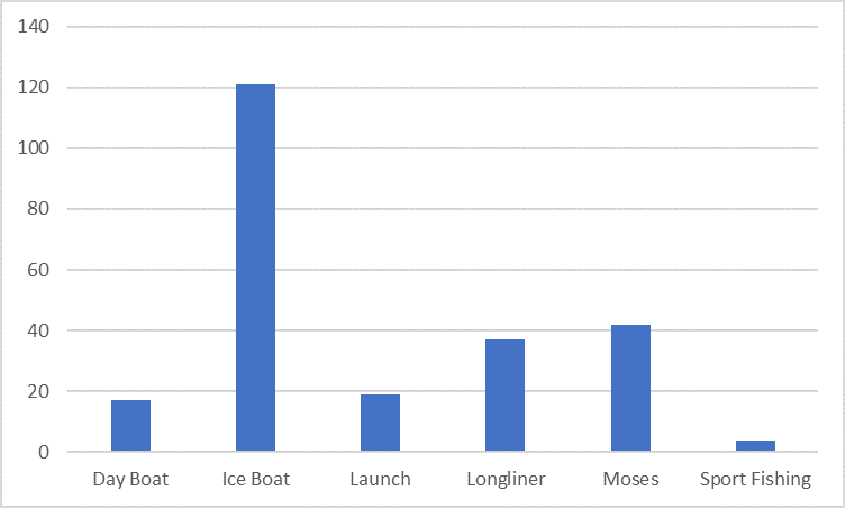
As of August 15, 2024, a total of 240 boats were affected by Hurricane Beryl, directly impacting an estimated 800 persons connected to these vessels. Of these, 176 boats sustained structural damage, while 64 were confirmed by surveyors as total losses—damaged beyond repair. Pictured is the number of boats affected at the Bridgetown Fisheries Complex, Ice boats were the most affected (121), followed by moses boats (42), with longliners (37), launches (19), day boats (17), and sports fishing vessels (4) also impacted. (Data from the Barbados Fisheries Division – Fisheries Sector Damage Assessment Report 2024, Page 2, Figure 2.)

The reduced number of operational vessels has had downstream effects on those who rely on steady fish supplies.

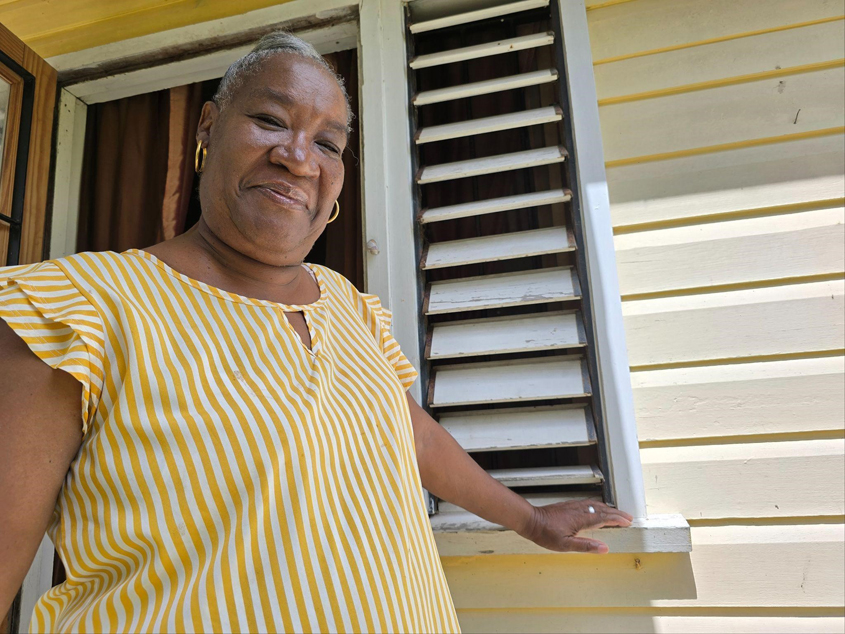
Fish vendor and Secretary at the Barbados National Union of Fisherfolk Organizations (BARNUFO), Kerry-Ann Howell-Browne always showed up in her apron, boots and head covering, ready to tackle the catch of the day. But after Hurricane Beryl hit, she had to leave her gear behind- instead, she sits and wonders when things will go back to the way they were. The storm sank two of the boats she worked with, and the other was under repair.

As vessels remained out of operation for extended periods, reduced fishing activity also affected fish availability, raising broader concerns about the stability of local food security.
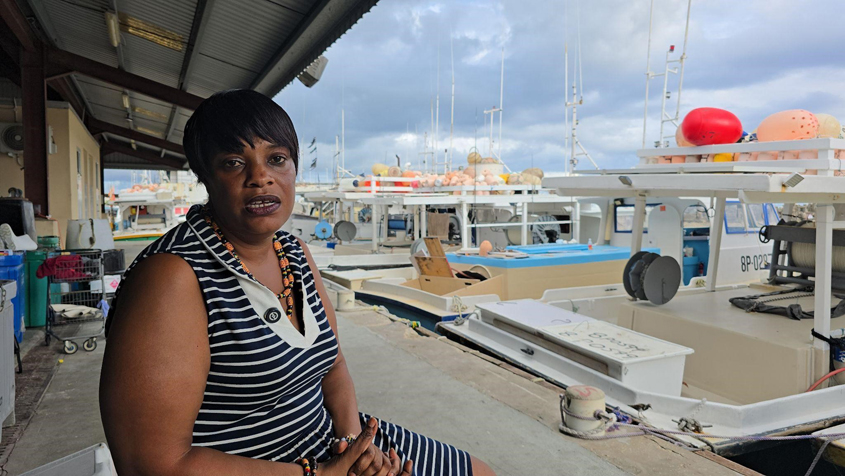
Fish vendor and Secretary at the Barbados National Union of Fisherfolk Organizations (BARNUFO), Kerry-Ann Howell-Browne, relates the difficulties all fisherfolk feel after Hurricane Beryl. (Photo by Esther Jones)

“After a disaster like Beryl, when we get fish, we try to get it off as quickly as possible but then sometimes fish right now is not selling as you would like it to. The boats are not bringing as much as they used to,” Kerry-Ann says as she passes many empty stalls.

“Climate change comes into play right now because some fish are not coming like the way they used to. They have changed and the fishermen now have to change with the climate,” she explained.
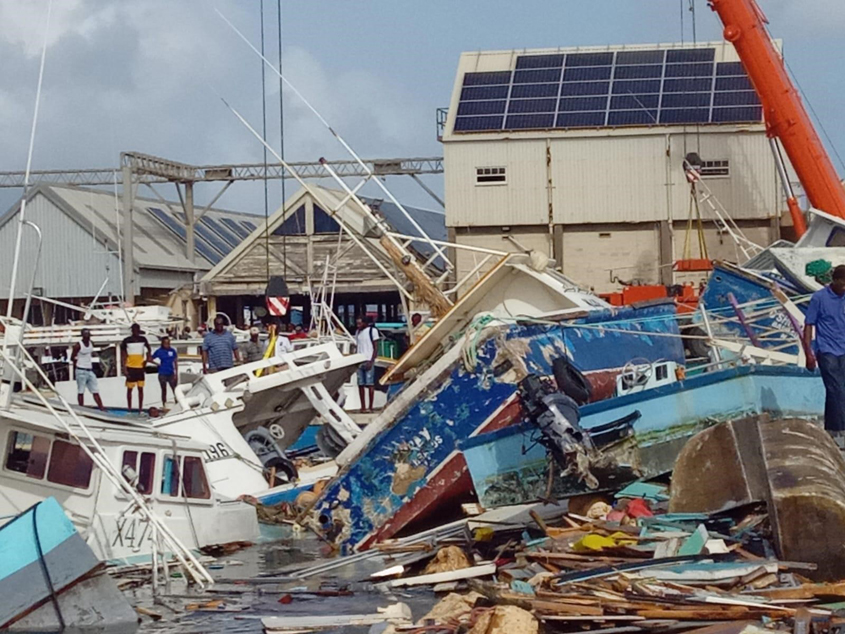
The destruction of fishing vessel at the Bridgetown Fisheries Complex following the passage of Hurricane Beryl. (Photo courtesy of Shevon Bourne)

President of the Barbados National Union of Fisherfolk Organisations (BARNUFO), Vernel Nichols, also said Hurricane Beryl inflicted unprecedented damage on the fisheries sector, unlike anything she had ever seen before. She also stressed that rebuilding public trust will be an essential consideration as the industry considers possible changes to its operations following customer concerns about fish prices.

“When we have fish, and we access the fish, we put them out on the market. I know a lot of the public has been crying out for the fish prices, and I am trying to work with the fisherfolk to see what is the issue and look at the issue of pricing,” Nicholls explained.

To address this, BARNUFO launched metrology training for vendors to improve weight estimation and transition to regulated scales that display weights to both buyers and sellers. 

She believed these improvements would help rebuild confidence in the local fish market. Recovery, however, also depends on the level of financial assistance that fishers can access.
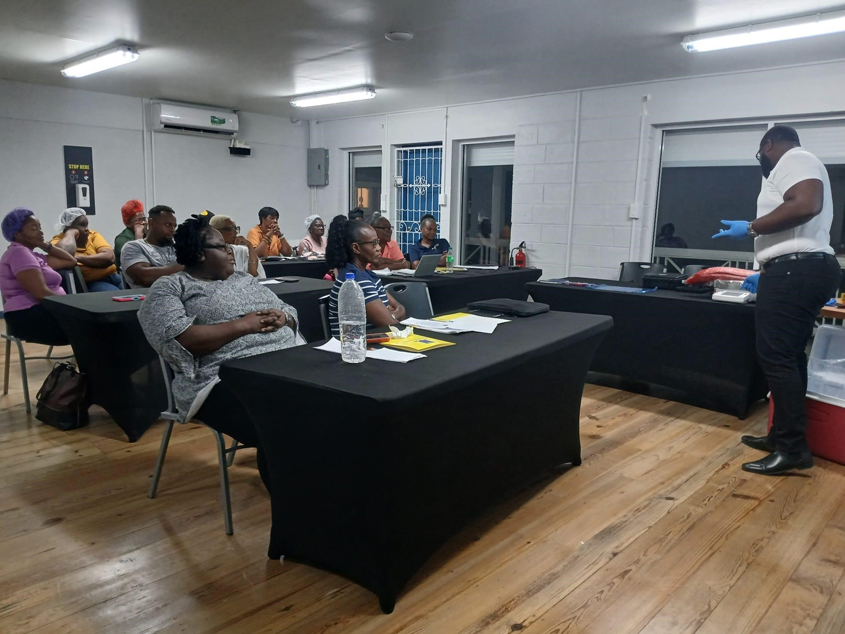
Trainer Damien Prescod (standing) conducts a metrology session for fish vendors as part of a series of capacity-building workshops organised by the Barbados National Union of Fisherfolk Organisations (BARNUFO). (Photo courtesy of Vernel Nichols)
BARNUFO President, Vernel Nichols. (Photo by Esther Jones)

That support came from several agencies after Beryl, including the Government of Barbados, the World Food Programme, the Red Cross, the World Bank, and the Japanese government, which provided financial assistance to fisherfolk.

Boat owners (boat agents) received three monthly payments of BBD $1,500 each through the Hurricane Beryl Fisheries Support Programme, launched by the Barbados Government in collaboration with the UN World Food Programme (WFP).

Fish vendors were granted a single cash transfer of BBD $1,800. A  Business Interruption Benefit was also extended to boat owners whose vessels remained under repair, providing about $2,000 per month, along with similar benefits for crew members. 

Additionally, Prime Minister Mia Amore Mottley announced a grant covering 25% of the cost of new boats or repairs, supported by a $500,000 donation from the CAF Development Bank of Latin America and the Caribbean.

To date, over $3.7 million has been disbursed to fisherfolk, including $2.75 million in business interruption benefits.

The Barbados Red Cross, to boost assistance to fish vendors, donated cash and vouchers totalling $232,200 BBD to 129 fish vendors and 15 fishermen, along with fish-pot materials valued at $24,874.93.

The Japanese Government provided US$2.9 million in funding assistance to the fisheries sector through the Barbados Coastal Fisheries Resilience Project.
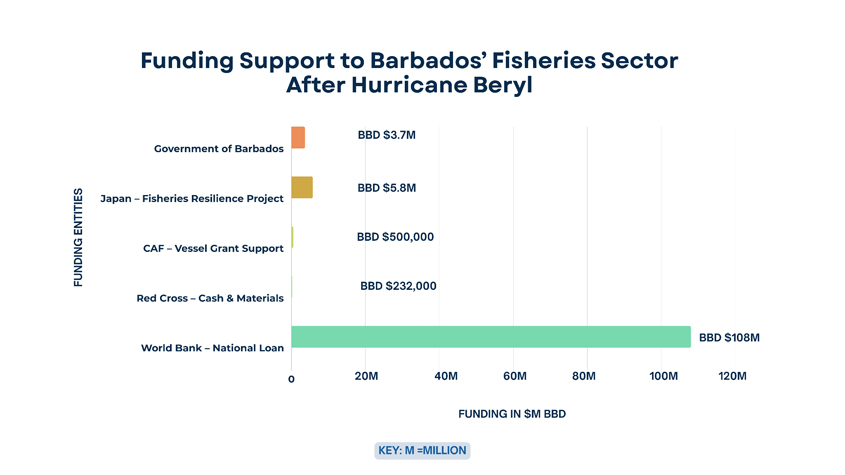
A breakdown of funding support provided to Barbados’ fisheries sector after Hurricane Beryl, showing contributions from government, international partners, and NGOs. (Graphic designed by Gabrielle Williams)

However, Delbert Forde, boat owner and Vice President of the Bridgetown Fisherfolk Association of Barbados, highlighted concerns about funding assistance for fisherfolk.
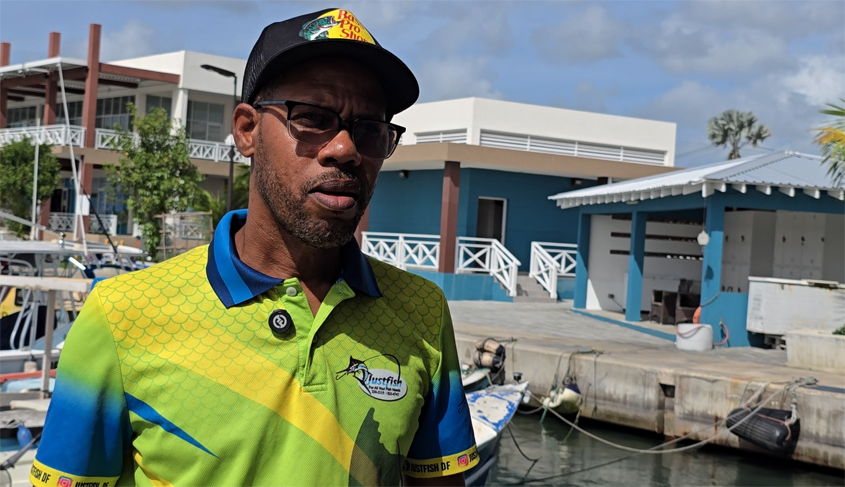
Delbert Forde, boat owner and Vice President of the Bridgetown Fisherfolk Association of Barbados, expressed concerns about how funding assistance was distributed after Hurricane Beryl. (Photo by Esther Jones)

According to Forde, some who were not active in the industry still received aid while those who desperately needed it did not, noting vendors were particularly dissatisfied after promises of three months of payments were reduced to a single one.

“Vendors weren’t pleased in the way the fundings were dealt with. It was told that people who paid NIS will get funding first. Fishermen will get X amount of money for three payments, and the vendors will get the same three months as well.

“What happened then is in the process of all of that, it changed. The vendors got one payment, and the fishermen got all of their payment. The vendors were promised X amount in the same order, and that was changed in the process,” he claimed.

The financial strain forced many, including Forde, to “dip into savings”.

The BARNUFO President, Vernel Nichols, also shared these concerns and suggested that the Government needed to build trust with organisations that work on the ground with the people who serve as distributors of funds.

“There should always be checks and balances that are put in place to support accountability, and because BARNUFO is the National Organisation for fisherfolk, BARNUFO would have to put the necessary things in place to ensure that each organisation is accountable and that they know who their people are,” she said.

A survey for this article was distributed through trusted fisher organisations, NGOs, and government channels, and responses were gathered from 24 participants. While this is a small sample, the feedback offers a useful indication of the challenges fishers faced when seeking recovery support after Hurricane Beryl.

Among the respondents, 14 reported receiving some form of assistance; however, their responses show uneven access to support, with both the amounts received and the waiting periods varying widely.

Most of the 14 said they waited more than two months before any funds were released, while only a few received help within several weeks.

Taken together, these responses provide a snapshot of how recovery support was accessed and the timelines involved during the post-Beryl period. Several formal requests were made for updated official figures on Hurricane Beryl recovery funding; however, no information was provided by the time of publication, leaving some aspects of the funding picture still undefined.
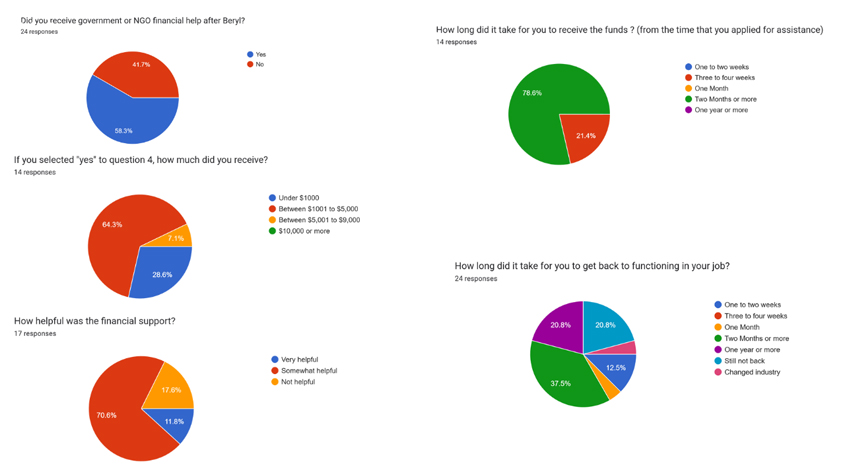
Survey responses from 24 fisherfolk indicate uneven access to recovery assistance after Hurricane Beryl, with vast differences in the amounts received and the time it took for funds to be delivered.

Alongside these individual experiences, officials outlined several measures introduced to support the wider sector.

Chief Fisheries Officer Dr Shelly-Ann Cox said the post-Beryl response included a business interruption benefit, a vessel repair rebate, and cash assistance from the Red Cross and the World Food Programme.

Under the vessel replacement project, boat owners with total losses will receive a 25% government grant and access to a financing scheme to cover the remaining 75% of the cost to replace their boats.

Cox shared that the government provided the funding assistance, and the World Bank provided a 54 million US loan, which she said went beyond the focus on fisheries.
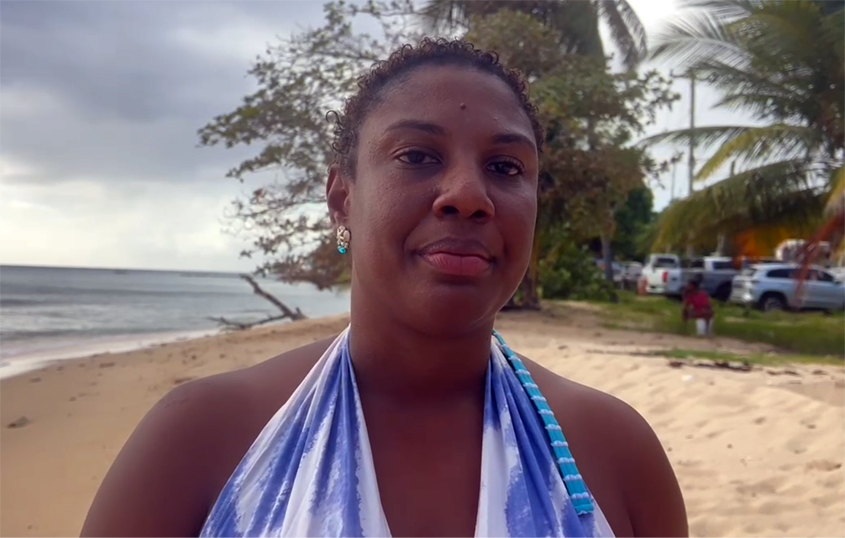
Shelly-Ann Cox
Chief Fisheries Officer, Dr. Shelly-Ann Cox (Photo by Tré Greaves)

“There will be some coastal protection works here at Six Men’s as well as at Paynes Bay. Our colleagues at the Bridgetown Port, as well, had significant damage, so the project funds will support that. The Department of Emergency Management (DEM) will get support for early warning systems and to enhance their information platform,” she said.

Cox noted that the government has already paid out more than $7 million in interruption benefits and relief, with continued support for captains, crew members, boat owners and fish vendors.

However, Beryl identified gaps in protocols for fish markets, aquaculture, and processing facilities, especially after storm surge damaged ice boxes and equipment. As a result, the fisheries plan is being updated to include all subsectors, not just vessel safety.

She also warned that climate variability was producing stronger, more intense weather events, adding that infrastructure such as the Bridgetown harbour must be strengthened.

This article forms part of the Caribbean Disaster Preparedness Project, a six-month fellowship programme led by the Public Media Alliance (PMA), with support from the UNESCO Caribbean Office and the UNESCO International Programme for the Development of Communication (IPDC).

The project brought together 12 fellows from Barbados, Grenada and Trinidad and Tobago, consisting of journalists, producers and content coordinators who, over the last few months of the programme, had opportunities to develop and test storytelling tools in the field, sharpening their skills in data journalism, and working together on disaster preparedness stories relevant to their communities.

This story was produced through research conducted by the Barbados Team, comprising Ashada Joseph, Tré Greaves, Esther Jones, Kristojay Paul, and Gabrielle Williams.

Roger Springer, Jeremy Payne awarded bravery medals

0

It was no ordinary day on February 11, 2024. According to Roger Ricardo Springer, the sea appeared very angry. Just a few hours later, he and his friend, Jeremy Adrian Payne, would be fighting to save the lives of sea-bathers at Queen Street beach, St Peter. Their efforts resulted in the rescue of four individuals. But, sadly, one young man drowned, swallowed by the boisterous waves which had seemed intent to take the lives of those who had simply set out to enjoy a day at the beach.

Their acts of bravery led to the two water sports operators shaking hands with President The Most Honourable Jeffrey Bostic, when the newly installed President presented awards and bestowed honours on those who were recognised in their respective fields during the annual Independence Day Ceremonial Parade at Kensington Oval on November 30. They both received the Barbados Bravery Medal.

Recalling that day, Roger, who said that he always loved the sea and as a child frequented Brandon’s Beach, which was a few minutes away from his childhood home at Deacon’s Road, St Michael, described the day as “a sad one”.

The current resident of Road View, St Peter, told Easy: “I remember I was on the job at Cobblers Cove Hotel, St Peter, where I work as a water sports operator. It was just after lunchtime when a guest at the hotel ran over to the water sports shop and told us someone was drowning. I had to run from Cobblers Cove to Queen Street beach, some 130 metres away. By the time I got there, a local guy had already drowned.

Elderly couple

“I saw an old kayak nearby, grabbed it and paddled out. There were an elderly couple and a single lady nearby. I reached her first and assisted her. She then said that she was okay and would make it back to shore. When I got to the couple, who were visitors, they were fatigued. The gentleman said he saw the local guy but that he could not help him.”

Roger, 55, said the swells were vehement that day and that it took about 25 minutes to get the couple out of the ocean.

He was joined by Jeremy, who, after hearing that his friend had gone out on his own to save lives, rushed to the scene. With a surfboard in hand, the two fought the waves.

“Jeremy came out with his surfboard. When he saw what was happening, we decided to tie the surfboard to the kayak. He pulled; I paddled. When I saw the body of the guy who had drowned, it was not a good feeling. His body was going to the north, and there was nothing we could do for him. We could not let go of the living to go to him,” Roger said.

“When we reached shore, I told Jeremy I was going to look for the young man. We came back to the shore after spending about 12 minutes looking for his body. We realised it was a risk for us. It was only Jeremy and I who were helping these individuals. Many people were taking photos, but no one else helped on that day,” Roger recalled.

Jeremy, 64, of Queen Street, Speightstown, St Peter, still lives with that day constantly in his memory.

“It was rough and there were hazardous conditions. In fact, some say it was rough, but I say it had gone passed rough. The sea like it was very upset,” he said.

“I came down to go surfing. When I asked where Roger was, as he was not at the water sports shop, I was told he had gone to save somebody from drowning. I remember grabbing my surfboard and taking off like plane. I saw that Roger was in difficulty. It took me about three minutes to get out there and 25 minutes get back because the currents were unbelievably strong. The sea was dashing you about like you were a piece of trash. It was not the best morning in the world, but I was happy to help.

“After the ordeal, I felt like my blood sugar was very low. I was very exhausted. We saved four persons that day and one drowned. That was hard for me because I had met the guy that drowned a few weeks earlier, when he was employed by a company that was carrying out construction work at the hotel.”

The friends said it was not the first time they had saved people from drowning. Each is always ready to take action to save lives when any sea bather is in distress, as there is no lifeguard based on that beach.

“I go through a lot dealing with hundreds of guests each year,” Roger, the father of six, said.

Jeremy, who is married with two children, is just happy to know that his days as a boy scout, when he learned how to swim well, continue to pay off – especially in a crisis.

Encouraged

The friends had slightly different emotions about receiving the awards.

“I do not feel excited about it so much because someone died. I will always remember that day. For a long time after the incident I didn’t sleep well. When I found out I was going to be recognised, it did not move me. But Jeremy told me it was something good. My girlfriend also encouraged me to accept the award. We were not trying to be heroes that day. Since then, I went out three times in one day to rescue people at Queen Street Beach,” Roger said.

Jeremy said he was happy to meet Barbados’ new Head of State.

“I was happy to meet the new President, The Most Honourable Jeffrey Bostic. I am pleased that he was a soldier and I also admired the way he handled things during COVID-19. It was a proud moment for me.”

Medals for their bravery or not, these two just know they have a responsibility as responsible citizens to save lives whenever duty calls. (CH)

CIBC Caribbean assists with completion of Richard Stoute Amphitheatre

0

The Richard Stoute Amphitheatre at the National Botanical Gardens is now moving closer to completion following a major financial contribution from CIBC Caribbean.

On Wednesday, December 9, the bank made a BDS $1.2 million donation through its Comtrust Foundation to support construction of the amphitheatre and further development of the National Botanical Gardens.

The presentation took place at CIBC Caribbean’s head offices in Warrens.

During the event, the bank also marked 105 years of banking in Barbados with the presentation of a red flame glass award to Prime Minister Mia Amor Mottley.

The award was presented by President and Chief Executive Officer of CIBC, Harry Culham, who was visiting Barbados for the occasion. The presentation was witnessed by outgoing President Victor Dodig and Chief Executive Officer of CIBC Caribbean, Mark St. Hill.

The BDS $1.2 million contribution was presented by St. Hill and witnessed by Culham and Minister of Finance Ryan Straughn.

Accepting the donation, Prime Minister Mottley highlighted the bank’s role in national development.

“CIBC has firmly established itself as a true example of a private sector partner that understands the importance of working together for national development. They have been a key partner in our two debt swaps, our debt-for-nature swap and our debt-for-climate swap which will assist in upgrading the South Coast sewerage treatment plant into a modern water reclamation facility.”

She added: “Today they reaffirmed their commitment to our national development with a BDS$1.2 million donation for the completion of the Richard Stoute Amphitheatre in the National Botanical Gardens.”

St. Hill reaffirmed the bank’s long-standing commitment to Barbados and the region.

“Much has happened in Barbados and in the region over the last one hundred and five years, but the fact that CIBC has continued to work and serve the people of this region is testimony to our continued commitment.”

He also noted the cultural significance of the project.

“We are also aware that Richard Stoute has been an icon in this country and the amphitheatre will not only be a tribute to him but to all the other hard-working entertainers that he has mentored over the years, and those to come who are following in their footsteps. We are pleased to be a part of its creation.” (PR)

Winter season well poised to take off

0

Tomorrow’s official start of Barbados’ 2025/2026 tourism winter cruise season marks the beginning of a year with an encouraging outlook for the performance of the bedrock of the Barbados economy.

With projections for increased activity in most tourism sectors during the coming year, Minister of Tourism and International Transport Ian Gooding-Edghill says he remains “quietly encouraged for next year, based on the acknowledged success of the current year and the strong positive indications for the coming year”.

Sharing his plans with the Sunday Sun, Gooding-Edghill said: “In 2026 and beyond, we will be seeking to expand airlift into Barbados, with the implementation of Phase 2 of our airlift strategy. We are going to focus on expanded airlift from Canada, Manchester and Europe, in addition to other key gateways.”

He observed that Phase 1 of that strategy was already responsible for increased air seat capacity from the United States, with the return of American carriers Delta and American Airlines coming out of key US gateways, as well as the return of Copa Airlines from Latin America, which is an important source of airlift for a market which Barbados has been working to grow.

Marketing push

Gooding-Edghill added that key marketing activities and incentives would be implemented to increase visitor arrivals during the summer months, a period when arrival numbers have traditionally dropped. He announced as part of his 2026 policy initiatives the appointment of two new overseas Barbados Tourism Marketing Inc. (BTMI) directors in the first quarter of the year to boost promotion in markets Barbados was now targeting.

“We have appointed a director for Africa and the Gulf States, who will reside in Kenya, with satellite offices in Ghana and the UAE . . . . A second BTMI external director will be appointed for Asia and the Pacific to be located in China, with supporting staff and facilities deployed to cover this extensive market.

“It is intended that our presence in these emerging markets will result in significant exposure of the Barbados brand through intense marketing and personal interaction with the travel trade to increase visitor arrivals from those markets.”

Even as he works at positioning Barbados more strongly in the global tourism arena, Gooding-Edghill expressed awareness that those plans could be derailed by external forces, saying: “You will have to continuously monitor the geo-political landscape, the economies of our major source markets and consumer confidence and skilfully respond to any shocks that come our way in a timely manner.”

Stay-over bump Reporting to the Barbados Hotel and Tourism Association (BHTA) membership last week, chairman Javon Griffith shared statistics which showed an increase in the number of stay-over visitors for 2025, which exceeded the pre-pandemic, highperformance year of 2019.

He also noted that cruise tourism had rebounded “appreciatively”, with passenger numbers trending upwards and airlift across the island’s source markets growing exponentially.

Griffith urged continuing airlift advocacy and the protection of and continuing focus on the growth of Barbados’ tourism in the US.

He advised securing and promoting the reinstated KLM airline service out of the Netherlands, while exploring the possibility of expanded European connectivity, as well as targeting tourism opportunities from Africa and the Middle East.

From an accommodation perspective, the BHTA chairman envisioned a 2026 with expanded hotel plant such as the Royalton Vessence, a Blue Diamond Resorts hotel on the West Coast due to open on July 1, 2026, and the Hotel Indigo on the South Coast, scheduled for a January 2026 opening.

He said these two hotels and others, either to be built or completed over the next two years, formed part of a massive plan that represents “well over US$1 billion in hotel and related real estate development”.

Against this background, the BHTA head projected a “cautiously optimistic” outlook for 2026.

He anticipated “modest single-digit growth in stay-over arrivals, contingent on stable economic conditions in source markets”, for the coming year while hailing the Minister of Tourism for his tireless efforts that resulted in new and returning airlift.

BTMI is ramping up its marketing, taking Barbados’ message to potentially new markets around the globe.

Chairman Andrea Franklin said the BTMI’s targeted sales and marketing approach across all markets was a “focus on building and maintaining airlift; reconnecting to its travel trade community and promoting a vibrant cultural calendar of events resulting in favourable forward bookings”.

She was “very optimistic” that the island would see positive growth in visitor arrivals in the 2025/2026 winter season and said her team engaged all stakeholders industrywide in a consultation last month to bring everyone up to date on planned improvements at the island’s two ports of entry, in anticipation of the increased traffic expected to be passing through both points.

More than 800 000 cruise passengers are expected and more than 400 cruise ship calls are scheduled for the Bridgetown Port during the 2025/2026 winter season.

Local cruise tourism specialist Martin Ince, the chief executive officer of Foster & Ince, anticipates a “strong season going right up to the second week of April”, based on the bookings. However, he said there would be “no cruise ships visiting Barbados during next year’s summer season”.

“In fact, there are no cruise ships coming south of Antigua during the summer. We have known this for a little while because, obviously, the cruise ship schedules are done far in advance,” Ince said.

In the past, Barbados received summer calls at the Bridgetown Port from the popular Carnival cruise line, which ceased during the COVID-19 pandemic.

That southern Caribbean Carnival rotation has since been discontinued, with Carnival ships being repositioned to the northern Caribbean.

Royal Caribbean, which was doing a two-week rotation to the southern Caribbean during the 2025 summer season, has also been repositioned to the northern Caribbean.

However, though Ince said the loss was “disappointing, he said “the good thing is that the summer of 2027 will see a lot more traffic down our way”. He anticipated it would be “the largest number of cruise ships Barbados will be seeing in the summer in a very long time”.

The veteran cruising expert said Barbados was seeing “a fair share of new ships” visiting during the winter season. (GC)

Australia: 11 killed in shooting at Sydney’s Bondi Beach

0

Two gunmen opened fire at Sydney’s Bondi Beach on Sunday, December 14, killing 11 people and wounding multiple others in a “terrorist incident” during a gathering for the Jewish festival of Hanukkah.

Emergency responders rushed another 29 people to various hospitals from the beach, one of the biggest tourist draws in Australia’s largest city, said New South Wales police. One of the alleged shooters was killed, and the second was in critical condition, police said.

Police declared the shooting a “terrorist incident” and revealed they had found suspected “improvised explosive devices” in a vehicle near the beach that was linked to the “deceased offender.”

“This is a targeted attack on Jewish Australians on the first day of Hanukkah, which should be a day of joy, a celebration of faith – an act of evil, antisemitism, terrorism that has struck the heart of our nation,” Prime Minister Anthony Albanese said in a televised address. “An attack on Jewish Australians is an attack on every Australian.”

The shooting took place during an annual “Hanukkah by the Sea” event in the afternoon at Bondi Beach.

“We heard the shots. It was shocking, it felt like 10 minutes of just bang, bang, bang. It seemed like a powerful weapon,” Camilo Diaz, a 25-year-old student from Chile, told AFP at the scene. Crowds fled in fear from the beach in eastern Sydney, which draws huge numbers of surfers, swimmers and tourists, especially at weekends.

Emergency services first responded to reports of shots being fired at 6:45pm local time, New South Wales police said.

Israeli President Isaac Herzog condemned it as a “cruel attack on Jews” and urged the Australian authorities to step up the fight against antisemitism.

EU chief Ursula von der Leyen said she was “shocked” by the shooting. “Europe stands with Australia and Jewish communities everywhere. We are united against violence, antisemitism and hatred,” von der Leyen, the European Commission President, wrote on X. “This appalling act of violence against the Jewish community must be unequivocally condemned,” added EU foreign policy chief Kaja Kallas.

French President Emmanuel Macron said that France would fight “relentlessly against antisemitic hatred” as he extended his condolences. “France extends its thoughts to the victims, the injured and their loved ones,” Macron said in English on X. “We share the pain of the Australian people and will continue to fight relentlessly against antisemitic hatred, which hurts us all, wherever it strikes.”

The grassy hill overlooking Bondi Beach was strewn with discarded items from people fleeing too fast to pack up, including an abandoned children’s stroller, an AFP journalist at the scene said.

Paramedics tended to multiple people lying on the grass by the beach, images broadcast by public broadcaster ABC showed. A weapon that appeared to be a pump action shot-gun was lying by a tree by the beach.

A British tourist told AFP he saw “two shooters in black” after the gunfire broke out. “There was a shooting, two shooters in black with semi-automatic rifles,” Timothy Brant-Coles told AFP, saying he saw multiple people who had been shot and wounded.

Another witness, 30-year-old local resident Harry Wilson, told the Sydney Morning Herald he saw “at least 10 people on the ground and blood everywhere.”

Bondi Beach’s local Waverley Council said it was “deeply saddened” by the attack. “Our thoughts and prayers are with anyone who has been impacted by this horrendous act, which occurred as Chanukah festivities were taking place,” a spokesperson for the council said. (Le Monde)

Watson slams Growth Fund Bill

0

Attorney and consumer advocate Tricia Watson has called Government’s proposed Economic Diversification and Growth Fund alarming and not acceptable, saying it is being established to “give our money to substantial foreign companies”.

Watson shared her concerns via social media on Friday as the Economic Diversification And Growth Fund Bill, 2025 was under consideration in the House of Assembly. The legislation was later passed following a debate led by Minister in the Ministry of Finance Ryan Straughn.

The legislation seeks to “establish a fund, to be known as the Economic Diversification and Growth Fund, to provide financial support to certain companies to increase employment, earnings of foreign exchange and economic growth in Barbados”.

It will be capitalised by an initial $225 million “to be drawn from the Consolidated Fund over a three-year period in annual instalments of $75 million”.

“The purpose . . . is to provide financial support to qualifying companies to increase employment and contribute to economic growth. The commitment to the earning of foreign exchange is going to be absolutely critical with respect to this as it relates to the jobs,” Straughn said.

“So, companies obviously will have a real and substantive economic presence in Barbados, in order to be able to be considered, to be qualified, with respect to the fund.

Watson charged that Government had rushed to Parliament with this major law “while you are distracted by Christmas activities”.

“This was laid in Parliament on Tuesday, December 9, 2025, and is being debated on Friday, December 12, 2025. When it is passed in the Senate and assented to by the President it will go into effect immediately, no requirement for proclamation,” she said.

“The money in the Consolidated Fund is our hard-earned money or money that we will have to repay to lenders using our hard-earned money.”

One of the issues Watson had with the legislation was that certain terms were not properly defined, including “real and substantial economic presence” and “real and substantial economic activity”.

“When you look at the provisions that set out how a company can go about getting money out of this fund, there is no rigour required. There is a committee that will look at applications to get money out of the fund and make recommendations to the minister, and monitor to see if the people receiving money from the fund [are in] compliance,” she said.

“But there is little detail about the information that the company will have to provide, or what the company will have to prove in order to get our money.”

Watson added: “There is no requirement to provide financial information, no requirement for shareholder information and no ‘fit and proper’ requirement for directors and other officers of the company, no requirement for the company to prove that it is in good standing in other places where it operates.” The attorney said these were “the minimum requirements that should be in place for any company getting public funds. “To make matters worse, it says that the minister may enter into the agreement with the company for disbursement of the money. “In Barbados, ministers are not empowered to contract for the Government. This bill and the fund are utter nonsense. They do not meet the standard that is set out for handling public funds that are set out in our own laws. “There is no clarity on whether monies disbursed are grants – and therefore, don’t have to be repaid, or, if the disbursements are loans, nothing is said about repayment.” Watson also said that “there is no requirement for the Government to disclose who has applied for our money”. “There is no requirement for the Government to disclose who will get our money. There will be no accountability for what happens with this fund! This is ridiculous!” she said.

“This is not acceptable. I don’t care what party you support. I don’t care how much money you have or you do not have – this is not okay.” (SC)

Natural Resources Ministry in Guyana urges miners to stop paying workers in raw gold

0

 The Ministry of Natural Resources has strongly urged miners across Guyana to cease the practice of paying workers in raw gold, warning that the illegal method of compensation undermines transparency, weakens gold declarations, and exposes workers to exploitation and unsafe practices.

The call was made during a high-level meeting convened earlier this week  by the Ministry of Natural Resources in collaboration with the Guyana Gold and Diamond Miners Association (GGDMA).

In a statement, Minister of Natural Resources, Vickram Bharrat, reiterated that all workers in the mining sector must be paid through lawful financial channels in keeping with labour and tax laws.

 He also reminded miners that it is illegal to allow what is commonly referred to as the “Blai box,” stressing that gold may only be used in transactions with approved buyers and the Guyana Gold Board. 

The ministry indicated that inspections will be increased and employers found in breach will face penalties.

During the engagement, Bharrat further emphasised the Government of Guyana’s firm commitment to ensuring that the country’s mineral resources are managed responsibly, transparently, and in strict accordance with the law.

As part of a strengthened enforcement approach, several enhanced measures were identified and are to be implemented immediately. 

These include tighter oversight of licensed gold dealers and traders, with intensified audits of purchasing records, verification of gold source declarations, and routine compliance checks. 

Dealers found facilitating undeclared gold transactions or failing to meet reporting requirements risk sanctions, including the suspension or revocation of their licences.

The ministry also announced a significant scale-up in field operations across mining districts to curb illegal mining. 

These efforts will focus on ensuring compliance with environmental, safety, and production reporting standards, while targeting unauthorised mining activities.

Additionally, agencies under the ministry’s purview have been directed to intensify the seizure of illegal mining equipment, particularly machinery operating without proper documentation or within prohibited areas. 

This forms part of what the ministry described as a zero-tolerance stance against activities that undermine national mining regulations.

To further strengthen enforcement, multi-agency operations will be expanded, involving the Guyana Geology and Mines Commission (GGMC), the Guyana Police Force (GPF), the Guyana Defence Force (GDF), and other relevant agencies. 

These joint operations will focus on identifying, arresting, and prosecuting individuals and groups engaged in illegal mining.

Miners were also strongly urged to sell gold only to the Guyana Gold Board or licensed dealers, a move the ministry said is critical for maintaining accurate national production data, promoting fair trade, and ensuring the sector’s benefits are properly accounted for. (CMC)

Sammy’s stinging verdict: Batsmen must “stand up” after Wellington wobble

3

 A visibly frustrated West Indies head coach Daren Sammy dissected another damaging collapse, labelling his team’s nine-wicket defeat to New Zealand in the second Test as a case of “two steps backwards.”

The tourists, utterly outplayed inside three days at the Basin Reserve, were skittled for 205 and a paltry 128, leaving the Black Caps a trivial target.

While the bowlers shared the wickets in New Zealand’s first innings, with fast bowler Anderson Phillip finishing with four in the match, the batting frailties were terminal.

Shai Hope’s 47 and John Campbell’s 44 were the highest scores of a dismal collective effort, leaving Sammy to draw a painful parallel with a past failure on New Zealand soil.

“It shows every time we try to take a step forward, we take about two steps backwards,” Sammy stated. “It takes me back to 2013, where we drew the Test in Dunedin, came here, and lost inside three days. It’s just the consistency that we’re looking for.”

The coach pinpointed a familiar foe: a failure to seize crucial moments. “We keep getting ourselves in good positions, but little moments switch the momentum, and in this Test match, once we lost the momentum, we lost it for a long period of time.”

While praising a relentless New Zealand attack that “answered the call,” Sammy’s sharpest criticism was reserved for his own batting line-up. He delivered a blunt assessment of their failure to support a battling bowling unit.

“In a team, you want people to step up when needed the most. In this Test match, nobody stood up for us,” he said. “When you have runs not coming from the number seven and the number five positions, it puts a lot of pressure on the rest of the team. The bowlers are doing their job. It’s not the bowlers’ fault. I think it’s the batsmen that have to take more responsibility.”

Sammy pointed to the fighting draw in the first Test in Christchurch as the blueprint, proof that resilience changes their complexion entirely.

“You’ve seen in the first Test, when we take responsibility, and one or two people put their hands up and dig deep, we look like a different side.”

The West Indies will take on New Zealand in the third Test at Mount Maunganui, starting on Wednesday. (CMC)

CTUSAB supports new minimum wage

0

The Congress of Trade Unions and Staff Associations of Barbados (CTUSAB) has welcomed the announcement by Minister of Labour, Social Security and Third Sector Colin Jordan of a new national minimum wage and a revised hourly rate for security guards, saying it reflected Government’s commitment made when wages were last adjusted in June 2025.

In a statement, CTUSAB noted that “Government at that time promised a further two per cent increase as of January 2026, thus, effectively establishing a new general rate of $10.71 per hour and that of $11.66 per hour for security guards.”

The trade union body said its position on wage increases had been consistent. It recalled comments made by its president, Ryan Phillips, at a press conference on May 13, 2025, following the proposal of a new minimum wage earlier that year.

At the time, Phillips said: “It is to be expected that any upward adjustment in the minimum wage would enable the most vulnerable to have access to the decent living wage.”

CTUSAB said that statement underscored its support for increases in both the national minimum wage and sectoral wage rates. However, it stressed that wage adjustments must be closely linked to the rising cost of living.

“The institution has stated that it maintains that an increase in the minimum or sectoral wage must bear a relation to the escalating cost of living, that is simply borne out in the high food prices, the cost of goods, services, health care, utilities, transport and doing business,” the statement said.

CTUSAB argued that Government’s recent economic performance should allow for more substantial wage increases for vulnerable workers.

“CTUSAB contends that given the declaration made by the Government that it realised a bounty in the last financial year and, moreover, that it has recorded 17 consecutive quarters of economic growth, this should position the Government to be able to share a greater piece of pie with vulnerable workers.”

According to the union body, there is a disconnect between Government’s fiscal claims and the level of wage increases.

“Government’s share of the economic pie is therefore inconsistent with its pronouncements of its fiscal performance, which speaks to both surpluses in both the overall and primary balance.

“This, along with the claim of a strong economic performance as this relates to GDP growth, leads to an expectation that the Government can provide a more realistic increase in the national minimum wage rate,” CTUSAB said.

The organisation also pointed to the wider public sector, adding: “It is now left to be seen how the Government will treat to rewarding the public officers of Barbados, who have been tasked with doing the heavy lifting, towards ensuring the restoration of the economic and fiscal stability of Barbados.”

(PR)

Every cent will be accounted for, says PM

1

Prime Minister Mia Amor Mottley is stoutly defending the contents of the Economic Diversification and Growth Fund Bill, making it clear there will be no investment or subsidies given to any foreign company that does not significantly expand employment in Barbados by providing more than 100 jobs and earn foreign exchange for the Barbados economy.

She also said these companies will pay tax at nine per cent and not the reduced rates of 2.5 per cent declining to 1.5 per cent that existed previously.

In a statement yesterday to this newspaper, Mottley said the Bill was designed and would be implemented with clear objectives – to protect and grow jobs, enhance foreign and domestic investment and grow the economy for all Barbadians.

‘Plainly political’ “A lot has been said publicly about it, much of it highly emotional and in some cases plainly political. I understand why some people may feel uneasy or a bit confused when they hear only the loudest voices, but once we slow down and look at the facts, a clearer and more balanced picture emerges,” she said.

The Prime Minister said it was important to note that Barbados and Barbadians would be the net beneficiaries from the operations of the fund.

“It has been designed for the country and its citizens to win, not lose, in an increasingly hostile global environment for small states,” she said.

Mottley added: “At the same time, local companies continue to benefit from a number of supports. As mentioned before, small businesses enjoy much lower taxation at 5.5 per cent. In addition, where applicable, they have ready access to supportive entities such as the Industrial Credit Fund, the Agricultural Development Fund, the BEST Programme for Tourism and the Small Hotels Investment Fund, to mention a few.

“On the issue of governance and administration, the system could not be stronger, nor the process more transparent and independent. The legislation makes it clear that every cent taken into the fund and subsequently spent will be accounted for.

“The fund is administered by the Accountant General and audited by the Auditor General. The Advisory Committee is extremely broad-based and includes key public servants and members of the private sector. The minister acts on the advice of both this committee and the National Growth Council, all of whose members are outside of Government and the partisan political class. These are the clear guardrails that have been put in place to protect the public interest.”

The Prime Minister said that at the end of the day, this Bill was about saving real jobs and securing new ones, while maintaining and improving the instruments the country already has for local companies to benefit in tangible ways.

Unacceptable

She noted that under the previous Democratic Labour Party administration, foreign international business companies (IBCs) were taxed at a rate of 2.5 per cent or less, while local companies were taxed at 25 per cent. This arrangement, she said, was considered by international regulators to be unacceptable “ring-fencing” in favour of foreign companies and it placed local companies at a significant disadvantage in their own country.

The Mottley Administration, she said, addressed this imbalance.

“Today, local small business companies are taxed at 5.5 per cent, while all other companies – foreign and local – are taxed at nine per cent. Foreign entities now pay a much higher rate than they previously did,” she said.

However, she pointed out that if Barbados does not take other steps to keep itself attractive to foreign investors, it stands to not only lose companies already operating here, but could also become unattractive to new investors.

“Simply put, if we do not act now and act decisively, hundreds of jobs could be lost and millions of dollars in tax revenue wiped from our revenue streams. So the question becomes: what can we, as Barbadians do to encourage foreign companies to invest in Barbados without risking blacklisting or undermining our tax policy under OECD [Organisation for Economic Cooperation and Development] rules?

“Our courageous tax reform has already brought substantially more revenue. More will come this year and next year. We have shared part of this with Bajans. We must, however, also reserve a portion of this to remain competitive and attract significant businesses and sectors to attract more jobs for Bajans and to earn foreign exchange to keep our economy stable,” she said.

Mottley said the answer was to design a policy that strikes a careful balance – one that maintains the country’s reputation as a globally competitive investment jurisdiction, while staying firmly within acceptable international norms on taxation.

“The reality is that the old days of granting foreign companies tax concessions to artificially reduce their tax liability are over,” she said.

The Prime Minister further stated that the Bill was designed to address that specific challenge.

“It augments the options available to us to keep Barbados attractive for investment that earns foreign exchange, creates jobs and still provides tax revenue for the country,” she said.

Beneficial

“We have had to move to an option like this for foreign companies but even so, we have ensured that local companies with a foreign presence can also benefit. Other local companies will continue to benefit in different ways through existing mechanisms.”

Regarding the contents of the Bill, Mottley said to those who believed this was not the right time to do this, “we simply say, there is no wrong time to do the right thing for Barbados and Barbadians”.

(CM)