Wednesday, May 6, 2026
Home Blog Page 4

Three dead in suspected virus outbreak on Atlantic cruise ship

0

Three people have died after a suspected hantavirus outbreak on a cruise ship sailing in the Atlantic Ocean, the World Health Organization (WHO) has told the BBC.

One case of Hantavirus has been confirmed, with five more suspected cases under investigation, it said. One British national is reportedly in intensive care.

The outbreak was reported aboard the MV Hondius cruise ship, which was travelling from Argentina to Cape Verde.

Hantavirus infections are usually linked to environmental exposure, such as contact with urine or faeces from infected rodents, but in rare cases can spread between people, leading to severe respiratory illness.

Foster Mohale, a spokesperson for South Africa’s health ministry, earlier told the BBC that at least two people had died.

The MV Hondius is run by Dutch-based tour company Oceanwide Expeditions.

According to an itinerary on the Oceanwide Expeditions website, MV Hondius departed from Ushuaia in Argentina on 20 March and was expected to complete its journey on 4 May in Cape Verde.

South African authorities told the BBC the first person to show symptoms was a 70-year-old passenger who died on board. His body is now on the island of Saint Helena, a British territory in the South Atlantic.

His 69-year-old wife also became ill on board and was evacuated to South Africa, where she died in a Johannesburg hospital.

A 69-year-old Briton was also reportedly evacuated to Johannesburg, where he is being treated in intensive care.

According to Oceanwide Expeditions, MV Hondius is a 107.6m (353ft) long polar cruise ship, with space for 170 people in 80 cabins.

WHO also said it was helping co-ordinate between member states and the ship’s operators for the medical evacuation of two symptomatic passengers, as well as a full public health risk assessment and support for those still on board.

It has described the outbreak as a “public health event”. (BBC News)

Fogging Schedule: May 4 to 8

The Vector Control Unit will concentrate its mosquito reduction programme in St. George next week.

On Monday, May 4, the Unit will focus on the following districts: Bourne’s Village, Locust Hall Terrace, Locust Hall No.1, Applewhaites, Roach Village, Paradise, Paradise Village Nos.1 and 2, Market Hill, Jericho, and environs.

The next day, Tuesday May 5, it will be the turn of Bridge Cot, Market Hill, Belair, Bridge Cot Terrace, Cottage Link Road, Cottage Heights, Cottage Crescent, Grove Terrace, Grove Tenantry Road, and surrounding areas.

The team will visit Belair, Market Hill, Bridge Cot, Cottage Court West, Coral Austin Avenue, Newbury Heights, Country Road, No.2 Avenue Newbury and Woodale, Taitt Hill, and neighbouring districts on Wednesday, May 6.

The Unit will go into Workmans, Free Hill, Hope Estate, Salisbury, and Briggs Hill on Thursday, May 7.

The fogging exercise for the week will conclude on Friday, May 8, in Taitt Hill, Rock Hall, Walkers Terrace, Walkers View, Glebe Gardens, Walkers, Workmans, and Upright Street.

Fogging takes place from 4:30 p.m. to 8:30 p.m. daily. Householders are reminded to open their windows and doors to allow the spray to enter. Children should not be allowed to play in the fog.            

The public is advised that the completion of scheduled fogging activities may be affected by events beyond the Unit’s control. In such circumstances, the Unit will return to communities affected in the soonest possible time. (BGIS)

BARJAM calls for FOI and media safety

0

The Barbados Association of Journalists and Media Workers is urging greater safety for journalists, responsible use of artificial intelligence and the introduction of Freedom of Information legislation, as it marked World Press Freedom Day 2026.

In a statement, the association said press freedom remains “a key pillar for peace and security”, while warning about the risks journalists face when covering crime. 

The full statement follows:

As the Barbados Association of Journalists and Media Workers (BARJAM) observes and celebrates this World Press Freedom Day 2026, we reflect on the theme ‘Shaping a future at peace’.

Without a doubt, press freedom continues to be a key pillar for peace and security, not just in a global context but for us in Barbados and the region as well.

While we may not typically find ourselves in active warzones, unfortunately many of us have felt the impact of a different type of warfare on our streets and in our communities with the scourge of gun crime. As Government, police, the defence force and ordinary Barbadians continue to play their respective roles in responding to the troubling situation, we continue to urge journalists covering crime scenes to exercise the utmost caution. We urge our fellow media workers to be always guided by the Barbados Police Service in the effective and safe reporting of such incidents.

Additionally, as we acknowledge our responsibility as gatekeepers of the facts to shape a peaceful future based on truth, BARJAM uses this opportunity to urge the responsible use of AI as an assistive tool. We must preserve the focus on the matters of human interest and good news. We must also continue to embrace our role in this new media age, as the Bonafide sources that our citizens turn to, to ensure the information they encounter in the digital space is true and accurate.

At the same time, we will not miss this opportunity to once again make an impassioned appeal to the Government of Barbados to make Freedom of Information Legislation a reality and to make it a priority for this new parliament. Some of our CARICOM neighbours have already made the important move and we should be next.

We believe a Freedom of Information Act will only serve to complement Government’s ongoing efforts to modernise and improve planned Integrity legislation, and perhaps more importantly, create a dedicated framework of transparency and accountability for all of our public institutions. Ultimately, this can only serve to boost public confidence and knowledge about the operation of our public systems into the future.

US threatens shipping firms with sanctions if they pay Iran tolls

0

The US has warned shipping companies they could face sanctions if they pay Iran for safe passage through the Strait of Hormuz.

An alert on Friday by the US Office of Foreign Assets Control (OFAC) warned US persons and companies were generally banned from paying Iranian government entities, and non-US persons may risk exposure to sanctions if they pay.

“Maritime industry participants involved with vessels calling at Iranian ports face significant sanctions risk under multiple sanctions authorities targeting Iran’s shipping sector and ports”, OFAC said.

Iran has severely limited traffic through the strait since the war began in February. The US has also enforced a naval blockade on Iranian ports.

Iran has called the US interception of ships entering and leaving Iranian ports under the blockade “piracy”.

Tehran says it has collected tolls from ships in order to navigate freely through the strait, with Hamidreza Haji Bababei, deputy speaker of Iran’s Parliament, last week claiming the first toll revenue had been deposited with the country’s Central Bank.

No further detail was provided on the amount of the toll, the method of collection nor who paid it. The BBC could not independently verify this claim.

OFAC’s alert said payments could involve cash as well as “digital assets, offsets, informal swaps, or other in-kind payments,” including charitable donations and payments at Iranian embassies.

The agency warned that non-US persons who pay could also face civil and criminal enforcement liability if payments cause US persons, such as insurers and financial institutions, to violate sanctions.

OFAC said it “will continue to aggressively target Iran’s main revenue-generating sectors, in particular its petroleum and petrochemical sectors”.

The US Treasury also announced sanctions on three Iranian foreign currency exchange houses on Friday, saying they have converted oil revenue into more usable currencies.

Treasury Secretary Scott Bessent said his agency would “relentlessly target the regime’s ability to generate, move and repatriate funds, and pursue anyone enabling Tehran’s attempts to evade sanctions”.

After the US and Israel attacked Iran on 28 February, Iran has been targeting and striking ships passing through the Strait of Hormuz, including seizing two of them.

The US has also enforced a naval blockade since 13 April, stopping all ships from travelling to or from Iranian ports. Trump had hoped the blockade would put pressure on Iran by targeting its revenue from the tolls and oil sales.

US Central Command (Centcom) said on Friday that 45 commercial ships have been told to turn around since the blockade began.

About 3,000 ships typically pass through the strait each month, but that number has dropped sharply to just a handful each day.

The strait is a crucial shipping channel for oil and other goods including food, medicines and technological supplies.

UNHCR, the UN refugee agency, said on Friday that the closure of key maritime routes has forced the use of longer and more expensive alternatives to transport aid.

Higher transport and fuel costs “disproportionately affect people in emergencies”, including refugees and displaced people, the agency said.

The cost of delivering aid to Sudan, entering its fourth year of war, has doubled in recent months, as rerouting shipments around the Cape of Good Hope in South Africa adds up to 25 days in delivery time.

The UN agency said it has adapted quickly by rerouting sea cargo and relying more on land corridors. But it warned that “if instability in the Middle East persists, rising costs, delays and limited transport capacity are likely to constrain humanitarian operations further.”

The US and Iran began a fragile ceasefire on 8 April. Since then, the two countries have held talks, but no long-term deal has been reached.

Iran gave mediators in Pakistan a proposal to end the war on Thursday night, according to Iran’s state-run IRNA news agency. However, US President Donald Trump has responded negatively to the proposal.

“They want to make a deal, I’m not excited, so we’ll see what happens,” Trump said on Friday.

He added: “Because they have no military left, essentially. I’m not sure if they ever get there.”

The president did not give details about the proposal or explain why he was not satisfied, but said: “They’re asking for things that I can’t agree to.”

He also voiced frustration with Iran’s leadership, saying: “It’s a very disjointed leadership. They all want to make a deal, but they’re all messed up.”

After Iran’s Supreme Leader Ali Khamenei was killed in US and Israeli strikes on the first day of the war, his son Mojtaba Khamenei succeeded him. However, decision-making seems less centralised than it was before the war.

On Thursday, Trump said he was briefed on options for Iran ranging from “blast the hell out of them and finish them forever” to “make a deal”.

The conflict began after the US and Israel carried out wide-ranging strikes on Iran in February. Iran responded by launching attacks on Israel and US-allied states in the Gulf.

The US and Israel said Iran was trying to develop a nuclear bomb, which Tehran has strongly denied. (BBC News)

CBU head bemoans lack of access to information laws

0

As Barbados marks World Press Freedom Day today, president of the Caribbean Broadcasting Union (CBU) Anthony Greene says the country must move to enact longdiscussed freedom of information legislation, pointing to what he described as a critical gap in the national governance framework.

Greene, in a statement issued to coincide with the observance, said while Barbados continues to benefit from a strong democratic tradition and a generally free media environment, the absence of a comprehensive legal structure guaranteeing the public’s right to information remains unresolved.

“As we mark World Press Freedom Day, we are reminded that Press freedom is not only a global concern, but a national responsibility,” he said, adding that the issue must be examined within the Barbadian context.

He noted that long-running discussions on access to information laws have not yet resulted in implementation, leaving Barbados behind several Caribbean territories that have already established formal legislative frameworks.

“One of those gaps is the absence of comprehensive access to information legislation,” he said. “Despite previous commitments, Barbados still lags behind many of its Caribbean neighbours in establishing a formal legal framework that guarantees citizens’ right to information.

“That is not a small issue. It goes to the heart of transparency, accountability and public trust,” he added.

Greene, who is also General Manager of Starcom Network Inc., acknowledged that policy discussions had often centred on the need to modernise data governance systems before introducing such legislation, but said that approach should no longer delay progress.

“There have been arguments that the country must first modernise its data governance framework before introducing such legislation. While that is an important consideration, it should no longer be a basis for continued delay.

“Strengthening data systems and advancing access to information are not mutually exclusive, but must proceed together if we are serious about transparency in a modern, digital society.”

The CBU president also addressed the broader role of the media within the democratic process, noting that structural support for journalism remained essential. “At the same time, we must reaffirm the critical role of an independent media in sustaining a strong democracy.”

He pointed to shifts in communication practices, including the growing use of direct messaging by institutions and officials, but said these developments do not replace the functions performed by professional journalism.

“The work of the media to question, verify, provide context and hold power to account, must never be discounted,” he stressed.

Greene said the current information environment, shaped by rapid digital dissemination and increased volumes of unverified content, placed additional demands on both media practitioners and public institutions.

“At a time when misinformation is rising and media systems are under increasing strain, access to timely and accurate public information is more critical than ever,” he said.

He added that ensuring such access was not only a matter of principle, but also required systems which facilitate the consistent flow of reliable information to journalists and the public.

“Press freedom must be supported not only by principle, but by practical measures that enable journalists to do their work effectively and responsibly.”

Greene said Press freedom should be understood as one that extended beyond media organisations, encompassing the rights of citizens to be informed.

“Ultimately, Press freedom is about the public’s right to know. Strengthening that right in Barbados will require both the continued protection of media independence and meaningful progress on long-promised reforms that empower citizens and reinforce trust in our institutions.”

World Press Freedom Day was proclaimed by the United Nations General Assembly in 1993, following a recommendation by UNESCO. It is observed annually on May 3 to raise awareness of the importance of freedom of the Press, to remind governments of their duty to respect and uphold the right to freedom of expression, and to honour journalists who have faced threats or lost their lives in the line of duty. (CLM)

CDB appoints Gillian Charles-Gollop as vice president, corporate services

The Caribbean Development Bank (CDB) has appointed Gillian Charles-Gollop as Vice President, Corporate Services, effective May 1.

Charles-Gollop brings more than 30 years of experience in banking and financial services, with a track record spanning corporate and investment banking, governance, strategic planning, and risk management.

 The Bank said her leadership combines innovation with disciplined execution, supporting its focus on operational excellence and strong financial stewardship.

She most recently served as Executive Director for Corporate Banking and Sustainable Finance at CIBC Caribbean, where she oversaw a regional corporate and sovereign credit portfolio exceeding six billion U.S. dollars and helped advance the institution’s sustainable finance agenda.

Her career has also included leading major financing and advisory transactions across the Caribbean, including infrastructure, renewable energy, utilities and telecommunications projects.

A national of St.  Lucia, Charles-Gollop has earned recognition for her leadership in risk management, operational performance and client service. 

President of the Caribbean Development Bank, Daniel M. Best, said the appointment comes at a critical time for the institution.

“Gillian’s appointment strengthens CDB’s leadership team at a pivotal time,” he said. “Her strategic insight, deep financial expertise, and strong commitment to the region’s advancement will be invaluable as we continue to enhance financial management, mobilise resources, and support sustainable development across our borrowing member countries.”

In her new role, Charles-Gollop will provide oversight of the Bank’s corporate services functions, with responsibility for strengthening internal operations and supporting the institution’s broader development mandate.

The CDB said her appointment will help advance its mission of promoting inclusive growth and sustainable development across the Caribbean. (CMC)

Economists raise questions about over-reliance on sector

Barbados’ economic stability is dangerously over-reliant on tourism and could quickly unravel if that sector falters, economist Professor Troy Lorde has warned.

Reacting to the Central Bank of Barbados’ first quarter review last week, he said the headline figures, while positive, tell only part of the story, pointing out that growth remained heavily concentrated in a single sector.

His colleague at the University of the West Indies Cave Hill, Professor Don Marshall, described the recent performance as a “remarkable stabilisation achievement”, but cautioned that the country had yet to achieve meaningful economic transformation.

Expansion

Central Bank Governor Dr The Most Honourable Kevin Greenidge on Wednesday reported that the economy grew by 1.7 per cent in the first quarter of 2026, resulting in 20 consecutive quarters of expansion, with inflation at 1.1 per cent and unemployment at 7.2 per cent.

Tourism again drove much of that performance, supported by increases in both stay-over and cruise arrivals, along with continued activity in construction and services.

Lorde said the Central Bank’s latest report masked a deeper structural imbalance in the economy.

“The rest of the economy is lagging . . . . Tourism is essentially the economy right now,” he said, noting that while the sector expanded by more than three per cent, overall growth was just 1.7 per cent, implying that other sectors grew at roughly one per cent or less.

“That tells you the structure is still very dependent and very imbalanced. If tourism is not doing well, that stability narrative would disappear.”

He added: “That 1.7 per cent is a headline figure. It doesn’t tell the story.”

He explained that Barbados’ dependence on tourism left it highly exposed to external shocks, particularly as leisure travel was discretionary and driven by global economic conditions.

“When people don’t feel confident about their finances, they don’t travel. That is the nature of tourism, so we need other sectors that can function when tourism is not firing.”

Marshall, head of the Sir Arthur Lewis Institute of Social and Economic Studies, said while the combination of steady growth, low inflation, falling unemployment and improved fiscal balances reflected sound economic management, the underlying structure of the economy remained largely unchanged.

“This is not diversification in any meaningful, developmental sense. It is sectoral deepening within an already narrow structure,” he said, pointing out that growth continued to be concentrated in tourism, construction and services, with investment largely tied to real estate and tourism-related activity.

External demand

He said Barbados remained locked into a model that depends on external demand, one that “exports experiences and imports necessities”.

Both economists also raised concerns about the disconnect between official data and the realities facing households.

Lorde questioned whether the low inflation rate of 1.1 per cent reflected actual cost-of-living pressures, arguing that increases in essential goods and services were often masked within broader price indices.

“Inflation is made up of a number of items . . . but the things people have to buy – food, rent, transportation – did those only go up by one per cent? Probably not,” he said.

Marshall noted that rising costs in key areas such as transport, health care and education were being felt disproportionately, even as overall inflation remained subdued.

“Low aggregate inflation masks the reality that cost-ofliving pressures are concentrated precisely where households feel them most,” he said.

On the fiscal side, Marshall acknowledged Government’s success in restoring discipline, with a strong primary surplus and declining debt levels, but questioned whether those gains were being used to fundamentally reshape the economy.

“This raises a crucial question: what kind of investment is being prioritised, and whom does it serve?” he asked, stressing that fiscal prudence without structural change risks reinforcing existing economic dependencies.

Lorde took issue with the continued reliance on tax concessions and incentives to attract investment, adding that such measures could undermine Government’s ability to fund essential services.

“If your model can only succeed on the back of concessions and reduced taxes, then you’re putting pressure on the Government to provide education, health care and everything else with less revenue,” he said.

Both agreed that diversification remained the central challenge, with Lorde pointing out that responsibility must be shared between Government and the private sector.

“The Government has to send signals, but investors and entrepreneurs also have to take risks,” he said.

Marshall said Barbados must move beyond a narrow focus on macroeconomic stability and pursue a model centred on productivity, resilience and economic sovereignty.

“Stabilisation was necessary; it was not sufficient,” he said, warning that without meaningful change, the country risks remaining in a “low-diversification, high-debt equilibrium”. (CLM)

Govt dismisses DLP claims of threat to national sovereignty

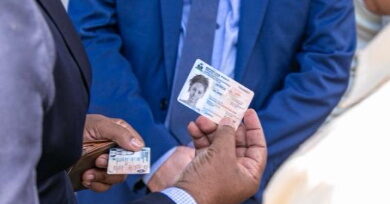
A heated clash has erupted over the reintroduction of the Barbados Citizenship Bill, 2026, and Immigration Bill, 2026, with Government dismissing Opposition criticism as “ridiculous” and ill-informed, but the Democratic Labour Party (DLP) warning the measures could undermine national sovereignty and the integrity of the Barbados passport.

Minister of Home Affairs Gregory Nicholls fired back at DLP spokesperson Corey Greenidge within hours of the party’s statement yesterday, accusing him of showing “a lack of understanding of the parliamentary process”. He insisted that the legislation was properly returned to Parliament to continue unfinished work before a Joint Select Committee.

However, Greenidge is charging that the process is a “political buffer” and argued that despite public consultation, the core provisions of the bills were unchanged, raising serious concerns about fasttracked citizenship and its potential impact locally and internationally.

The bills, which seek to repeal and replace existing laws on citizenship and immigration, were reintroduced in the House of Assembly last Wednesday. They were initially proposed in October 2025, just months before the February 11 General Election, but referred to a Joint Select Committee following public outcry.

In a statement yesterday, Greenidge, DLP spokesperson on legal affairs, office of the Attorney General and Home Affairs, contended that the committee process was merely a “political buffer” used to quiet dissent during the election season. He noted that despite submissions from civil society and professionals regarding employment, social services and national security, the core provisions of the bills remained the same.

“The only reasonable conclusion is that the committee process was never intended to meaningfully reshape the bills,” he stated.

“It served as a way to diffuse public concern during the election period . . . . That is not consultation in any meaningful sense. It is political gamesmanship.”

Central to the DLP’s concerns is a proposed drastic reduction in the time required to obtain citizenship. Under the current Barbados Citizenship Act (Cap 186), naturalisation typically requires seven years of lawful residence, a process the DLP describes as one of “gradual and deliberate” integration.

Under the proposed new legislation, however, citizenship could be obtained after as little as 180 days (six months) of residence for CARICOM nationals, and 270 days (nine months) for others.

The opposition party warned that when read in conjunction with the proposed Immigration Bill, which introduces a points-based system for permanent residence favouring financial resources and property ownership, the laws create an accelerated pathway to citizenship.

“Individuals with sufficient financial means can strengthen their eligibility for permanent residence through their economic footprint alone,” Greenidge argued.

“This creates a system where financial capacity becomes a factor that can materially accelerate access to permanent residence, which in turn accelerates access to citizenship.”

He highlighted the potential international repercussions of the reforms, specifically citing recent actions by the United Kingdom and Canada to impose visa restrictions on Dominica, and St Kitts and Nevis, due to concerns over citizenship-byinvestment programmes. While the new bills do not technically constitute a citizenship-by-investment programme, Greenidge, an attorney, warned that the “fast-track” nature of the legislation could be perceived similarly by international partners.

“Barbados currently enjoys one of the strongest passports in the region . . . . That privilege is not automatic. It is based on trust. If citizenship becomes too accessible, particularly where financial pathways are involved, the passport itself becomes a potential back door into [international] borders.”

The party cautioned that the Mia Amor Mottley administration was engaging in a “calculated gamble” with the reputation of the Barbados passport, risking the withdrawal of visa-free access to major global destinations.

However, Nicholls, who reintroduced the bills, reiterated that submissions made to the Joint Select Committee would still be under review.

“Mr Greenidge has demonstrated a lack of understanding of the parliamentary process,” he said, pointing out that the committee never concluded its work before the election was called.

“So, therefore, this ridiculous statement from the Democratic Party shows that they don’t understand the political process when Parliament is dissolved. All bills and all the processes of Parliament are ongoing in respect to any legislation that has not been completed . . . . So, therefore, the bills were brought back by Government to continue that process before a joint parliamentary select committee,” he stated, adding that submissions previously made would be considered and new one could also be made.

“The Government signalled its intention once we had won the election to bring back the bills that were before the joint parliamentary select committee. All the pieces of legislation that were before the parliamentary process will come back in the same form that they were. It would be disingenuous for Government to change the bill when that process was not completed. I would hope that the Democratic Labour Party would not do what it did at the last joint select committee; that is, not attend any meetings.”

Regarding the DLP’s concerns about wealthy individuals being able to cement their eligibility for citizenship, Nicholls also dismissed them.

“There is no evidence that the provisions in the bill will allow Barbados immigration system to be overwhelmed with people of wealth. That is an alarming statement being made before any real tangible evidence of that happening or what provision in the bill will allow our system to be overwhelmed by people of wealth. Indeed, what is wrong with people who have means coming to invest in Barbados, invest in industry, invest in development of human capital and to invest in the development of the Barbados economy?

“Mr Greenidge’s statement again notes that he has a profound ignorance of the mechanics that will allow the Barbados economy to be able to sustain a level of growth and to maintain a quality of life and a standard of living that Barbadians have become accustomed to . . . .” the Minister stressed. (MB)

Four remanded in major cannabis and firearm seizure

Four men have been remanded to prison following a major drug and firearm seizure by police.

This Content Is Only For Subscribers

Please subscribe to unlock this content. Enter your email to get access.
Your email address is 100% safe from spam!

Bubba’s Restaurant celebrating 30 years

0

Bubba’s Sports Bar and Restaurant is celebrating 30 years in business, having opened its doors on April 26, 1996, to an enthusiastic crowd, comprising Barbadians and visitors alike.

Located at Rockley, Christ Church, and offering tasty meals for breakfast, lunch or dinner in a relaxed atmosphere, Bubba’s is where you can kick back and enjoy all the major sporting action live via two satellite dishes, on three 10-foot screens and 20 additional LED televisions.The atmosphere and ambience will draw you back time and time again, as you relax and celebrate special occasions or just enjoy an ordinary dining experience with your loved ones.

On this milestone occasion, owners George and Liza Elias, along with senior management extend thanks to all staff – past and present, customers, and business partners — for their dedication and commitment over the years. (CH)