Home Blog Page 41

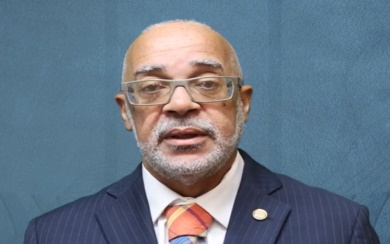
Jules re-appointed as OECS director general

0

Organisation of Eastern Caribbean States (OECS) leaders have approved the reappointment of Dr. Didacus Jules to a fourth term as Director General, reaffirming its confidence in his leadership and continued commitment to advancing the OECS integration agenda.

According to a statement issued here, the decision to re-appoint the St. Lucian-born Jules, who first assumed office in 2014, was taken during last weekend’s OECS summit in Antigua and Barbuda, where the leaders of the sub-regional grouping “commended Dr. Jules’s distinguished service and significant contributions to regional development, cooperation, and institutional strengthening over the course of his tenure”.

The statement said that Jules has played a pivotal role in advancing key regional priorities, including food sovereignty, digital transformation, healthier communities, and educational reform, while strengthening the OECS’s capacity to respond to emerging challenges and opportunities facing member sates.

St. Vincent and the Grenadines Prime Minister Dr. Godwin Friday in a statement recognised  Jules’ strategic “vision, dedication to public service, and commitment to fostering deeper regional integration and sustainable development throughout the Eastern Caribbean.

“”The (reappointment) decision reflects the confidence of the Authority in your leadership and acknowledges your valuable contribution to the advancement of the OECS integration agenda and the continued strengthening of the Organisation.

“On behalf of the OECS Authority, I extend sincere congratulations on your reappointment and look forward to your continued service and dedication to the people and Governments of the OECS member states,”  Friday added.

The OECS groups the islands of Antigua and Barbuda, Dominica, Grenada, St. Lucia, St. Vincent and the Grenadines,  St. Kitts and Nevis, Montserrat, Anguilla and the British Virgin Islands. (CMC)

BARP sounds caution

0

Not only does the Barbados Association of Retired Person (BARP) not support the call for retired returning nationals to pay towards their own health care cost, but the organisation is also requesting empirical data on why such a call was made in the first place.

In a statement, BARP acknowledged the increasing use of the health care system and the potential strain on its infrastructure in the wake of debate on the Barbados Medical Products Bill, 2026 earlier this month in the House of Assembly but said there was misperception about that segment of the population.

“The association notes that many returning Barbadians live on modest, fixed incomes that have been significantly affected by global inflation. As a result, they are often incorrectly perceived as being financially secure,” the release said.

“BARP further points out that members of the Barbadian diaspora have historically contributed to national development through investments in real estate, the payment of property taxes and ongoing financial support to relatives through remittances.”

During the debate on June 16, Member of Parliament for St Philip North Dr Sonia Browne said while she might get some “licks” from the public, there were returning nationals among the people who go to the polyclinics that “never contributed to our system, never paid NIS (National Insurance) in our system but are happy to sit down with a book in the polyclinics for hours to get free medication that somebody else pays for”.

“I think it is time, as I said with the exceptions, that some of these individuals are required to contribute to the cost of drugs. It is only fair and it can lend to less burden on it and hundreds of people visit the polyclinic on a daily basis,” said Browne, a former minister of state in the Ministry of Health with responsibility for the Queen Elizabeth Hospital.

“It would lend to the burden of the medication, the cost could go to some other part in medicine but I think it is about time that we have a look at that, or relook at it, so that they will lend to the cost of it.”

BARP president Marilyn Rice-Bowen acknowledged the challenges facing the sector but sounded a note of caution.

“We cannot support policies that create unequal tiers of citizenship. It is difficult to justify providing access to publicly-funded healthcare services for foreign nationals under regional agreements while denying similar access to Barbadians who have returned home after living abroad.”

The proposed Immigration and Citizenship Bill, 2026, now before the Joint Select Committee, makes provision for CARICOM nationals working here to qualify for healthcare and education.

BARP said they have promoted better planning for personal healthcare among the membership, including the promotion of private medical insurance designed to provide another safety net for people in their 40s and 50s, reducing their dependence on the public healthcare system.

“Our objective must be to strengthen national protection and healthcare sustainability while ensuring that no group of Barbadians is unfairly excluded. Many returning nationals have contributed to Barbados in meaningful ways throughout their lives, even if those contributions were made outside traditional systems,” Rice-Bowen pointed out.

During that same debate, Deputy Prime Minister Santia Bradshaw stayed away from the call to pay but said more emphasis needed to be placed on improving the systems that impacted the day-to-day life of the ordinary Barbadian. ( PR/SAT)

BSIL head: Recent delays troubling

0

Barbados’ sugar industry has suffered a dramatic decline in production this year, with the island recording a crop approximately 30 000 tonnes lower than previous years.

Barbados Sugar Industry Ltd (BSIL) chairman Mark Sealy said this was largely caused by a delayed start to harvesting.

He also raised concerns about delayed payments to farmers.

Yesterday, Sealy warned that unless the sugar cane crop begins on time, the industry would continue to face disappointing results.

“This year is very low in comparison to previous years. One year we did 110 000 tonnes and that dropped to 100 000 tonnes another year. Last year, it was about 90 000 tonnes and we’ve dropped significantly to about 71 000 tonnes this year but that is the result of starting late,” he said.

“I keep saying it but I need to keep saying it; the crop needs to get started on February 15. We lost a reasonable amount of tonnage because canes start to rot, they go overripe and then your weight is far less and, of course, the factory is also getting poorer quality cane.”

The 2025 crop ended on June 13, with approximately 71 000 tonnes of cane delivered to Portvale Factory. Of that total, about 52 000 tonnes came from the roughly 14 farms managed by BSIL, while around 19 000 tonnes were supplied by the six farms under Agricultural Business Company (ABC) Ltd. It started in early April.

Sealy acknowledged that Portvale Factory operator Barbados Energy and Sugar Company Inc. (BESCO) faced significant challenges this season, including mechanical difficulties and industrial relations issues.

Challenges

“I recognise Portvale Factory had its challenges, both mechanical and with industrial relations and wanted to congratulate BESCO for managing the situation,” he said. However, he noted that the disruptions ultimately resulted in valuable time being lost during the crop.

While drought conditions have become a concern, Sealy stressed that weather alone could not be blamed for the disappointing yield.

“Remember last year, we had a terrible wet season. So that significantly affected the tonnage this year, besides, of course, the late start.”

He explained that successful sugar production depended on careful timing and a balance between wet and dry conditions.

“You want reasonably dry conditions during the crop because you have to get into the fields to harvest it and if it rains a lot, then you can’t get in the fields, plus you want the cane to dry out a bit. But the main thing is now that we’ve cut the cane, that we have a reasonably good wet season and consistent rainfall.”

According to Sealy, the industry’s traditional calendar exists for a reason.

“In years where there were huge amounts of sugar cane in Barbados, people started crop in January, but in more recent times, they wanted to start around February because you have to finish crop so that in the dry season, you can cultivate, then you get the wet season, which helps the ratoons to grow for the following crop.”

Germination

He added that planting ideally takes place between September and November, allowing rainfall to assist germination before the crop is harvested the following year.

“So, it’s all balancing and timing. Timing is crucial in farming and that’s the reason why these dates go back hundreds of years.”

Expanding on the delayed payments to farmers, the veteran industry official said under the agreed arrangement, farmers are paid $100 per tonne two weeks after delivery, followed by $50 per tonne at the end of July and a further payment in September. Based on the 71 000 tonnes delivered this year, approximately $7.1 million worth of cane has been supplied to the factory.

While acknowledging improvements in payment arrangements over the years, Sealy said recent delays were troubling.

“Let me first just make it clear that the timing of payments have got significantly better. Years ago, we’re talking before 2018, we would get paid a year later and that was ridiculous; farms were basically going to shut down.

“Having said that, normally, we get paid when you deliver cane one week later for that cane because, of course, the farmers need cash flow. That was put back to two weeks later, which is not too bad but unfortunately, that broke down.”

Sealy said farmers were still awaiting payment after the crop ended on June 13 and expressed hope the issue would be resolved this week.

He stressed that prompt payment was essential to allow farmers to purchase fertiliser, weedicides and other inputs needed to prepare fields for the next crop.

“We need to start on time, we need to finish on time. We need to start cultivating in the drier part of the season, we need to plant on time in September and we need to plant properly and we need, obviously, the payment on time.”

Repeating his longstanding call for earlier preparation, Sealy said: “I’ve kept on saying it, year after year, you have to start crop by February 15 and if that means that Government has to give the factory money early o’clock so that they can get the maintenance done, then they have to do it.”

Sealy said a seminar was scheduled in August by the Agricultural Research Department on how farmers could improve their husbandry to have better yields per acre, and deliver “very clean” cane to the factory, resulting in better quality molasses and sugar. (CA)

PM Mottley meets UK Prime Minister during London Climate Action Week

0

Prime Minister Mia Amor Mottley met with United Kingdom Prime Minister Sir Keir Starmer at 10 Downing Street today, where the two leaders discussed strengthening cooperation between Barbados and the UK.

The meeting, held during London Climate Action Week, focused on security, climate and clean air, tourism, investment, research and trade.

According to a statement from the Office of the Prime Minister, Mottley and Starmer also discussed closer collaboration between Barbados, the United Kingdom and the Regional Security System to combat organised crime and strengthen regional security.

Climate action also featured prominently, with the leaders discussing the need to accelerate international efforts to reduce methane emissions and other super pollutants. They also reaffirmed the importance of the Commonwealth in advancing cooperation on trade, business, security and development.

The meeting comes days after Starmer announced he would step down as Labour leader and prime minister following mounting political pressure after Labour’s poor performance in local elections and growing opposition within his party.

BUT: Public schools have resource edge

0

Comparisons between public and private schools based on Barbados Secondary Schools’ Entrance Examination (BSSEE) results are unfair, says president of the Barbados Union of Teachers (BUT) Rudy Lovell.

With this year’s results released on Monday, he argued that while both were staffed by highly-qualified teachers and follow the same curriculum set by the Ministry of Education Transformation, several factors placed public schools at a disadvantage.

Of the top 12 overall performers revealed by the ministry, only four came from public schools.

Lovell questioned whether differences in resources and parental support might explain why private schools tended to outperform public schools.

“The private schools, in our opinion, may be better resourced than the public schools,” he said, noting that public school teachers often spend significant sums of their own money purchasing teaching materials despite Government’s investment in education.

Teachers, he added, were “usually the ones who provide a lot of funding for education in Barbados” by purchasing resources for their classrooms.

Th BUT leader also pointed to stronger parental involvement in private institutions, suggesting that while parents were involved in public schools, that participation “could be greatly enhanced”.

Asked whether the performance gap reflected shortcomings in the public school curriculum, Lovell maintained that the comparison was not a fair one.

“Both schools are following the curriculum as outlined by the Ministry of Education, but there are some variables,” he noted.

As an example, he highlighted repeated closures at public schools because of environmental issues.

“When was the last time you heard about a private school being closed for environmental issues? Public schools throughout the whole school year have been closing continuously with regards to environmental issues.”

He called on the ministry to identify what it believed was contributing to the stronger performances by private schools.

“There are several other variables that may contribute to the divide between the public schools and the private schools in terms of the examination mark. I would like the ministry to tell us what, in their opinion, may be causing the private schools to outperform the public schools.”

Addressing concerns about the persistent performance gap between boys and girls, Lovell said more targeted support was needed for the males.

“I think that more can be done,” he said, suggesting that public schools should have specialised teachers in subjects such as mathematics, English and reading to better support students’ learning needs. (DDS)

Drug trafficker set to learn fate

His attorney believes that Colis Arlington Paul should not get another day in prison after being on remand for more than five years.

This Content Is Only For Subscribers

Please subscribe to unlock this content. Enter your email to get access.
Your email address is 100% safe from spam!

Oil price falls back to pre-Iran war levels

0

The price of oil has fallen to levels not seen since before the Iran war as traffic through the key Strait of Hormuz shipping route gradually resumes.

Global benchmark Brent crude briefly fell below $72.48 (£55) a barrel, the price it was at the day before the US and Israel launched attacks on Iran on 28 February, before edging up to $73.23.

Energy prices have been on a wild ride since Iran responded to the strikes by effectively closing the strait, a critical waterway for oil and gas shipments.

The cost of crude has been moving sharply lower since the US and Iran signed a Memorandum of Understanding (MOU) on 17 June which set out a 60-day period for negotiations on Tehran’s nuclear programme and other measures to end the war.

Representatives from the two sides met in Switzerland last weekend for talks to end the war, which resulted in the US partially lifting sanctions on Iranian oil exports.

The number of vessels crossing the Strait of Hormuz has risen significantly since the MOU was signed, according to maritime intelligence firm Kpler.

Its latest data suggests 284 vessels have made the transit from 18 June, the day after the deal was signed, although that is is still well below the pre-conflict average of some 138 crossings each day.

The ships passing through the waterway in recent days include those carrying crude oil, liquefied natural gas (LNG), fertiliser and other goods, Kpler told the BBC.

The US and Iran had also formed a “communication line” to prevent misunderstandings “with the aim of safe passage for commercial vessels through the Strait of Hormuz”, mediators Qatar and Pakistan said in a joint statement on Monday.

There has been a “tremendous shift” with far more ships using the strait in recent days, said Dimitris Maniatis, the chief executive of Marisks, a maritime risk advisory firm working with ships stuck in the region.

A limited number of ships can cross a northern passageway with the permission of Iranian authorities, he said.

The US navy has also provided guidance for vessels to travel through a southern route that is safe from mines and other obstacles that has been laid out since the war, Maniatis said.

But the number of ships crossing the strait is still below levels seen before the war, when it was used by more than 100 ships a day.

Hundreds of ships still appear to be waiting in the Gulf. (BBC News)

Pinnacle Feeds: No link to death of chickens

0

Managing Director of Roberts Manufacturing, Jonathan Hart, says there have been no findings linking their feed to the death of a farmer’s chickens as alleged in a social media post.

He was responded to a farmer’s public allegation that over 172 of his birds died after giving them feed from Pinnacle Feeds, a subsidiary of Roberts Manufacturing.

The individual, who did not identify himself, said he was a small farmer who now had to face the mounting financial loss. He mentioned that arrangements were made with the company for a veterinarian to investigate but the visit never materialised.

Hart said they were aware of the situation.

“We understand how serious and distressing this type of loss is for any farmer, particularly a small farmer, and we take the matter seriously. The complaint was received through our customer complaint process, a farm visit was conducted and the sample feed was tested by our quality assurance department. The results showed no unusual findings based on regulatory standards.

“We also recognise that animal health outcomes can be affected by several factors and we remain willing to work with the customer and relevant technical partners to better understand the full circumstances,” he explained in a statement.

“Any customers with any concerns are always encouraged to contact us directly so that the matter can be properly documented and investigated,” he added.

(JRN)

Venezuela twin quakes kill at least 164 with many trapped under rubble

0

A pair of powerful earthquakes that rocked Venezuela have killed at least 164 people, the country’s leader said Thursday as residents searched for loved ones trapped under rubble after many buildings were flattened within minutes.

An international outpouring of aid quickly followed the tremors on Wednesday evening, which the United States Geological Survey measured as magnitude 7.2 and 7.5, centered west of the capital Caracas.

The toll has climbed quickly, with interim President Delcy Rodriguez reporting at least 164 dead and over 970 hurt, noting that the state of La Guaira north of Caracas was hit hard.

“Right now we have nothing, not even the strength or the courage to go in there,” Larry Rojas, 49, told AFP, standing in front of a collapsed building where his family was trapped in the La Guaira city of Catia La Mar.

The coastal city was without electricity, and many residents spent the night in the streets or searching for their relatives, according to AFP reporters.

The 7.5-magnitude earthquake was Venezuela’s most powerful since October 29, 1900, when a 7.7-magnitude tremor struck offshore.

Threatening to complicate the relief effort, the international airport near Caracas was closed due to “serious damage,” Rodriguez said, with social media video showing the terminal’s ceiling collapsing over panicked travelers.

– ‘No one saving them’ –

The first quake, with an epicenter 21 kilometers (13 miles) west of the coastal town of Moron, occurred at 2204 GMT, USGS said. Within a minute, a 7.5-magnitude quake struck about 45 kilometers away. They struck at depths of 22 kilometers and 10 kilometers, respectively.

Scores of rescuers were deploying from the United States and several European countries, while specialists certified by the United Nations were also on their way to help search for survivors, Rodriguez said.

Other nations including China, India, Brazil and even war-battered Iran offered help.

“We have a whole-of-government response. It’ll be big, it’ll be fast, and it’ll be effective,” US Secretary of State Marco Rubio told reporters during a visit to Bahrain, saying his country’s military would play a “big logistical role.”

Washington is closely involved in oil-rich Venezuela after US forces captured president Nicolas Maduro in January.

Many residential buildings in La Guaira were left with large cracks or collapsed walls, with dozens of others destroyed.

“There are people alive in there and no one is coming to save them,” said a woman waiting for news of her daughter, who was buried in the rubble of a 12-story building.

Interior Minister Diosdado Cabello asked people to leave their homes, adding that gas supplies had been cut to some buildings as a precaution.

“We have some damaged structures and we don’t want any kind of accident involving gas to occur,” he said.

In Caracas, the quakes sent residents fleeing into the streets.

“The stairs came away, the whole wall cracked. Things fell from the ceiling. It was horrible,” said 54-year-old bank employee Odalis Escalona.

A 22-story building was completely destroyed in the capital’s Altamira neighborhood, where people cried out relatives’ names as volunteers climbed over the rubble.

“We need flashlights,” one of them said.

– ‘We couldn’t get out’ –

Shoppers at a Caracas mall screamed in panic when the quakes hit.

“It was unbelievable, I don’t even know how long it lasted,” said shopkeeper Heidi Romero, who was on the top floor at the time.

Carmen Guedez, 69, who lives in a hilly middle-class neighborhood above Caracas, was with her bedridden sister when she felt the jolts.

“It kept getting stronger,” she told AFP. “I started to see the windows begin to move and then everything shook.”

She described how she “huddled together” with her sister and a neighbor, adding that “we couldn’t get out.”

The states of Trujillo, Carabobo, Miranda and La Guaira were the hardest hit, according to Cabello.

The quake was felt as far away as the Colombian capital of Bogota, where alarms sounded and some residents evacuated buildings as a precaution.

Freddy Tovar, coordinator of Colombia’s National Seismological Network, said authorities had received more than 200 reports of tremors nationwide.

The strongest tremors in earthquake-prone Venezuela’s recent history occurred in the northeast in 1997, killing 73 people, and in Caracas in 1967, when 236 people died. (AFP)

Major blow to West Indies as Shai Hope ruled out with injury

0

Shai Hope has been ruled out of the first Test match for West Indies against Sri Lanka at the Sir Vivian Richards Stadium in Antigua due to a left shoulder strain. 

Cricket West Indies (CWI) updated earlier this morning that Hope sustained the injury during Tuesday’s final training session ahead of the series opener. They did not outline how the injury occurred but indicated that further assessments will be conducted to determine the batter’s availability for the second Test which bowls off on Friday July 3.

Hope, who is the West Indies white ball captain, was expected to feature prominently in this upcoming series and this is a major blow to the West Indies batting line-up. 

The 32-year-old Barbadian scored two centuries in his last four matches away from home – 103 against India in New Delhi and 140 against New Zealand in Christchurch.

West Indies enter the series confident as they are playing on home soil. They are at the bottom in the ICC Men’s Test Championship table with 4.17 points and are also languishing near the bottom of the ICC Test rankings with 68 points in ninth spot out of 10 teams.

Today’s first Test match bowls off at 10am. (PS)