Home Blog Page 82

Butterfield to acquire CIBC Caribbean in US$1.8 billion deal

The Bank of N.T. Butterfield & Son Limited has agreed to acquire control of CIBC Caribbean Bank Limited in a US$1.8 billion transaction announced today in a press release.

Under the agreement, Butterfield will purchase CIBC’s 91.7 per cent stake in CIBC Caribbean and subsequently launch a mandatory takeover bid for the remaining shares held by minority shareholders.

The companies said the deal will create a combined financial institution with approximately US$29 billion in assets, expanding its banking and wealth management footprint across the Caribbean and international financial centres.

Butterfield Chairman and CEO Michael Collins said: “Since Butterfield’s 2016 listing on the NYSE, we have successfully grown and enhanced profitability through bank and trust acquisitions. This deal combines two storied and complementary banks, with significant local scale advantages and time-honoured customer relationships in their respective core jurisdictions. The transaction will offer both scale and diversification to the benefit of all stakeholders, positioning Butterfield as a leading independent bank and wealth manager operating across international financial centres and attractive Caribbean markets. I look forward to welcoming our talented new colleagues and valued clients.”

CIBC Caribbean Chief Executive Officer Mark St. Hill said: “For our clients, employees and communities, this combination brings together two organisations with shared values and a common focus on relationship banking, innovating and community impact. We look forward to building on our legacy as the region’s champion in financial services.”

CIBC’s President and CEO Harry Culham said: “The entire CIBC Caribbean team led by Mark St. Hill has built a strong, client-focused bank across the region, and we look forward to realizing the strategic benefits of this transaction to deliver more for all stakeholders.”

According to the release, CIBC Caribbean’s regional headquarters in Barbados will be maintained following completion of the deal, with both institutions expected to expand digital banking services, cross-border payments and corporate and retail offerings.

The transaction is expected to close in the first half of 2027, subject to regulatory and shareholder approvals. (PR)

House fire in St Lucy

0

The Barbados Fire Service is on the scene of a house fire at Checker Hall, St Lucy.

Nine fire officers and one tender were dispatched.

More details as they come.

Two men charged with murder after Oistins Bay Garden shooting

Update

Jaheim Canute Collins, 18, of Inch Marlow, Silver Sands, Christ Church, and Shane Anthony Burke, 29, of Ashby Land, Lodge Road, Christ Church, have been remanded to Dodds.

The two appeared in the Oistins Magistrates’ Court today, Thursday, in connection with a series of serious criminal charges arising from an incident at Oistins Bay Garden, Christ Church, on April 6, 2026.

Police have charged the pair with murder in relation to Raul Clarke, along with wounding with intent on two counts, endangering life on three counts, use of a firearm on two counts, and violent disorder.

The accused were not required to plead to the indictable charges at this stage.

They are scheduled to reappear in court on June 25, 2026.

*****

Earlier Story


Police have arrested and formally charged two men in connection with a fatal shooting at Oistins Bay Garden, Christ Church.

This Content Is Only For Subscribers

Please subscribe to unlock this content. Enter your email to get access.
Your email address is 100% safe from spam!

RUSH Sports lands landmark FIFA World Cup 2026 broadcast deal for Caribbean fans

0

Caribbean football fans are set to experience the 2026 World Cup like never before.

Caribbean Premier Sports Ltd. (CPSL), the operator of the RUSH Sports Network, has joined forces with IRIS Sport Media in a groundbreaking exclusive media rights agreement for the FIFA World Cup 2026 across much of the Caribbean.

The deal positions RUSH Sports as a premier regional destination for the tournament, promising a broadcast model built specifically for Caribbean audiences.

Unlike traditional one-size-fits-all broadcast agreements, this partnership introduces a flexible, multi-platform strategy blending Pan-Caribbean premium sports distribution, market-specific match selections, free-to-air partnerships in selected territories, extensive mobile and streaming access, and dedicated World Cup programming across the RUSH Sports ecosystem

The approach recognises the diverse viewing habits across the region. In Jamaica, for example, fans will receive a specially curated mix of live and delayed matches, designed to optimise nationwide access while preserving premium live coverage through RUSH Sports.

Michael Look Tong, Chief Executive Officer of CPSL, hailed the agreement as a game-changer for regional sports broadcasting. 

“The FIFA World Cup is the biggest sporting event on the planet, and our mission is clear, and that is to bring Caribbean fans closer than ever to the drama, passion and energy of the tournament,” Look Tong said. “Through RUSH Sports, we are building a uniquely Caribbean broadcast model that combines premium coverage, regional reach, digital accessibility and strategic free-to-air partnerships.”

Santiago Sluzewski Monti, Senior Consultant & Partner of IRIS LATAM Sport Media, added, “CPSL’s regional reach, technical capabilities and understanding of Caribbean audiences make them an excellent partner to deliver the tournament to fans throughout the region.”

Coverage will extend far beyond kick-offs. RUSH Sports plans an extensive slate of supporting programming, including tournament preview shows, key fixture rebroadcasts, match analysis, fan engagement initiatives, Caribbean-focused storytelling content, and integrated digital and social media experiences.

The World Cup deal further cements CPSL’s emergence as the leading indigenous pan-Caribbean sports media platform. RUSH Sports already delivers premium global properties, including the UEFA Champions League, Formula 1, La Liga, Bundesliga, IPL, NFL, and international cricket to Caribbean audiences.

The FIFA World Cup 2026™, which is the largest ever staged, featuring 48 national teams across host nations Canada, Mexico and the United States, kicks off on June 11, 2026.

Further announcements regarding broadcast schedules, free-to-air partnerships, studio programming, digital initiatives and commercial opportunities will be made closer to the tournament. (CMC)

Caribbean forecasts quiet but erratic hurricane season

Caribbean climatologist Dr. Cedric Van Meerbeeck is forecasting a quieter but potentially unpredictable Atlantic hurricane season this year, warning that even a below-average season could still bring devastating storms, dangerous flooding, drought, and extreme heat across the region.

Speaking at the 2026 Wet/Hurricane Season Caribbean Climate Outlook Forum (CariCOF) in Nassau, the Caribbean Institute for Meteorology and Hydrology (CIMH) he said the region is likely to experience a strong El Niño pattern, which typically suppresses hurricane activity but increases heat and weather instability.

Van Meerbeeck said the 2026 season is expected to be “erratic,” with fewer storms overall but a higher risk of intense rainfall events, flash flooding, and prolonged heat waves. He forecast about five hurricanes this year, including two major hurricanes, below the seasonal average.

He warned that warmer-than-normal waters in the northern Caribbean, including The Bahamas, Cuba and Jamaica, could fuel extreme weather conditions despite reduced storm activity.

The climatologist also cautioned that while the wet season may ease drought conditions in some areas, the relief may not be enough to prevent water shortages later in the year. He urged Caribbean countries to improve water storage and drought preparedness while rains are available.

Van Meerbeeck said excessive heat linked to El Niño is expected to severely affect vulnerable groups, particularly the elderly and young children, with warmer nights posing an added health risk.

He stressed that fewer hurricanes do not mean lower danger, noting that one major storm can still cause widespread destruction to crops, infrastructure, water systems, livelihoods and national economies across the Caribbean. (CMC)

Fined, deported for having fake documents

His plan to travel via fraudulent documents was intercepted and after appearing before Magistrate Keitha Ellis, the non-national who attempted to do so was fined and deported.

This Content Is Only For Subscribers

Please subscribe to unlock this content. Enter your email to get access.
Your email address is 100% safe from spam!

Road marking works planned for section of ABC Highway

0

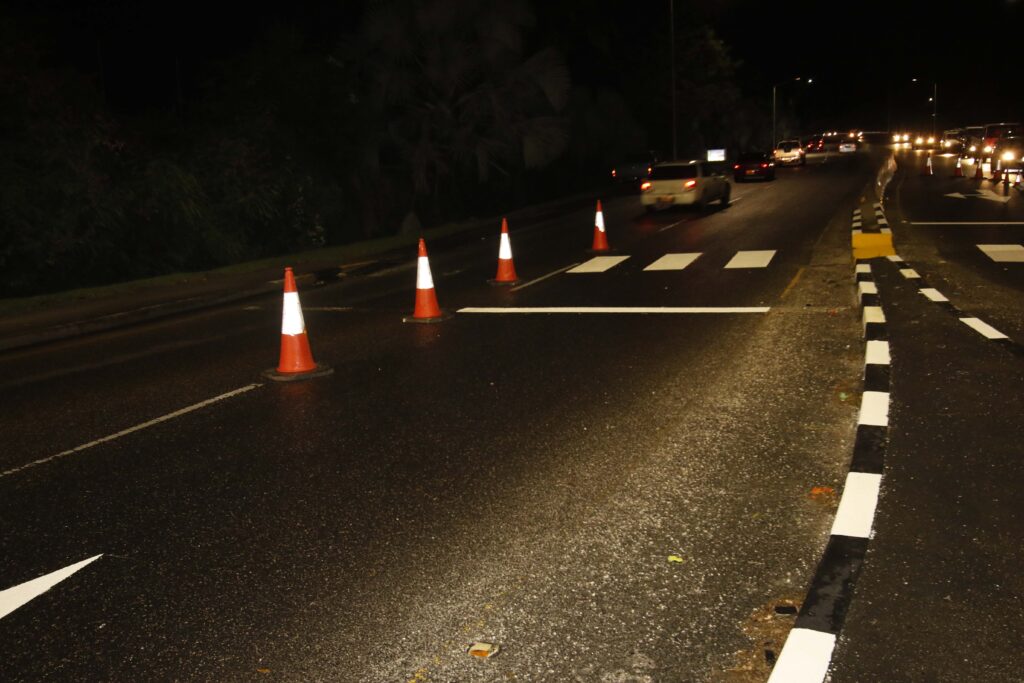
The Ministry of Transport and Works is advising motorists that road marking and painting works will be carried out tomorrow night along a section of the ABC Highway.

The works will take place between the Errol Barrow Roundabout and the Garfield Sobers Roundabout on Thursday, May 28, from 6 p.m. until 1 a.m.

According to the ministry, the exercise will allow its Road Marking crew to repaint the recently refurbished roadway as part of the Highway Maintenance Programme.

Motorists are being encouraged to use alternative routes where possible and to follow all signage and instructions from flag personnel in the area.

The ministry also apologised for any inconvenience caused and thanked the public for its patience and cooperation. (MTW)

St Lucia PM: Resuming hangings won’t be simple

CASTRIES -Prime Minister Phillip J Pierre says the resumption of capital punishment in St. Lucia is something his administration will have to “think of very, very carefully”  even as a petition is receiving significant support for the government to actively consider the enforcement of capital punishment.

The petition follows the murder last week of a 24 year-old mother, whose bullet riddled body was found in the driver’s  seat of a vehicle. Her estranged husband has since turned himself into law enforcement authorities.

The last execution in St. Lucia took place on October 17, 1995, when Joseph Solomon, a convicted murderer  was hanged. Since that time, the country has maintained a de facto moratorium on the death penalty. There are three people on death row so far this year.

“That is a serious, serious issue in the country. Every day someone tells me, bring back hanging every day. It’s complex, it’ has become an international issue and there are countries who suffer reprisals if they introduce again,” Prime Minister Pierre told the post Cabinet news conference.

“So it is, it’s a matter that we have to think of very, very carefully. I will not venture to give an opinion on it now,” Pierre said, noting that for example, the Roman Catholic Church opposes capital punishment.

“You’re aware of that, right? So it’s a very complex issue. It’s not an issue that we can just proclaim on. At this point I’m not willing to see, nor am I in a position to see whether we will bring back hanging or not.

“But I can tell you, many people, many, many people in the country are asking for the return of hanging, of capital punishment. Many, many people. People are saying you can move from hanging to the lethal injection,”  Pierre said, reiterating “I will not venture an opinion at this time”.

Pierre said all governments in St. Lucia have had to deal with the crime situation, especially murders and recalls a “maxim in law,” which he said states “it’s better a million men go free than one innocent man gets punished.

“It’s a very hard situation because you know again, you must look at our history,” Pierre said, noting the emotional nature of the debate on capital punishment as response to the crime situation.

“We come from a history where people were just accused of doing things that they never did. People were lynched for committing a crime,”  he said, insisting that his  administration has provided financial and other assistance to the police.

“Our history is that there must be independence of the judiciary. There must be no matter how painful it is. And I know it’s painful …it’s painful. It hurts. It hurts me  But we have to understand there must be independence of the judiciary,”  he said, noting that the government has spent million of dollars (One EC dollar=US$0.37 cents) on providing buildings for  the Eastern Caribbean Supreme Court of Justice.

Pierre defended the work of the police and their intelligence operations, telling reporters “you would appreciate that I can’t come in public and say to the public of St. Lucia that we have intelligence….

“How can I come to the public and say to them how much intelligence we have? So what’s the use of intelligence? And let’s be realistic. I hear some people, for their own political reasons, throwing that around the place.”

Pierre said that for much of the crime in this country, “if it wasn’t for intelligence, it would have been worse.

“It would have been worse if the intelligence didn’t exist. And I want to congratulate the police for the way they use that intelligence, but they cannot go out and tell you what they’re doing,”  he  said, adding “the people who ask that have been unrealistic, and they’ve been political.

“All I can tell you that in the most of the crime in St. Lucia, most of the crime in St. Lucia, that is solved,  there is some level of intelligence driven in, most of it. I can say that for now, most of it.

“We see the cameras, they are in the country. There are CCTV cameras in the country. There can be more, there will be more, but I will not tell you where they are. I can’t, apart from what you can see.

‘Constrained’ MSME sector needs support

Micro, Small And Medium Enterprises (MSMEs) remain central to Barbados’ economy, but they are operating under persistent constraints that have changed little over the last ten years.

Furthermore, unless MSMEs receive targeted financing support to build resilience while maintaining operational viability, existing vulnerabilities at the firm level may translate into broader systemic risks for the economy.

These are findings of The State Of Small Business In Barbados, a national survey of the MSME sector, which was commissioned by the Small Business Association (SBA), funded by the Inter-American Development Bank (IDB), with Professor Dwayne Devonish of the University of the West Indies (UWI) the lead researcher.

The research, which is the first of its kind carried out since 2016, and is based on a 2025 survey and insights from MSME operators, concluded that “the current configuration of the sector does not yet position the country for sustained expansion, export competitiveness, or economic resilience”.

The findings of the study included:

Without targeted and coordinated policy intervention, the MSME sector will continue to function as a survival-based ecosystem rather than a growth-oriented engine of development.

 Services’ relatively low export intensity constrains foreign exchange earnings and limits the sector’s contribution to external balance.

 While female participation has increased and aggregate revenue has grown, scaling, productivity, export depth, and resilience remain limited.

 Agriculture and manufacturing remain under represented in both employment and enterprise scale.

 Improving access to finance, specifically for working capital and early-stage expansion, is essential to enable firms to scale.

 Financial constraints within the MSME sector pose a significant risk to climate resilience, as firms lack the resources to invest in adaptation and risk mitigation measures.

“Addressing all aforementioned challenges will require coordinated, size- and sector-sensitive policies that go beyond entry support to actively enable firm growth, resilience, and long-term competitiveness,” the report stated.

Devonish, who is director of The School for Graduate Studies and Research at UWI’s Cave Hill Campus, said in the publication that “the findings highlight a sector that is both vital and resilient but severely constrained”.

“While MSMEs continue to demonstrate adaptability, particularly in the aftermath of COVID-19, persistent structural challenges remain,” he reported.

“These include limited scaling beyond the micro level, low export participation, concentration in domestically oriented services, and ongoing barriers related to finance, labour, and technology.

As a result, the sector is not yet fully positioned to drive sustained economic growth, export expansion, or long-term resilience.”

Devonish added: “At the same time, the report underscores significant opportunities for transformation. Expanding participation in agriculture and manufacturing, strengthening export-oriented enterprises, improving access to finance, and aligning skills development with sectoral needs are all critical pathways for enhancing the contribution of MSMEs to national development.”

SBA chief executive officer Dr Lynette Holder explained in the report that “during the past decade much has transpired to affect the business community, most notably were the COVID-19 pandemic, global supply chain disruptions on account of wars in the middle East and and Europe, and several climatic events”.

“It was therefore imperative that we assessed the state of small businesses today, with a view to identifying what effect those exogenous shocks had on the sector and what are the policy and programmatic responses needed to assist MSMEs to pivot to a position of growth,” she noted.

“This 2026 research featured an assessment on variables including inter alia, the sector’s size, age and gender distribution, contribution to exports and employment, and the revenue generation of firms.

“However, the disruptions in the last decade necessitated a review on the COVID-19 impact on the business community, the preparedness of the sector for digitalisation and the level of resilience of MSMEs to climate change.”

Michael Hall, financial sector senior specialist at the IDB, said in the publication that the research findings were “intended to inform policy dialogue and action by grounding decision-making in empirical evidence”.

“Such analysis is particularly valuable for the IDB as it advances operations aimed at improving the lives of the people of Barbados. Addressing the challenges identified will require coordinated, multi-stakeholder interventions to foster a sustainably productive MSME sector,” he stated.

“In this context, the continued efforts of organisations such as the SBA remain essential in promoting entrepreneurial development, representing MSME interests, and supporting firms along the pathway to scale and resilience.”

Arthur Seat bridge hazard dragging on, say residents

Residents at Arthur Seat, St Thomas, are calling for an urgent fix to the bridge in the area which they say has been a hazard for far too long. 

The bridge, residents said, was damaged more than a year ago and a wooden barricade was constructed on the cracked section to protect road users. 

However, they added that the placement of the structure had been the cause of many accidents and close shaves. 

Resident Ondre Taitt said that several times, motorists had crashed into the barricade or risked collision by trying to avoid it. 

“It wants dealing with. Everyone comes in and hits that. What happen is that people coming this way believe because they have the right of way that they’re not supposed to stop. It will take some dealing with for real. We get around it because we live here and we know how to manoeuvre around it but people who don’t know run into problems,” he said. 

Xeron Lovell offered the same verdict, noting there were accidents in the area every week.

“They only came and put the barricade up but that ain’t really doing anything. Right now the wood rotting and falling to pieces, and the nails fall into the road and puncturing people’s tyres. It really wants fixing,” he said.

Another resident, who opted to remain anonymous, said that because the bridge was at the bottom of the incline, the speed with which motorists approached the area sometimes left others with little room to manoeuvre. 

“People that don’t know this area drive down here and see that, and they stop abruptly. On a busier day with a lot of cars coming down it also causes a lot of traffic back-up because of the cars trying to move around it,” the resident said. 

When contacted for comment, parliamentary representative for St Thomas, Gregory Nicholls, said he had observed the state of the bridge and would have it rectified.

“There was work done on that area, but not on the bridge. The road was paved in Arthur Seat, so what I will commit to doing is to speak to the minister to clarify what is the position there and see whether it can get rectified as soon as possible. That bridge is an important transit point, so it has to be rectified,” he said. 

Nicholls also expressed concern about the danger caused by speeding drivers, which he said was raised by several residents.

“My concern is not only the bridge but the speed at which people are coming down there, especially public service vehicles. I have also had some encounters there because the road is being paved from the top to the bottom, and that is now creating another challenge. 

“In fact, during the election, people were asking about getting some speed humps in the area there and making sure there’s an adequate sidewalk.”

The MP said that some roads and several bridges in St Thomas had seen better days and added that the necessary attention should not be too far away.

“You can see some improvements coming to St Thomas and I’m being patient. It is the biggest concern for residents in terms of the state of the roads but the bridges also need to get some attention. 

“I’m very, very hopeful that attention is coming soon. Given that the roadworks are really coming to a state of completion in two of the major arteries in St Thomas, the roads are being completed and infrastructure being improved,” he said.
(JRN)