Sunday, May 31, 2026
Home Blog Page 226

Flash Flood watch in effect overnight

0

Barbados is under a flash-flood watch tonight as unstable atmospheric conditions continue to generate scattered moderate to heavy showers across the island.

The Barbados Meteorological Services issued the advisory at 5:30 p.m. today, warning that additional rainfall falling on already saturated ground could trigger rapid flooding, particularly in low-lying and flood-prone districts.

Forecasters estimate a further one to two inches of rain could accumulate overnight.

Officials noted that the island has reached a level of saturation where even short bursts of intense rain can overwhelm drainage systems, increase water levels in ponds and other water bodies, and lead to temporary road flooding or diversions. There is also a medium chance of soil erosion on exposed or previously damaged land surfaces.

A flash-flood watch signals the possibility of rapid flooding within a short window, generally within two hours, and may be issued up to 48 hours in advance.

While it does not guarantee flooding will occur, conditions are favourable enough to warrant heightened awareness.

The watch will be updated or terminated at 6:00 a.m. on Wednesday or sooner if conditions warrant. (BMS)

Hillaby Turner’s Hall Primary reopens tomorrow

0

Hillaby Turner’s Hall Primary School is set to reopen on Wednesday after an unexpected closure earlier today caused by a water supply problem.

The Education Technical Management Unit confirmed that the issue has been resolved and noted that monitoring will continue to ensure the school maintains a reliable supply heading into the new school day.

Officials indicated that the precautionary closure was necessary to maintain proper hygiene standards and student safety.

Parents and guardians were thanked for their cooperation during the disruption, as the school prepares to welcome students and staff back to the classroom on Wednesday. (PR)

Mottley calls for fiscal space to help Jamaica bounce back from Melissa

1

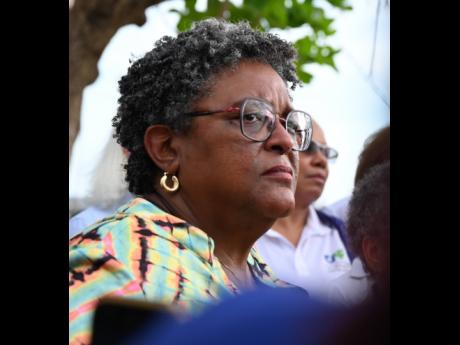
Barbados Prime Minister Mia Amor Mottley has called for urgent international support to ensure Jamaica gets the fiscal breathing room it needs to rebuild after Hurricane Melissa.

Mottley made the appeal during a CARICOM leaders’ tour of hard-hit communities in Westmoreland on Monday, warning that Jamaica’s revenue losses and extensive infrastructure damage require immediate global intervention to avoid slowing the country’s recovery.

“Jamaica must know that it does not walk alone in this moment,” she said. “This year, it is Jamaica. Next year, it will be one of us. And it is important that we retain that solidarity.”

Mottley said the destruction in five parishes, combined with the likely loss of government revenue over the coming months, requires decisive intervention from the international community. She expressed hope that Jamaica’s partners would help create an environment where Prime Minister Dr Andrew Holness’ administration can focus entirely on rebuilding without fiscal constraints.

“We must create an opportunity where your government can focus purely on rebuilding,” she said. “And also bridge the loss of revenue that will obviously take place for the next nine months, two years – however long it may be. The biggest contribution we can make is to work with the international community to give you the elbow room, the fiscal space you need.”

The Barbadian leader noted that Jamaica had been on track to reach its fiscal anchor of 60 per cent debt-to-GDP before the storm, but said Melissa’s impact will inevitably alter that trajectory. She compared the moment to the economic upheaval of the COVID-19 pandemic, which forced Barbados to reset but ultimately recover.

“We went through the same thing during COVID,” she said. “We recovered from it, and I have every confidence that Jamaica will recover from this moment.”

Mottley confirmed that Barbados has already dispatched a field hospital to support displaced residents. She emphasised the scale of Jamaica’s crisis, noting that the number of people left without shelter exceeds three times Barbados’ entire population.

In addition to medical support, Barbados is sending further relief, including garbage compactor trucks, tarpaulins, generators and immediate food supplies sourced from Trinidad. She said the region must respond quickly, describing disaster recovery as a continuous “race against time” to restore normalcy to affected communities.

Mottley also praised the broader CARICOM response, pointing to Guyana’s decision to deploy Guyana Defence Force engineers to repair 200 roofs in Westmoreland and Antigua and Barbuda’s commitment to the relief effort. She said the moment reflects the essence of regional cooperation.

“This is why we are a community,” she said. “Because in times like these, the community draws strength from each other and supports each other.”

She endorsed Holness’ goal of getting families under some form of shelter before Christmas, saying the experience of surviving such a disaster often deepens a community’s resolve to rebuild stronger and better.

“I believe the individuals who have gone through this will now have a greater passion for why they must work together to make their communities and their country the best it can be,” she said. (Jamaica Gleaner)

Desmond Haynes joins Barbados Pride in Trinidad

1

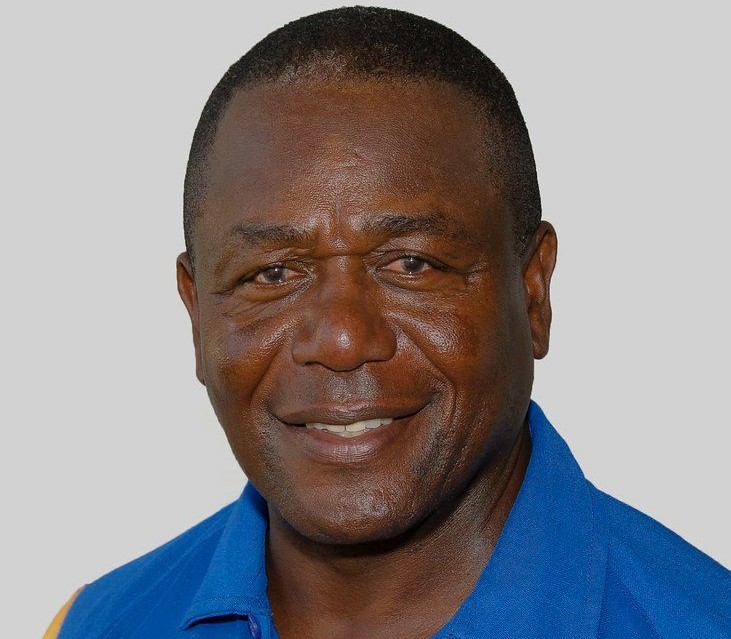
West Indies batting legend Desmond Haynes has joined the Barbados Pride senior men’s team as a specialist performance consultant ahead of the start of the regional Super50 tournament in Trinidad, which will be played from November 19 to 29.

The 69-year-old is one of the greatest opening batsmen in the history of cricket and World Cup hero from 1979. He is the most capped Bajan in Test history, having played 116 matches between 1978 and 1994.

The Barbados Cricket Association confirmed the appointment on Monday morning.

He will be working alongside head coach Vasbert Drakes and assistant coach Ryan Hinds as Barbados bid to win the marquee regional 50 over competition.

The Bajans arrived in Port-of-Spain yesterday. They will have training sessions on Monday afternoon at the Brian Lara Cricket Academy and Tuesday morning at the Frank Worrell Memorial ground at the St Augustine Campus of the University of the West Indies (UWI SPEC).

Barbados Pride will be playing under the captaincy of allrounder Kyle Mayers, who is expected to bat at the top of the order. Their first match will be on Wednesday at 9am against hosts Trinidad and Tobago Red Force at the UWI SPEC.

FULL SQUADS
Barbados Pride: Kyle Mayers (captain), Leniko Boucher, Kraigg Brathwaite, Zachary McCaskie, Jonathan Drakes, Dominic Drakes, Kevin Wickham, Demetrius Richards, Nyeem Young, Kemar Smith, Joshua Bishop, Matthew Jones, Javed Leacock, Akeem Jordan

FULL MATCH SCHEDULE
Wednesday, November 19: vs Trinidad and Tobago Red Force at UWI SPEC
Friday, November 21: vs Leewards Hurricanes at Queens Park Oval
Sunday, November 23: vs Windwards Volcanoes at Queens Park Oval
Tuesday, November 25: vs Jamaica Scorpions vs Barbados Pride at Brian Lara Cricket Academy
Thursday, November 27: vs Guyana Harpy Eagles vs Barbados Pride at UWI SPEC
Saturday, November 29: Grand Final at Brian Lara Cricket Academy

Remote work solution in hurricane season

0

PICTURE THIS SCENE, familiar to every Caribbean resident: A hurricane or tropical storm is upon us. Within hours, schools announce midday closures, sending parents scrambling. Businesses release employees simultaneously. Roads transform into parking lots. Gas stations develop hour-long queues. Supermarkets become battlegrounds as shelves empty. Banks face runs. The cellular network crawls. Emergency services struggle to respond while preparing their own operations.

And the storm? We had warnings days ago! We’ve watched this chaos repeat for decades, accepting it as inevitable. Meteorologists issue warnings. Governments announce closures. Gridlock ensues. Infrastructure strains to breaking. The vulnerable suffer most.

Then the actual storm arrives, finding us already exhausted from the pre-storm pandemonium we created ourselves. Here’s the uncomfortable truth: We’re doing this wrong. The crisis before the storm isn’t the natural disaster – it’s self-inflicted catastrophe created by simultaneously shutting down entire territories in the final 24 to 36 hours before impact.

The cost of chaos we don’t calculate

When every business releases employees at the same time, productivity doesn’t just stop – it reverses. Workers spend hours in traffic instead of minutes. Fuel that could have lasted weeks burns in a single day of idling engines. Vehicle accidents spike. Businesses rush to secure property, paying premium prices for supplies suddenly scarce. The economic cost exceeds lost productivity – it includes waste, damage, and inefficiency created by our own panic.

But economics pale beside human cost. When roads gridlock with office workers rushing home, ambulances can’t reach emergencies. When supermarkets overflow with panic buyers, elderly residents and people with disabilities cannot navigate the crowds. When everyone withdraws cash simultaneously, ATMs empty before the vulnerable arrive. When schools dismiss suddenly, working parents without flexible schedules face impossible choices: lose pay, risk their job, or leave children vulnerable.

Emergency services designed to serve those in need instead spend critical hours managing chaos we created. Fire trucks navigate gridlock to reach accidents caused by rushed driving. Police manage disorder at overcrowded stores. Medical facilities treat injuries from hasty preparation. All while these services need to prepare their own operations for the approaching storm. The concentrated chaos created by simultaneous closure doesn’t just inconvenience – it endangers the most vulnerable when they need protection most.

The organisations that don’t panic

Yet some organisations barely miss a beat. Companies with remote work infrastructure shift seamlessly to distributed operations days before storms arrive. Schools with online learning platforms transition students calmly to remote instruction. Government agencies with cloud systems continue delivering essential services. These organisations don’t just maintain operations – they contribute to rather than detract from community resilience.

When a school based on

the best available forecasts, can announce days ahead that classes will shift online, there’s no mad rush to gates, no traffic chaos, no terrified children waiting for parents stuck in gridlock. When companies activate remote protocols as storms enter forecast range, employees transition to home offices over several days.

Roads remain passable. Gas stations serve customers without hour-long queues because demand spreads over time. Workers prepare homes methodically – securing shutters, buying supplies, checking on elderly neighbours – rather than rushing through preparations after finally reaching home through traffic.

The contrast couldn’t be starker. Traditional closure creates synchronised crisis: everyone needs the same resources at the same moment, travels the same routes simultaneously, makes preparations in compressed timeframes. Remote capacity enables graduated transition: distributed operations over days, systematic preparation, manageable infrastructure load instead of crisis-level surge.

What we’re really talking about

Building remote capacity isn’t about trendy workplace flexibility or keeping up with global corporate culture.

It’s about choosing order over chaos, proactive preparation over reactive scrambling, systematic transition over simultaneous shut down. It’s about protecting infrastructure by distributing demand over time rather than concentrating it in crisis moments. It’s about enabling emergency services to serve the vulnerable rather than manage crowded roads and stores. It’s about ensuring the days before a storm strengthen rather than exhaust community resilience.

Yes, this requires investment – in telecommunications infrastructure, backup power systems, devices for students, training for teachers and employees, subsidised internet for low-income households. But this investment is far less than the accumulated cost of continued chaos. The infrastructure pressure, the emergency service strain, the risk to vulnerable populations, the economic waste – these costs compound the damage from storms themselves.

The choice ahead

Hurricane season is never far away in the Caribbean. The current approach – waiting until storm arrival seems imminent, then shutting down entire territories simultaneously – creates predictable crisis before the weather even deteriorates. The storms will come – they always do. The question is whether we’ll face them having already exhausted ourselves through chaos we created, or whether we’ll approach them prepared, calm, and resilient. The choice is ours.

Professor Justin Robinson is Pro Vice-Chancellor and Principal, University of the West Indies Five Islands Campus.

‘Trust vital in digital adoption’

0

Financial institutions and other companies seeking to offer digital services to the public must meet people face-fo-face to build trust, especially among the more mature part of the population.

That is the advice from George Thomas, chief executive officer (CEO) of Barbados’ first and only fully digital bank, Sagicor Bank (Barbados) Limited.

Thomas revealed that when the bank started in early 2023, he was disappointed that only 1 800 people became clients in the first month.

Now, he said, Sagicor Bank was about to “cross the 30 000-person mark in less than 30 months”.

The CEO was speaking while participating in the Eastern Caribbean Central Bank’s (ECCB) Seventh Annual Conference With Licensed Financial Institutions on November 6.

He was part of a panel which gathered in the Bernice White Lecture Room at the ECCB’s headquarters in Basseterre, St Kitts and Nevis to discuss From Data To Dignity: Empowering Consumers Through Digital Finance.

Get human and physical was his advice for entities striving to get customers to use digital services. By this, he meant that rather than relying exclusively on digital platforms to reach people, especially older customers, meeting them in-person was very important.

“When we first opened, the first month we got 1 800 people. I was disappointed . . . because from the surveys, everybody wanted to go digital, but everybody wants to talk it, but when it comes time to do [it] they start to get scared,” Thomas recalled.

“Of those 1 800, 70 per cent were Millennials or Gen Zers who sleep with their phones, so that’s all they want to do. We had to go meet with the Barbados Association of Retired [Persons], we had to go meet with the . . . communities. We had to get human and physical to cut through.

“I think one other month, we did about 2 000 people, but [it was a] steady 1 000 and I was like, ‘why can’t I get past that’, but at least I could maintain the 1 000. So today, probably in a week or two we’ll cross the 30 000 person mark in less than 30 months,” he told the conference audience.

Thomas said his proudest statistic “is the 11 per cent baby boomers that we now have because we went into the community and met people”.

He added: “So the key is to build trust, because we are all hard-wired for human connection from birth with our mothers and our parents, we still

require human connection.”

There has to be a constant dialogue. Barbados’ digital penetration is good so that is one fortunate thing for me. We use a lot of . . . digital media, but we had to get very physical because in the beginning the digital wasn’t working.

“It worked for the young people who are transactional and who will put $5 on the bank [or] $10, because we allow you to just have something on without any charges, but it did not work for the people that were really doing banking.

Thomas was speaking after the panel moderator C. Teresa Smith, ECCB director and corporate secretary, reported on the recent findings of the inaugural Eastern Caribbean Currency Union’s (ECCU) Financial Literacy And Inclusion Survey.

“From that, we got a sense as to what the region faces in terms of its literacy, its inclusion scores. And we noticed that the average ECCU financial literacy scores stand at roughly 12.2 out of 20, which is 61 per cent. Product awareness is high, but recent product usage is only 54.5 per cent, digital payments remain low,” she reported.

“Fewer than half of ECCU adults made an electronic payment in the past year, that was based on the survey results. This indicates that access existed, trust lags and behaviour, not awareness, is now the constraint.”

She suggested that financial inclusion “must evolve from access to agency, empowering consumers with control, capability and confidence in how data drives financial decisions”.

Referencing the statistics from the ECCU research, Thomas advised that “cutting through the trust barrier will require a programme around client education [and] information sharing”.

“In Barbados, it’s being driven by the Central Bank, by the Bankers’ Association, I am the deputy chair of the Bankers’ Association of Barbados, and we have public outreach programmes in each individual bank,” he noted.

“We’ve had to go out and meet clients and potential clients directly and going into businesses to help people understand this is how to manage your finances digitally.” (SC)

Guilty of raping eight-year-old girl

Shayne Douglas Marshall had claimed it was the girl’s father who got her to accuse him of rape because he (Marshall) was sleeping with the man’s wife.

This Content Is Only For Subscribers

Please subscribe to unlock this content. Enter your email to get access.
Your email address is 100% safe from spam!

Cloudflare outage takes down X and ChatGPT

0

A number of high-profile websites, including X and ChatGPT, have gone down for some users due to problems affecting major internet infrastructure firm, Cloudflare.

Thousands of users reported issues with X and other services to outage monitoring site Downdetector shortly after 11:30 GMT on Tuesday.

On its homepage, X is displaying a message saying there is a problem with its internal server, as a result of an “error” originating with Cloudflare.

ChatGPT’s site was also displaying an error message telling some users: “please unblock challenges cloudflare.com to proceed.”

“Cloudflare is aware of, and investigating an issue which potentially impacts multiple customers,” the company said in a note on its service status dashboard at 11:48 UTC.

In a subsequent update, the company said it was “seeing services recover” but added customers “may continue to observe higher-than-normal error rates as we continue remediation efforts”.

Cloudflare is a huge provider of internet security across the world, carrying out services such as checking visitor connections to sites are coming from humans rather than bots.

It says 20% of all websites worldwide use its services in some form.

It is unclear how many of those websites have been affected by this outage, and to what extent.

Downdetector itself – a site many flock to when sites stop loading or appear to have issues – also displayed an error message as many tried to access it on Tuesday.

Issues affecting Cloudflare’s services come after an outage impacting Amazon Web Services last month saw more than 1,000 sites and apps knocked offline.

Another major web services provider, Microsoft Azure, was also affected shortly afterwards.

Some experts suggest such incidents highlight the fragility of the modern internet, and the profound disruption that can be caused by problems at the small number of companies underpinning it. (BBC News)

Rocked by the rains

0

Broken bridges, stalled vehicles, flooded homes, damaged roads and fallen trees.

That was the grim scene which confronted Government officials yesterday as they toured northern parishes to assess the devastation from Sunday’s torrential rainfall, which also claimed a life.

Led by Deputy Prime Minister and Minister of Transport and Works Santia Bradshaw, the team included Minister of Home Affairs Wilfred Abrahams; Member of Parliament (MP) for St Peter Colin Jordan; MP for St Andrew Dr Romel Springer; St Lucy MP Peter Phillips, and officers from Department of Emergency Management (DEM).

They noted that the nine inches of rainfall which wreaked havoc especially on the northern parishes was an “extraordinary situation”.

Severe damage

They spent more than five hours moving from parish to parish viewing the severe damage, with Bradshaw even on occasion directing for calls to be made on the spot to engineers, crews from her ministry and Barbados Water Authority, in order to get some of the situations dealt with as a matter of urgency.

Speaking to the media, she pointed out that the rains had not only impacted households across the various communities, “but also impacted the road infrastructure, many of which is in motion in terms of ongoing roadworks”.

She noted that a number of roads across the Scotland District where mains replacements were ongoing had been “dug up”.

“Rains like this basically set back the roadworks programme, but it has also, in a sense, eaten out the roadway, and you are going to see a lot of different holes, which we are working feverishly now to be able to close up. A lot of the contractors have been asked to go out and to do the back filling to make sure that we are able to close a number of these holes.

“We are seeing that across a number of the projects we are visiting this morning, and I suspect as we continue along the day, you are going to start to see debris, and you are going to see a lot of the marl having been washed out from these roadworks. St Lucy and certainly in the St Peter parishes, we are doing the roadworks, and we are mindful that as those works continue, in terms of the mains replacements, that the heavy rains are going to compound the issues in terms of getting these roads replaced.”

She urged Barbadians to “pay attention to where these challenges are” as she assured that “we will have the contractors and the MTW teams at the depots going out to clear, first of all, the main arteries, and then we will come into the communities as we get the requests through the DEM and through the depots to be able to clear a number of those areas”.

Engineering designs

She added: “As it relates to the flooding in a number of areas, we have taken on board the concerns of a number of the residents across the country, and for the first time we have seven flood engineering designs actually being done, with a view to . . . in the early part of the year, having a number of those locations actually fully constructed in terms of the wells and the drainage designs.

“This is significant because these are long-standing issues that have crossed both political parties, because when it comes to these types of issues, politics cannot play a part in addressing these problems. We have made

sure that we have outsourced the works from other areas . . . . We are trying to make sure that our flood engineering designs are done with a view to being able to start construction.”

While overlooking the Salt Pond in Speightstown, St Peter, Jordan dismissed circulating videos which suggested that water had overflowed and flooded the town.

‘Canal did its job’

“I really have to tell you that I am pleased that this canal did exactly what it was supposed to do. There was a video circulating saying that Speightstown has flooded . . . but what the video showed was the canal doing exactly what the canal was constructed to do.

“The canal was constructed to take a one in 50-year event, and yesterday’s deluge might have been a one in 50, I’m not sure, but the canal handled the water well. Even when the tide was getting higher and the sea wasn’t taking the water where we would have wanted it to take the water, but it never flooded the traditional areas that are flooded.

“So that in Round The Town, there was no flooding. In Gills Terrace, there was no flooding. Based on the volume of water that we had yesterday, both of those areas would have flooded significantly. My fear is that if we had not as a Government built this canal about five or six years ago, that we may have had loss of life in the Gills Terrace or Round The Town area.”

He spoke of significant road damage at Moore Hill, Bakersville and especially Centipede Alley, where rushing waters washed away a lot of the roadworks, making it impassible for vehicular traffic.

“Major work needs to be done. That will take some surveying and some significant technical work. But even before the technical work is done, something will need to happen to make sure that the top of the marl surface can hold a decent shower,” Jordan added.

In Maycocks Terrace, St Lucy, Phillips also reported on flooded homes and damage to roads which were already under repair.

A crew from the Barbados Fire Service was on the scene throughout Sunday evening and again yesterday pumping off volumes of water which had created a pond in the middle of the road.

Phillips admitted that it was about the third time a home in the area had been flooded.

“Now, this situation has been exacerbated by the fact that a number of wells were promised to be sunk in this area, about five wells, and that would greatly assist in easing the situation here because literally every time there are clouds in the sky, these residents become extremely uneasy,” he said.

Over at Bawdens Bridge in St Andrew, Springer lauded the residents who he said sped into action and cleared debris which included several fallen trees when water topped over the bridge.

While he lamented the damage caused to the bridge and road, he said it would still give engineers the opportunity to redesign the area in order to make it better able to withstand such volumes of water. (MB)


All schools to reopen tomorrow

0

The Ministry of Educational Transformation has announced that all Government schools and nurseries will reopen on Tuesday.

According to the Ministry, the announcement follows consultations with the Barbados Meteorological Services regarding forecasted weather conditions.

Officials cautioned that some areas of the island may continue to experience rainfall, and certain communities remain particularly vulnerable due to recent flooding.

Parents and guardians are urged to exercise discretion when deciding whether it is safe for children to attend school under current circumstances.

The Ministry also encouraged families to maintain communication with schools so that students can stay up to date with assignments if attendance is affected.

Authorities stressed that maintaining student safety remains a priority while ensuring continuity in education.

In a statement, the Ministry expressed hope for a swift recovery for those most impacted and looked forward to welcoming students and teachers back to classrooms across Barbados.

(PR)