Home Blog Page 30

India orders Meta to remove ads promoting child sexual abuse

0

The Indian government has directed Meta to immediately disable advertisements and content on Instagram that promote or facilitate child sexual abuse material, a senior official said.

It comes after a BBC Eye investigation found that Instagram has been running paid adverts promoting child sexual abuse material in India, some of which linked users to Telegram channels where the material was offered for sale.

The government has also sought an explanation within a week on how advertisements containing such material were allowed on the platform, the official said.

Meta has said it has a zero-tolerance policy on child sexual abuse material and is continuing to strengthen its detection and defences.

Telegram said it had removed more than 274,000 groups and channels related to child sexual abuse material in 2026.

“The government has issued a stern notice to Meta over child sexual exploitative and abuse material appearing in paid advertisements on Instagram,” a senior official in India’s Ministry of Electronics and Information Technology told the BBC.

The official further said the federal ministry had “ordered Instagram to disable all ads and content promoting or facilitating access” to such material.

“The government has sought a detailed explanation from Meta within seven days,” the official added.

On being asked about the government’s notice, a Meta spokesperson said the company has “a zero-tolerance policy for soliciting or sharing” child sexual abuse material, including in ads.

“We use advanced AI technology to proactively detect violating content and individuals, but we are in a constant battle with criminals who hide among our 3.5 billion users and try to evade our detection,” the spokesperson said.

The government notice has been issues days after the BBC Eye Investigation was published.

However, neither the government nor Meta confirmed whether the notice was issued specifically in response to the BBC’s film.

The BBC set up a new alias Instagram account in India after noticing the platform was pushing sexually suggestive content even when users had not searched for it.

The account followed 10 such profiles and, in less than a week, Instagram began showing the alias account paid adverts featuring adult pornography.

Days later, it was also shown adverts promoting child sexual abuse material, some of which linked users to Telegram channels.

In its response to the BBC Investigation, Meta had said that “child exploitation is a horrific crime” and that it works aggressively to fight it on its apps.

The company, however, called it “categorially inaccurate” to suggest it knowingly and deliberately targeted ads featuring children to users with an inappropriate interest in such material and denied prioritising revenue over safety. (BBC News)
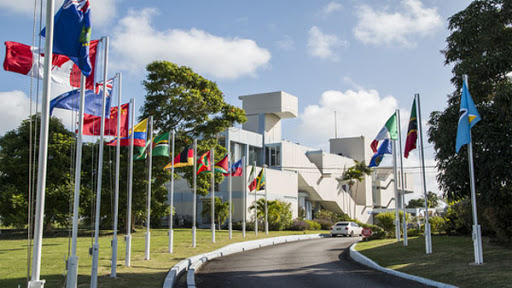

Barbados tops CDB evaluation

Barbados has stood out as the strongest performers among five Caribbean countries benefiting from policy-based loans (PBLs) provided by the Caribbean Development Bank (CDB).

That is the finding of an Evaluation of Policy-Based Lending Operations at the Caribbean Development Bank 2017-2025 published by the CDB’s Office of Independent Evaluation.

The analysis, which also included Antigua and Barbuda, Dominica, St Lucia and The Bahamas concluded overall that the CDB “should continue using PBLs but ensure clear policy and institutional additionality through complementary operations grounded in technical assistance”.

A section of the report focused on Why Barbados Worked – Lessons From A High-Ownership Model, and it noted that “the Barbados case stands out as the strongest performer among the five PBL countries evaluated”.

“Several factors differentiated it from other cases and offer transferable lessons for future PBL design,” the report stated.

In this regard, the following takeaways were outlined as transferable from Barbados to other countries using CDB PBLs.

A home-grown reform programme with a medium and long-term vision preceding the PBL.

Having a multi-partner coordination framework.

A programmatic design with built-in continuity. Strong technical specificity in prior actions. Dedicated technical assistance from specialised partners complemented the PBL.

Benefiting from a Social Partnership oversight mechanism.

Combine budget support

“PBLs achieve strongest results when they support nationally-owned reform programmes that pre-exist the financing request, operate within multi-partner coordination frameworks, combine budget support with dedicated technical assistance, and embed oversight mechanisms that extend beyond the Ministry of Finance,” the section dedicated to Barbados stated.

Barbados’ PBL efforts were anchored on the Barbados Economic Recovery and Transformation (BERT) programme.

“BERT was developed by the Government of Barbados before seeking international financial institutions’ support, not in response to donor conditionality,” the evaluation report noted.

“Prior actions reflected policy commitments embedded in the Government’s own reform agenda, rather than measures introduced primarily to meet external financing requirements.”

In terms of geographic distribution, the CDB publication said the institution’s PBL resources were concentrated among the smallest and least developed CDB members, except for Guyana in 2025, which totalled US$125 million.

“The Bahamas accounted for the largest volume of approved funding, with two programmatic operations – each consisting of two tranches – totalling US$265 million, followed by Barbados – one programmatic operation totalling US$150 million, St Lucia – two PBLs totalling US$61.9 million, and the British Virgin Islands – one PBL totalling US$50 million,” the report shared.

Sustained reforms

The evaluation indicated generally that PBLs are more likely to contribute to sustained reforms when they are cross-sector integrated from the outset, rather than primarily economics-led; anchored in coherent reform trajectories coordinated across sectors and development partners; designed around broader reform pathways rather than discrete prior actions; and supported by grounded technical assistance designed alongside the operation and focused on institutionalising reforms beyond disbursement.

“The analysis further shows that reliance on ex post evaluation and limited post-disbursement follow-up constrains the depth of reform and organisational learning. This insight points to the need for a more systematic engagement that builds on CDB’s comparative advantage, learning, and adaptation,” the report stated.

It added that such an approach should enable sector-integrated course correction during implementation; strengthen PBL governance and incentive arrangements that support reform continuity and sustainability; and prioritise development impacts rather than speed of disbursement.

“In practical terms, this would require institutionalising structured post-disbursement engagement through ongoing evaluation and a diversified set of monitoring, evaluation, and learning methods embedded within dynamic learning loops,” the evaluation report advised.

“These systems would enable continuous feedback, adaptive course correction, and sustained policy dialogue beyond loan closure.” (SC)

Family cries out over child

0

A family is publicly criticising the Child Care Board (CCB), alleging the state agency ignored their repeated reports of neglect and failed to protect a one-year-old child who was recently caught in a violent incident that left her with a concussion.

The family members, who spoke to the DAILY NATION on the condition of anonymity, claim they contacted the CCB “hundreds of times” over the past year to report the 21-year-old mother’s drug use and absenteeism. They allege that the agency failed to remove the child from dangerous situations.

The Social Empowerment Agency (SEA) says the case is being investigated but has denied the family’s allegations.

The situation culminated three weeks ago when the infant was thrown to the ground during a violent altercation. According to a family member, the mother and her 19-year-old half-brother were smoking “blackies” when the brother stabbed the mother three times in the neck. A relative of the half-brother, who was holding the baby at the time, dropped the child on the ground to intervene.

The infant was treated at the hospital for a concussion, while the mother received treatment for her stab wounds.

The family claims the CCB had ample warning that the child was in danger. According to relatives, when the infant was just one week old, a video was posted on social media showing the mother sitting on a block with the baby’s father, smoking weed and blowing the smoke into the newborn’s face. A second video reportedly showed the infant lying on a bed among rabbit stool.

The family said both incidents were reported to the child protection agency. According to relatives, an officer investigated but the child was not removed, and the parents were not ordered to take parenting classes.

“We let her move back in because of our concern for the baby,” one family member said, noting the mother had previously stated she prefers “bad boys who smoke and who have guns”, and had no intention of working or studying.

“We told her she had to stop smoking and stop walking the streets with the baby,” a family member said, lamenting that she refused to adhere to the rules.

Instead, the family claimed the mother would sometimes leave the infant asleep in her bedroom and leave the house between 10 p.m. and 11 p.m., returning hours later.

During this period, relatives said they called the CCB officer countless times from their cellphones and workplaces, leaving messages that were rarely returned. When the officer finally visited the home, the family alleged he told them they were “the ones who were wrong”.

When a family member asked about taking custody of the child, they claimed the officer stated it would “take a lot of paperwork” and require going to court.

The family’s most severe criticism stems from the child’s custody prior to the stabbing.

Earlier this year, the mother gave the baby to her 19-year-old halfbrother and his mother. The family said they were never consulted and did not know the teenager. A background search conducted by the family revealed the 19-year-old had been arrested for stabbing another boy at age 16.

When the family brought the teen’s criminal record to the attention of the CCB officer, they allege the officer stated he had investigated the home and found them to be “very nice people”.

Following the recent stabbing, the mother returned to the family home with the infant. “She called us around 1 o’clock in the morning screaming ‘Murder! Murder!’ and crying hysterically. When I got on the scene, she was covered in blood and the baby was crying and her head was swollen. She said she and her halfbrother were smoking ‘blackies’ when he tripped and started stabbing her. She ran to a neighbour screaming for help and the woman let her in. When she left the hospital she asked if she could come back home and stay for two weeks.”

However, relatives said the neglect has continued, with the mother still leaving the child in a bedroom when she sneaked out at night, or took her out at late hours.

The family has chosen to go public out of frustration with the CCB and to distance themselves from any future harm that may come to the child.

“This baby is a year. We don’t even know what the baby’s name is,” one member said. “We have told the Child Care Board about all of these matters . . . . We want this story put out because if anything happens to this child, we don’t want anyone blaming us. This child needs to be protected by the authorities.”

When contacted about the family’s allegations, director of the Social Care Delivery and Support Directorate, Roseann Richards, stated: “This is an active case that is being managed by the Social Empowerment Agency (SEA). The agency’s policy aligns with the tenets of the social work profession, where confidentiality remains paramount. As a matter of protocol, SEA will not discuss their clients’ information in public.”

However, she added: “Our investigations thus far have revealed that there is no truth to that which has been reported. The agency remains committed to serving the people of Barbados with dignity.” (MB)

England emerge from Azteca ordeal looking every inch World Cup contenders

0

If England are to win the World Cup, they may look back on Sunday ​night at the Azteca Stadium as the moment they proved it was possible.

Fuelled by two goals from Jude Bellingham and a captain’s ‌penalty from Harry Kane, England emerged from one of the fiercest examinations the tournament can offer with a stirring 10-man 3-2 victory over co-hosts Mexico.

And when the game descended into chaos, ​they found another way to win.

Reduced to 10 men with the Azteca crowd sensing blood, England were forced into a desperate rearguard action. ​Mexico attacked in waves, laying siege to the England goal.

But every player in white dug in, chased, blocked and battled ⁠for their lives.

Bellingham was the symbol of England’s grit. Already the architect of victory with two goals, he lunged to clear what seemed a certain Mexican ​goal off the line late in the first half.

Kane supplied the composure from the penalty spot. Declan Rice walked a disciplinary tightrope for most of the match ​on a yellow card, while goalkeeper Jordan Pickford delivered one of the finest performances of his England career, producing a series of outstanding saves.

“I can’t put it into words right now … the goals, the penalty against, the penalty for, the red card,” Bellingham said. “It was a chaotic game.

“It felt like a full squad performance. It felt like we had 26 ​players. Every time we cleared the ball, when big Dan Burn (a late substitute), smashed his head off one and cleared it up the pitch, you could ​see all the subs on the sideline up, all the staff, the fans got behind us in the stadium.”

The scale of the challenge should not be underestimated. (Reuters)

Chairman calls for united Caricom

0

Incoming Caribbean Community (CARICOM) chairman and St Lucia Prime Minister Philip J. Pierre yesterday challenged regional leaders to transform CARICOM from an organisation known for declarations, into one that delivers tangible results, warning that Caribbean people are demanding action on crime, climate change, food security and the rising cost of living.

Opening the 51st Regular Meeting of the Conference of Heads of Government in the St Lucian capital Castries, Pierre acknowledged that the region is facing unprecedented challenges, from geopolitical tensions and economic uncertainty to climate disasters and growing insecurity.

“Our people are asking a serious and legitimate question, ‘What more can CARICOM do for me?’ The question is not an attack on this community, but a genuine appeal for solutions,” he stated.

The prime minister said his chairmanship would be guided by a simple principle: “CARICOM must move from conference rooms to communities, from rhetoric to reality, from communiqués to results.

Regional cooperation

“Our people must be able to see and feel the benefits of regional cooperation. It is not enough for us to agree on principle; we must implement in practice . . . . Integration that our people cannot feel will not last.”

Calling for greater accountability, he said every regional commitment must have “ownership, timelines and accountability” and answer one question: “How will this improve the lives of our people?”

He also appealed to those present, including Mia Amor Mottley, Prime Minister of Barbados, and outgoing chairman Dr Terrance Drew, Prime Minister of St Kitts and Nevis, for greater unity among member states, noting that divisions only weaken the region’s influence internationally.

“The world has often benefited from Caribbean disunity, but when the Caribbean speaks with one voice, when we act together, when we negotiate as a bloc, our collective influence is far greater.”

Crime and citizen security featured prominently in his address as Pierre warned that organised crime, illegal firearms trafficking, gangs, cybercrime and drug trafficking were regional problems requiring a coordinated response.

“Crime affects families. It affects communities. It affects schools. It affects businesses. It affects investor confidence. It affects tourism,” he said.

He stressed that policing alone would not solve the problem.

“Security is not only about enforcement. It’s also about prevention. It’s about giving young people alternatives to crime . . . . A safer Caribbean must also be a more hopeful Caribbean.”

Climate finance

On climate change, Pierre argued Caribbean nations continue to pay the highest price for a crisis they did little to create.

“We cannot accept a global system that preaches our resilience while denying us the resources to survive,” he declared, calling for greater access to climate finance, debt relief and stronger international support.

He also urged CARICOM to deepen food security efforts by supporting regional farmers and fishers so that “more Caribbean food feeds Caribbean people”, while calling for a regional strategy on artificial intelligence to protect digital sovereignty and prepare workers for the changing global economy.

Pierre concluded by reminding leaders that young people were judging the relevance of CARICOM by its actions.

“They are asking whether CARICOM speaks to their future . . . . We must answer these questions, not in slogans, but with action.”

CARICOM Secretary General Dr Carla Barnett echoed Pierre’s call for implementation, saying regional integration has always been a practical response to shared challenges.

She said while CARICOM had strengthened the Single Market and Economy through expanded skilled labour movement and improved trade rules, much work remained.

“The challenges we face call us to redouble our efforts,” Barnett said.

Over the next two days, CARICOM leaders will deliberate on regional security, Haiti, climate resilience, food security, economic integration, artificial intelligence and youth development as they seek to chart the Community’s future amid mounting global uncertainty.

(NS)

New system coming to shore-up country’s security

0

The effort to secure Barbados’ borders is intensifying, with the Immigration Department preparing to introduce “a modern system of facial recognition”, among other measures.

Chief Immigration Officer Margaret Inniss, while stressing that she could not go into details considering the national security implications, told the DAILY NATION in an exclusive interview over the weekend: “We are anticipating that some time early next year, we will have a complete system that really positions us for the modern world.”

She also made it clear that the technical difficulties her department encountered between December 2024 and March 2025, which negatively affected visitor arrivals data provided to the Barbados Statistical Service (BSS), had in no way impacted Barbados’ border security.

She was speaking at the BSS’ office in Baobab Tower, Warrens, St Michael, where she and BSS senior statistician Nadia Skeete shed light on the recently reported downward revision of visitor arrivals.

“We are in the process of modernising our system and this [technical difficulties situation] has in no way impacted securing our borders as such,” Inniss said.

“We are about midway through and it’s more looking at a modern system of not only data collection, but a modern system of facial recognition, how we better secure our borders, not only for us locals, but for those persons who we are inviting in on island. This type of modernisation helps us to be more competitive from a global perspective,” she explained.

The Chief Immigration Officer reminded that the Immigration Department plays two roles: “We facilitate services and then we are also one of the arms to protect our borders, a part of [national] security, so to speak.”

While not specifying the technical difficulties that have been resolved since April 2025, Inniss said: “At no time did the technical issues we had affect our border security. We have a very robust border security system, all of which I can’t detail for you, as you can appreciate.

“And so our borders continue to be protected and we’ve even used some other security agencies and methodologies to further secure our borders. So the incomplete data during that period did not in any way impact the securing of our borders.

“The Barbados Immigration Department, we acknowledge that we had some technical issues during the period identified and we declare our hands that every system can be strengthened. We’re in the process of developing our border security methodologies,” she reiterated.

Inniss said the department had already benefited from technological and other advancements over the years, mentioning the shift from a paperbased embarkationdisembarkation card to an online system which provided information before passengers arrived at the Grantley Adams International Airport.

“First of all, it’s in keeping with the global market. Second, we get real-time data from a security perspective,” she noted.

“We get basically the advanced passenger information system. Now we can see what is a threat or person of interest in real time, as compared to before when a person had to present themselves before you. So, for us, it is something that really is advantageous to the country as a whole.” (SC)

Shooting death at Belfield

One man is reported to have died following a shooting incident this morning at Belfield, St Michael.

Moe details as they come to hand.

Consumers to pay more for gas from midnight

0

The cost of liquefied petroleum gas has gone up again, the second time in two weeks.

From midnight, consumers will be paying $182.81 for the 100-pound cylinder, an increase of $16.42. On June 22, the cost went up from $160.39 to $166.39, a $6 hike.

The 25-pound bottle has gone from $46.70 to $50.80; the 22-pounder from $41.26 to $44.87, and the 20-pound cylinder to $40.79, up from $37.51.

On May 17, the retail prices of gasoline, diesel and kerosene increased. Gasoline now sells at $4.01 per litre and diesel at $3.21 per litre, representing increases of 28 cents and six cents, respectively. The price of kerosene moved to $2.56 per litre, rising by $1.03. (PR/NS)

Norway stun Brazil 2-1 to reach World Cup quarter-finals

0

EAST RUTHERFORD – Erling Haaland struck two late goals as Norway stunned record five-times champions Brazil 2-1 in the World Cup last 16 on Sunday to send the Scandinavian team into their first quarter-final.

With their ​fans hugely outnumbered and in conditions that felt like a sauna, Norway tuned ​out the noise and the heat with Haaland using every inch of ⁠his 6-foot-5-inch frame to head in the opening goal after 79 minutes before blasting ​home a shot from distance.

Neymar’s penalty deep into stoppage time was little consolation for Brazil, ​for whom Bruno Guimaraes missed an early penalty as they failed to reach the World Cup quarter-finals for the first time since 1990.

Haaland pulled level with Kylian Mbappe and Lionel Messi in the Golden ​Boot race with his second goal, his seventh of the tournament.

The momentum appeared in ​Brazil’s favour at the start, as Kristoffer Ajer conceded an early penalty with a foolish challenge on ‌Matheus ⁠Cunha after 13 minutes.

But the Brazilian fans were left scratching their heads as Guimaraes stepped up to take the kick instead of Vinicius Junior and that confusion turned to exasperation when Orjan Nyland dived left to save the penalty.

Norway coach Stale Solbakken replaced both ​wingers after halftime, sending ​on Andreas Schjelderup ⁠and Oscar Bobb, a masterstroke that gave Haaland the supporting cast he needed to put on a show.

The Manchester City striker was ​a full head above the Brazilian defenders as he headed in ​the opener ⁠from a superb cross by Schjelderup.

Eleven minutes later, Schjelderup again teed up Haaland, who appeared exhausted but found enough strength to fire in an unstoppable strike from outside the box as ⁠Brazil manager ​Carlo Ancelotti sat grim-faced in the dugout.

Neymar’s penalty ten minutes into added time did little to change it.

Norway will play Mexico or England in the quarter-finals. (Reuters)

Mother of former PM David Thompson dies at 96

0

Margaret Knight, the mother of former Prime Minister David Thompson, passed away early yesterday morning. She was 96.

She was also an author and published From London To Ilaro Court in 2014, about her son’s political life.

In 2022, she wrote and published her seventh book at the age of 92, an autobiography of her life from childhood to present day aptly called The Unstoppable Molly Knight.

The book also detailed her life after she and her sister, Donna, were sent off to boarding school in England where she also resided for many years, and where she met and married the father of her four children, Charles Thompson.