
Home Blog Page 32

Dannyele answers opportunity’s knock

0

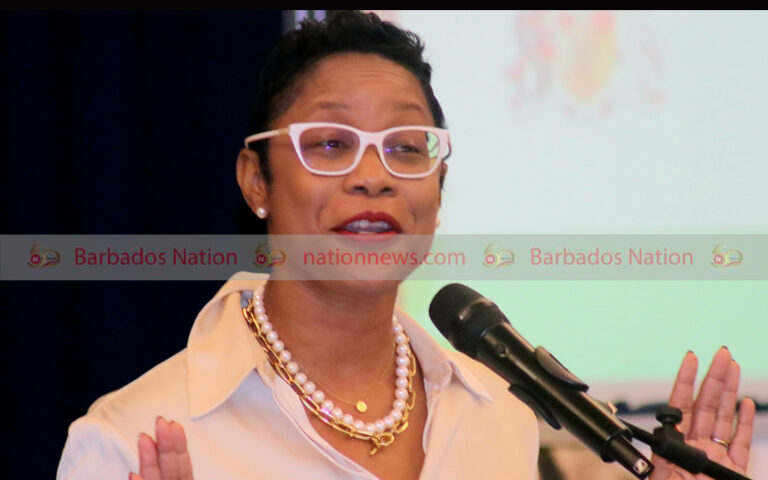
Dannyele Teneel Leslie is preparing to represent Barbados at Miss Afrikana International 2027 in Ghana, a journey she says carries a meaning far beyond competing for a crown. The Alexandra School alumna, who holds a master’s degree in international trade policy, has built a life spanning diplomacy, music, fashion and pageantry, while navigating personal challenges, including a diagnosis of multiple sclerosis in 2017. She spoke to Associate Editor Natanga Smith as she prepares to reconnect with her African heritage on an international stage.

Q: You grew up in Speightstown, St Peter. What was childhood like and did you always imagine you would pursue so many different interests?

Leslie: I had a very pleasant and adventurous childhood in what was then a much quieter, but incredibly historic Speightstown. Some of my fondest memories are of fishing from a jetty with my father and roasting flying fish on the beach. I also spent a lot of time with my grandmother in St James, so the West Coast and the sea have always been part of my life. Ironically, after all that time around the sea, I still cannot swim, but I can certainly fish!

Church was another very important part of my childhood. I grew up attending Speightstown Church of the Nazarene every Sunday. One of my earliest memories is of the three of us going to church on my father’s motorcycle, my father riding, me in the middle and my mother on the back.

Church was also where singing first entered my life. Like so many singers, I started by singing and reciting in church as a very young child.

I was academically strong, but I was equally interested in drama, Brownies, public speaking and even track and field. If there was an opportunity to participate, I generally wanted to be part of it. It never occurred to me that I had to choose between being academic and being creative.

Q: Who were the people who helped shape the woman you have become?

Leslie: My mother would certainly be one of the greatest influences. She is a social worker by profession, but she is also an incredibly creative woman and a florist by trade. I grew up watching her work her day job while still finding room for all these other abilities.

I think I absorbed that without even realising it. She showed me very early that different parts of a person can coexist. You don’t necessarily have to sacrifice your creativity for your profession, or one ambition in order to pursue another.

Mr Jeff Broomes was another important influence during my Alexandra years. He recognised ability in his students and pushed us to develop it. He celebrated students who were doing well rather than allowing their talents to go unnoticed.

Q: You have pursued international trade policy, modelling, music, entrepreneurship and pageantry. Why have you never limited yourself to one path?

Leslie: I have never felt obligated to diminish one part of myself in order to satisfy another. I think I always knew that I was good at many things, and I never understood why that meant I had to choose only one.

For a very long time, one of my personal philosophies has been: “Opportunity knocks but once, whether it comes with its value stamped on it, or whether it comes in disguise.” So when an opportunity presents itself, my instinct has generally been to explore it. I would rather discover what I am capable of than spend my life wondering what might have happened if I had tried.

Even now, I don’t particularly like being still. I am happiest when I am creating something, learning something, working towards something or simply getting things done.

So whether it has been international trade policy, modelling, music, entrepreneurship or pageantry, I don’t see those things as competing identities. They are different expressions of the same person.

Q: You have experienced several pageant runner-up finishes. Did those disappointments ever make you consider giving up?

Leslie: I competed in Miss Barbados World in 2006, where I placed first runner-up and won Best Talent, before I won Miss Holetown in 2009. After Miss Holetown, I went on to represent Barbados regionally

and internationally, including at Miss JCI’s Caribbean Queen in Antigua, where I placed first runnerup; Miss Caribbean World in Tortola, where I was also first runner-up and received Best Question And Answer and Miss Intellect; and Miss Jamzone International in Guyana, where I again placed first runner-up after what I felt was a very strong showing.

At one point, my friends and I used to laugh that I was going to write a book called First Runner-Up (laughs).

But I don’t look back on those placements with disappointment. Pageantry taught me something much more important: never allow someone else’s interpretation of you to determine where you go next.

In a competition, you prepare as thoroughly as you can, you walk onto that stage and you give the absolute best of yourself. After that, the result is no longer entirely within your control. Judges have a job to do, and their decision is final. However, the judges’ decision may be final; your destination is not.

And after all those first runner-up finishes, am I hoping to win this one? Absolutely (laughs).

Q: You founded the fashion brand Carib Reign and have pursued music. Which creative projects remain closest to your heart?

Leslie: I love many things, and I have never felt that I needed to focus on one creative pursuit at the expense of another. For me, it is often about what opportunity presents itself and what feels aligned with me at that particular stage of my life.

With Carib Reign, navigating entrepreneurship has certainly taught me a lot. I would never pretend that building a business is all cake and rainbows. It can be incredibly challenging. But there have also been moments that reminded me why I started creating in the first place.

I had the opportunity to partner with the National Cultural Foundation on Bloom Barbados, where I was one of the featured designers and contributed some of my designs to the project. I also participated in my first fashion show and was able to watch pieces that had existed initially in my imagination come alive on models and onstage.

Music is different because it has been with me for such a long time. I don’t sing nearly as much as I probably should anymore, but I have never closed that door.

I don’t need every talent I possess to become a career. Some things can simply remain part of who I am until the right opportunity calls them forward again.

Q: You were diagnosed witmultiple sclerosis (MS) in 2017. How did that diagnosis change your outlook on life?

Leslie: The diagnosis actually came several years after my first experience with optic neuritis, which caused me to lose the vision in my right eye. I was treated with steroids in hospital and my vision eventually returned so life continued.

Years later, while completing my master’s degree [international trade policy], it happened again. I was doing an intensive one-year programme, preparing for examinations and trying, as I always do, to give my absolute best. It was an incredibly stressful period, and then I experienced what became my first major MS episode. That eventually led to my diagnosis.

I had to defer my examinations, which was difficult for someone accustomed to pushing through and getting things done.

On the surface, most people would probably never know that I live with MS. But I don’t say that because I believe illness should be hidden. Quite the opposite. I have simply never wanted a diagnosis to become my identity.

MS is something I live with. It has changed aspects of my life and it has certainly tested me, but it does not get to tell me who I am.

Perhaps that has been the greatest lesson: strength isn’t always pretending that nothing affects you. Sometimes strength is accepting what is, adapting where you must, and still refusing to surrender the fullness of your life.

Q: Your selection for Miss Afrikana International 2027 brings you to Ghana, which has a historical and cultural connection to Barbados. What does reconnecting with Africa mean to you?

Leslie: My interest in identity actually began long before Miss Afrikana. Even something as seemingly simple as my relationship with my hair has been part of that journey. Like many black girls of my generation, my hair was relaxed from the time I was about six or seven years old. I essentially knew my hair as straightened hair for most of my life.

That changed when I was about 30 and living in Belize, where I was completing an internship with the Caribbean Community Climate Change Centre. I couldn’t find anyone to maintain my relaxed hair and by the time I returned to Barbados, my hair was not in particularly good condition.

So I made what felt at the time like this incredibly brave decision: I cut it off and started again.

That curiosity eventually led me to explore my ancestry as well. My most recent ancestry update estimates that I am approximately 95 per cent African, with Ghana and Western Togo accounting for 22 per cent, my largest single regional connection.

And the timing was almost poetic. The update arrived in the same week that I received confirmation that I had been selected to represent Barbados at Miss Afrikana International.

Barbados was profoundly shaped by African people, by their memory, their survival, their traditions and everything they created under circumstances they did not choose.

The Atlantic separated geography, but it did not erase identity.

Our ancestors crossed that Atlantic in one direction without freedom, without choice and without control over the lives awaiting them. Generations later, I have the extraordinary privilege of crossing it in the opposite direction as a free woman.

Q: Beyond competing for the crown, what do you hope to achieve through Miss Afrikana and what legacy would you like to leave for young Barbadian women?

Leslie: I want my life to outlive the time I am given. I understand that our time here is measured, but I think legacy is what allows a person’s impact to extend beyond it. For me, fulfilment would not simply be being able to look back at everything I accomplished personally. It would be knowing that somewhere along the way, I created opportunities that continued after me.

As it relates specifically to Miss Afrikana, yes, the immediate goal is very clear: I am going to Ghana to win the crown. I don’t think there is anything wrong with saying that. I am preparing seriously because I want to represent Barbados exceptionally well and I want to win.

But I also want this journey to become bigger than my own participation.

Ultimately, I would love to establish a Miss Afrikana Barbados franchise so that another Barbadian woman can have this experience after me, learning her history, understanding the connections between Barbados, Ghana and the wider African continent, developing her talents, and having an international platform through which she can show the world something of what Barbados is made of.

I would like another young woman to have access to those possibilities, and then create possibilities of her own.

I don’t simply want to collect opportunities. I want to leave some behind for somebody else.

If another young Barbadian woman can eventually stand on an international stage because a door I walked through remained open behind me, that would feel like legacy.

Q: Finally, when life does not go according to plan, what keeps you moving forward?

Leslie: Like most people, I have had doors closed in my face. Sometimes that has been quite literal in the modelling and pageant spaces. I have always been very petite, so I’ve heard, “You’re too small”, or, “You’re not tall enough”. Professionally, I’ve received my share of those emails that begin, “We regret to inform you . . . .”

And I won’t pretend those moments don’t hurt. They do. When you have prepared, believed you were capable and genuinely wanted something, disappointment can be incredibly deflating.

But I’ve learned not to live there. Sometimes you go back to the drawing board. Sometimes you lean on the people you trust. You pray. You apply yourself again. And sometimes, after knocking repeatedly on the door you were convinced was meant for you, you have to be willing to turn around and notice that there are other doors.

I have never allowed my disappointments to trap me in a box of disappointment.

I may be disappointed. I may need a moment to regroup. But eventually, I crawl out, reassess and look for the next thing that can bring me purpose, joy, success or fulfilment. (NS)

Dale Marshall receives BLP’s highest honour

0

Former Attorney General (AG) Dale Marshall is this year’s recipient of the Barbados Labour Party’s (BLP) highest honour.

The former Senator and Member of Parliament for St Joseph, which he represented for 23 years, was recognised for his “distinguished record of public service, steady leadership and commitment to the party” and, as such, was awarded the Grantley Adams Award by party leader, Prime Minister Mia Amor Mottley during the Barbados Labour Party’s 87th Annual Conference cocktail reception and awards ceremony at St George Secondary School, Constant, St George.

In his acceptance speech, the veteran politician, who announced his retirement from elective politics shortly after the general election in February, thanked the BLP for recognising the efforts of all the awardees.

“I am deeply humbled and honoured to receive [this] award. I can’t readily identify anything I have done over the years of membership of this great party which would even place me in the same category as the many outstanding party members who have had this particular honour bestowed on them in prior years,” he said. 

Marshall said the award was not given lightly and he accepted it with “profound gratitude”. 

He thanked the party members for their support and friendship, the “wonderful people of St Joseph” for placing their trust in him, and his long-suffering family, who gave up spending time with him so he could serve his country.

Despite his retirement from active politics, Marshall pledged his continued support for the party and promised he would be available to play his part “whenever and wherever” he was needed. The former AG regaled the audience with a brief history of his joining the party, saying he joined at a low point of the party and saw it rise to greatness, adding that the highlights of his career were the camaraderie, friendships made, and helping people, which did not stem from high office. 

“I have always held the view that it has been when we were in Opposition that the true greatness of this party is seen. It is then our resilience is most evident; it is then our strength as a party most keenly felt; that is when we rally around each other and lift each other up. 

Don’t get me wrong, I am not wishing for us to be in Opposition again, but I’m sure the PM would agree with me, and I say it to all who have only known electoral victory, that the real test is when you are not in power. That is when the people see who you truly are and determine your worth,” he said, advising the party never to forget the people who got them there.

The night also featured Diana Forde receiving the Milroy Reece Award; Ambassador David Comissiong receiving the Chairman’s Award; Carolyn Corbin receiving the Chessel Rock Award; Kyrie Bethune receiving the David Simmons Award; and Beverly Yearwood receiving the Ermie Bourne Award. (CA)

Push to shepherd netballers

0

Anna Shepherd is returning to fulltime coaching with an ambitious vision to help shape the next generation of netball talent in Barbados through the launch of a netball academy.

The experienced and highlyrespected coach has turned her attention to developing young players, providing them with the technical skills, tactical understanding and discipline needed to progress through the ranks and potentially represent Barbados on the international stage.

Shepherd launched the “Shep’s Netball Academy International” – the first of its kind project – on Thursday night at the Wildey Gymnasium.

The stately event was attended by several local officials as well as regional and international delegates on the island for the ongoing Netball World Cup Americas Qualifier tournament.

The Bajan Gems are seeking one of the two top spots to qualify for the World Cup which will be played in Sydney, Australia from August 25 to September 5, 2027.

“Netball has given me everything and at Shep’s Netball Academy, we will honour the legacy of the sport in Barbados. Netball gave many of us the amazing opportunity to represent this great country and also gave us a passport to the world,” Shepherd told the audience.

“We must do more to provide our young people with pathways to the future. Our young people are not lazy, they are smart. They want to know where their commitment can take them. My dream is that five years from now I will be able to sit here and watch young players who started with us shoot the winning goals for Barbados against England, New Zealand, Australia . . . or represent a professional championship franchise team.”

Significant contributions

Also in attendance were several former national players who represented the island with distinction over the last four decades – including the 1987 national team coached by Shepherd – which reached the highest international ranking in the island’s history.

That team included Pamala Proverbs, who was master of ceremonies, Sandrene Jordan, Marion Johnson-Hurley, Sandra Bruce-Small, Denise Morgan and Sonia Banfield; all of whom have made significant contributions to the sport in various capacities over the last four decades.

Shepherd said she answered the many calls to return to the forefront of the sport’s development after she witnessed a “decline” in the levels of performance in the sport and wanted to be hands-on to help.

“We are not playing enough netball … too many players are no longer students of the game. Every sport is investing in its youth, yet we seem to be waiting for a miracle . . . ladies and gentlemen, there will be no miracles. I finally said to myself ‘Shep, stop complaining and build it’. With encouragement I decided to take action,” she said.

“We will have programmes to strengthen the local game and help ensure Barbados can produce netballers capable of competing with the best in the region and beyond.”

Shepherd is rated among the best coaches in the region.

Along with her track record in Barbados, she was the mastermind behind the National Sports Council’s primary schools’ tournament and was also at the helm when Antigua and Barbuda attained their highest global ranking.

The academy is expected to provide a structured environment for aspiring netballers to sharpen their fundamentals, improve their fitness and develop a deeper understanding of the game.

It will also place emphasis on confidence, teamwork and the mental strength required to compete at the highest level.

The main sponsor Ian Beach, hailed Shepherd’s lifelong work to develop talent.

He also noted, that at this juncture where the sport continues to seek greater investment in youth development, a stronger pathway from grassroots participation to elite competition, overseas franchise placements and national selection, a project like the academy is the right tonic. (PS)

Man arrested after fire at Hitler’s mountaintop Eagle’s Nest retreat

0

Police in the southern German state of Bavaria have detained a 33-year-old German manduring a fire at Adolf Hitler’s Alpine mountain retreat, the Kehlsteinhaus, also known as the Eagle’s Nest.

Dispatchers in Traunstein received a fire alarm from the building at 21:15 local time (19:15 GMT) on Friday and firefighters found it engulfed in flames.

Some 200 emergency personnel were deployed to the scene where the blaze was still burning early on Saturday, as police said difficult terrain hindered efforts to bring the fire under control.

Police said they apprehended the suspect riding a motorcyclenear the scene and possible motives were still being examined, German media reported. A criminal investigation has been launched.

There is currently nothing to suggest the involvement of further suspects, police official Gerhart Holzinger told a press conference on Saturday afternoon.

Public prosecutor Rainer Vietze said a psychiatric report had concluded the 33-year-old man showed signs of possible mental illness and diminished responsibility might therefore be assumed.

Vietze said a possible political motive was also being considered, but stressed the investigation was in its early stages.

The residence, above the town of Berchtesgaden, was one of several buildings in the area used by the Nazi dictator and his entourage during World War Two.

Hitler and top Nazi officials used his nearby Berghof residence to plan the invasion of the USSR in 1941 and the whole complex was considered one of his headquarters.

He also used the area as a backdrop for propaganda films portraying him as a lover of animals and nature.

Local media reported that site had been “largely destroyed” and the public was urged to avoid the area.

Bavaria’s Interior Minister Joachim Herrmann told reporters that the site would “under no circumstances remain a ruin”, broadcaster BR24 reported. “It is important that we continue our work of remembrance,” he added.

Completed by the Nazis in 1938, the Eagle’s Nest, which sits at an elevation of around 1,800m (5,900ft), escaped destruction after their defeat in 1945.

Since then, it has become a popular tourist destination and houses a mountain inn.

It serves as “a cautionary reminder of the abysses of the inhumane Nazi dictatorship”, according to its official website.

During WW2, Hitler and his followers were responsible for the deaths of tens of millions of people, including the mass murder of European Jews. Homosexuals, gypsies, the disabled and ethnic minorities were sent to concentration camps and put to death.

There has been a wider debate in Germany and Vienna over whether to preserve, repurpose or demolish buildings connected to Hitler.

While some say these buildings should be preserved for historical reasons, others have raised concerns that they could be used as monuments or places of pilgrimage for neo-Nazis and far-right extremists.

In June, Berlin authorities announced they would tear down one of Hitler’s bunkers – described at the time as “the power centre of Nazi Germany” – to build flats and offices on the site.

Those critical of the plans said the bunker had “significant historical value” and that it should have been turned into a museum and memorial site with an exhibit about the end of the war.

And in July, after years of controversy, Austrian authorities refurbished the house in the town of Braunau am Inn in which Hitler was born and turned it into a police station. (BBC News)

Call to craft workplace policies for dementia

0

Alzheimer’s disease is now a workplace issue and Barbados will have to deal with it.

Executive board member of the Barbados Alzheimer’s Association, Kaila Branch, said younger people worldwide were being diagnosed, so it was no longer solely an older person or retiree problem.

“One of the common myths when we’re thinking about dementia is that it only affects the older person, the person who is over the age of 65. But let me highlight that whilst age is the strongest risk factor, we have youngeronset dementia and younger-onset Alzheimer’s disease that occurs in persons who are in their 30s, 40s, 50s and 60s and obviously persons who are within the working population,” she said.

Branch was addressing the recent third annual Workplace Wellness in Action seminar under the theme Policy in Action. It was hosted by the National Committee on Wellness in the Workplace and was held on Monday in the Lloyd Erskine Sandiford Centre, Two Mile Hill, St Michael.

The mental health advocate said it was possible for people with mortgages, dependents and young families to be diagnosed with the dreaded disease and, as such, would need support. However, many of them may not want to disclose their condition.

“This is why I continue to press upon persons that we must normalise this conversation because it is something that is on us, it’s something that certainly has impacted us, and we don’t want most persons to suffer in silence while their job security is eroded due to the poor performance that may be attributed to a number of other things as well,” she said.

Branch said this was why it was vital to establish protocols dealing with dementia and Alzheimer’s among working-age people.

“We also recognise that a number of persons face stigma and discrimination; obviously that may be misaligned with poor performance, wrongful demotion or termination, and certainly feelings of disregard and lack of value. Can you imagine if you’re working 15, 20 years with a company, and you start to have these levels of symptoms, which may be impacting your work, and the first thing that person thinks to do is to write you up in terms of your performance metrics and try to hustle you out of the job,” she said.

Fall under category

The advocate added it was not only those who were diagnosed with Alzheimer’s disease who may clash with their workplaces, as caretakers also fall under that category. She said caretakers of those with dementia often had to find a way to balance taking care of their loved ones with their own careers.

“These informal caregivers must balance caregiving with productivity. Will absenteeism affect your job? Do I leave my job to care for my loved one? Obviously, we know that private care is also an expense. And so, globally, international figures highlight that 50 per cent of the costs associated with elder care are attributed to the informal caregiver. Therefore, families absorb a vast amount of their long-term care costs, either through direct out-of-pocket expenses or the heavy economic opportunity costs of unpaid care hours.

“And so yes, dementia is a labour issue. It intersects with the workingage employee who may be diagnosed early with the condition. Obviously it also impacts many employees who act as unpaid, informal family caregivers,” she said.

The mental health advocate said there had to be support in the workplace for those who were diagnosed with early-onset Alzheimer’s as well as caregivers with jobs.

“We want to create a supportive workplace environment, and we must do this proactively. We must shape the future of work rather than respond reactively to it. I want to urge employers who have no policies with respect to education on dementia to do so. It is imperative that we all know how to recognise the signs and the symptoms. And not only so, but to have guidelines which are going to offer balance for employees and institutional safety and functionality extended with empathy and respect for the employee’s privacy and dignity as well,” she said. (CA)

PAHO warns of childhood lead poisoning risks in the Caribbean  

0

The Pan American Health Organization (PAHO) is urging Caribbean and other countries in the Americas to strengthen efforts to detect and prevent childhood lead poisoning, warning that exposure to the toxic metal often goes unnoticed despite its potentially irreversible health effects.

Marking International Lead Poisoning Prevention Week, observed from October 18 to 24, PAHO said children can be exposed to lead in their homes and communities without displaying symptoms, even as it affects brain development and long-term health.

The regional health agency said an estimated 815 million children worldwide, or one in three, are affected by lead poisoning.

It warned that there is no known safe level of lead in the blood, noting that even low concentrations can contribute to reduced intelligence, behavioural difficulties and learning problems.

In Latin America and the Caribbean, studies indicate that approximately 30 per cent of children tested had blood lead levels exceeding five micrograms per decilitre, while nearly seven per cent recorded levels above 10 micrograms.

PAHO said lead exposure is also linked to nearly 200,000 deaths annually in the region, while the World Health Organization (WHO) estimates that more than 3.5 million deaths globally were attributable to lead exposure in 2023, primarily from cardiovascular complications.

“Lead poisoning is preventable, but we cannot prevent what we do not identify,” said PAHO technical adviser on chemical safety, Francisco Sánchez Otero.

He said stronger surveillance and improved identification of exposure sources were essential to protecting children before irreversible harm occurred.

PAHO identified mining, industrial activities, informal recycling of lead-acid batteries, lead-based paints and lead-glazed ceramics among the major sources of exposure in the region.

Children may also ingest or inhale lead through contaminated dust, soil, water and food.

The agency expressed concern that limited testing and surveillance in several countries continue to hamper efforts to identify affected populations and prevent exposure.

It said it is assisting Caribbean and other countries in strengthening laboratory testing, blood lead monitoring, environmental surveillance and regulations governing hazardous products.

PAHO is also supporting measures to improve drinking water safety, phase out lead-containing paints and promote safer battery recycling.

The agency noted that WHO introduced an initial module of its PREVENT Technical Package on Lead Poisoning Prevention in May, with the full framework expected in 2027.

PAHO said coordinated action across the health, environment, education and industrial sectors was critical to reducing exposure and protecting children from long-term harm.

“By linking surveillance data to targeted interventions, countries can move beyond documenting lead exposure to preventing it, protecting children from irreversible harm,” PAHO said. (CMC)

DLP: Food bill a critical failure

0

The Democratic Labour Party’s spokesperson on Agriculture and Fisheries, Amoy Gilding-Bourne, has labelled Barbados’ food import bill a national security risk.

Responding to the Weekend Nation’s stories yesterday on the issues farmers faced and the comparison between local production and imports, Gilding-Bourne, an attorney, called for an emergency acquisition and production action plan.

“This island’s staggering $957 million annual food import bill is a critical failure of economic governance and a direct threat to national food security. It is unacceptable that our local farmers produce only $300 million in food annually while we depend on overseas supplies for over 70 per cent of what we consume.

“This is not just an agricultural deficit; it is an unsustainable drain on our foreign reserves. The current administration’s passive approach to agriculture has left our food security vulnerable to global supply shocks and climate volatility,” she said.

Citing the data from the University of the West Indies’ Centre for Agricultural Research and Innovation, Gilding-Bourne stated that Barbados was “haemorrhaging” $77 million annually on just four categories of food: 10.2 million kilogrammes of fresh produce, 2.15 million kilogrammes of beef, 1.12 million kilogrammes of pork, and 500 000 kilogrammes of mutton and lamb.

As such, she proposed that an immediate response from government should include launching targeted grant programmes for local blackbelly sheep farmers and introducing temporary feed subsidies to immediately scale up local pork, beef, and mutton production.

“We cannot afford to keep farming out our food security to foreign nations. Our farmers have the skill; they simply need a government with the political will to back them,” she said.

Meanwhile, the acting chief executive officer of the Barbados Agricultural Development and Marketing Corporation, Dr Claire Durant, said they had introduced its Bajan Harvest Hub to work with farmers supplying speciality crops to the tourism industry, as well as the Crop Escalation Programme, which targets 16 traditionally imported staple and vegetable crops for local production.

(CA)

‘DPP cannot be included’

The State has filed an appeal against a High Court decision that quashed a magistrate’s order sending former CLICO Life Insurance Company chairman Leroy Parris to stand trial for the alleged theft of $3.3 million from the now-defunct insurance company.

This Content Is Only For Subscribers

Please subscribe to unlock this content. Enter your email to get access.
Your email address is 100% safe from spam!

Cummins: Govt prioritising adolescent care

0

Barbados has built universal health care, education and social protection, but the next challenge is making those systems speak to one another so no young person slips away unnoticed, Minister of Health and Wellness, Senator Lisa Cummins, has said.

She was speaking on Wednesday at the opening of a two-day Training of Trainers Workshop on the Appropriate Care of Adolescents, hosted by the United Nations Population Fund (UNFPA) and the Ministry of Health and Wellness at UN House, Christ Church.

Cummins described how a struggling student might be seen by a teacher, a doctor and a social worker, each doing their job well. Without collaboration, “this individual, this child, this girl or this boy, is inevitably likely to fall through the cracks”, she stated.

She noted that eight of the island’s nine polyclinics now offer adolescent health clinics, supported by a ten-year adolescent health strategy. However, she said that care must go beyond buildings. “It’s not enough to establish a clinic,” she said, pointing to the attitudes of staff, the way they communicate and the welcome of the physical space. For a young person unsure about seeking help, the minister said, the first visit matters most. “That first interaction with us can be decisive,” she said.

Speak openly

Cummins also made a case for long-term thinking, adding that boys should be encouraged to speak openly about their health. “Investments in adolescent health are investments in the future health of our adult population,” she highlighted.

The Minister of Health challenged participants to consider how they will communicate effectively with adolescents, recognise when a health concern is linked to circumstances at home, in school or in the community, and help establish national standards so that clinics deliver consistent quality across the island.

UNFPA Director and Representative of the Sub-Regional Office for the Caribbean, Beatrice Mutali, commended the ministry for developing the Barbados national standards for delivery of health services for adolescents, which calls for training trainers as a way of getting the standards into practice across the health system. Mutali noted that adolescents are not a uniform group and, while they readily seek care for common illnesses, “are far less likely to seek care for mental health and sexual and reproductive health services,” she said. She urged particular attention to adolescents living with disabilities, who can face inaccessible facilities and the denial of confidentiality and consent.

Mutali added that the true measure of success will come when a nervous adolescent walks into a clinic and meets a provider who listens with empathy and respects their confidentiality. “That single moment of trust is the outcome we are striving for,” she said.

(DDS)

Deadly shooting near Paris investigated as ‘crime of terrorism’, minister says

0

One person has been killed and five others wounded – three seriously – in a gun attack in a Parisian suburb which authorities are investigating as “terrorism”.

Several drive-by shootings took place on Friday – first in Trappes to the south-west of Paris, and then in nearby La Verrière. The rampage lasted almost 15 minutes, said Interior Minister Laurent Nuñez. A12-year-old girl is among the wounded.

The suspected attacker has been arrested. The motive remains unclear, but the National Anti-Terrorist Prosecutor’s Office (PNAT) said the incident appeared to be “murder in connection with a terrorist enterprise”.

Nuñez told reporters in Trappes: “It’s clearly a terrorist crime, that’s what [the prosecutor] has said.”

The Mayor of Trappes, Ali Rabeh, said that “an individual fired shots from his vehicle at several people he encountered” on Friday morning.

The gunman drove through several neighbourhoods in a grey Renault Clio, according to witnesses. Rabeh said he had “fired randomly” with the seeming intent of causing “as many casualties as possible… he wanted to cause carnage”, he said.

The mayor said people had been targeted at a petrol station, a medical centre and a playground in Trappes before the attacker had driven on to nearby La Verrière.

A police union official said the suspect had been detained in La Verrière on the main N10 road that runs through the town.

Asked what the motive for the shootings may have been, the mayor of Trappes said that the victim who had died was of African origin and one of those in a critical condition was of North African descent.

The attack had a “racist, probably Islamophobic overtone”, he said.

In its own statement, the anti-terror prosecutor called for caution regarding the identity of the victims.

However, among the alleged offences covered by the investigation, the prosecutor listed “murder in connection with a terrorist enterprise” with the aggravated circumstance of acts committed because of “real or perceived membership of a particular race, ethnicity, nation or religion”.

The mother of the injured 12-year-old told French broadcaster RTL her daughter suffered eight gunshot wounds and needed surgery.

“How could anyone do this to a child?” she asked.

The mother said her daughter had been wearing a headscarf and questioned whether this was why she was attacked.

“She’s a child who was born in France, in Trappes. She has the right to live in France, to make her life in France,” she added. (BBC News)