
Home Blog Page 33

Father remanded to custody on a charge of murdering his son

0

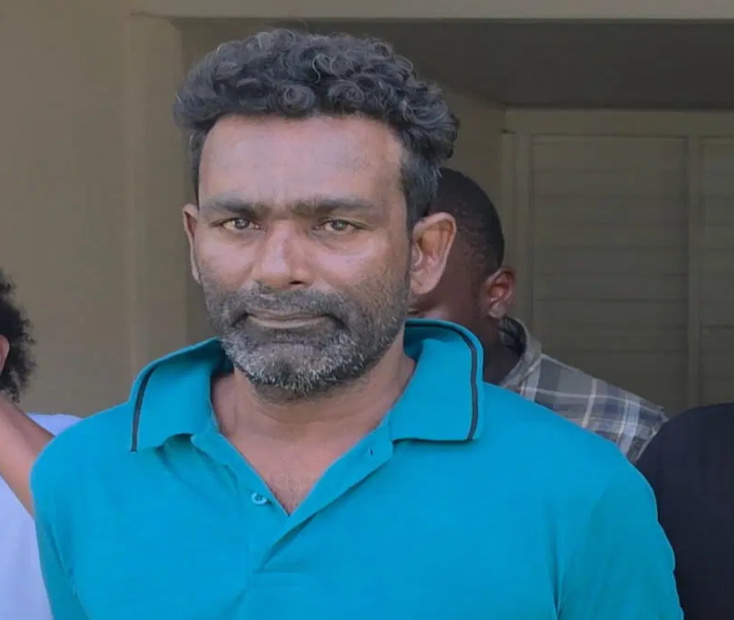
A 45-year-old cane harvester has been remanded to prison after he appeared in a magistrate’s  court here on Friday charged with the murder of his six-year-old son, Orlando Jaikarran, whose body was discovered in a canal at Waterloo, West Coast Berbice, earlier this week.

Bharrat Jaikarran appeared before Magistrate Shareefah Parks at the Weldaad Magistrate’s Court, with the prosecution alleging that the offence occurred on October 15, 2026, at Waterloo, Bath Settlement, West Coast Berbice.

The accused’s mother, Gowkarran, who broke down in tears, was among several relatives also attended the brief hearing.

Police prosecutor Garfield Edwards told the court that the case file had been completed and legal advice obtained. He said investigations were continuing into the involvement of another suspect.

Jaikarran was remanded to prison until November 12 with the matter being transferred to the Fort Wellington Magistrate’s Court for further proceedings.

The police say that Jaikarran, who lived with his three children, reported that Orlando was last seen alive on the evening of October 14.

The child’s body partially decomposing body was later discovered on October 20 on the northern side of Waterloo with the police saying that his head, part of the left hand and the right foot severed. A post-mortem examination was subsequently conducted, but the cause of death was recorded as unascertainable due to the condition of the body.

Meanwhile, Human Services and Social Security Minister Dr Vindhya Persaud has condemned what she described as the use of religion and superstition to justify atrocities against children, insisting that no faith should ever serve as a cover for brutality.

“No faith, no religion, no one should parade under the guise of faith and religion to do the kinds of atrocities that I’m hearing of. None,” she said at a candlelight vigil on Thursday evening.

“We cannot condone these things. And I’m very plain about it. Don’t subscribe to nonsense and superstition,” said Persaud, who was joined by Education Minister Sonia Parag, government officials, teachers, students, and residents.

“What has happened is a monstrosity, a brutality beyond what any sensible mind can comprehend,” she said, adding “I expect a thorough investigation. I expect prosecution. That is why the law is here. I expect the harshest penalty for anyone who committed this. No holds barred.”

Persaud also made reference to the statement by President Irfaan Ali, whom she said had suggested that the tthe time may have come to revisit some of the penalties currently provided under the law.

The Minister expressed anger that a child could suffer such a fate when the adults responsible for his care should have been his greatest source of protection.

“The arms that should love, care for, protect, and hold a child safe – those arms didn’t do that,” she said, urging parents and guardians never to allow anger or adult conflicts to result in harm to children, stressing that their safety must remain paramount.Parag demanded accountability as she pledged support for Orlando’s grieving school community.

“Every ounce of what the law should do, it should do in this case,” Parag said, adding that she intends to personally visit Bath Primary School, where Orlando was a Grade One pupil, to provide comfort and support to his classmates and teachers. (CMC)

Pitch to boost business facilitation

0

The global business sector is keen to continue working with Government and other partners to improve business facilitation in Barbados. Joanna Austin, president of BIBA, the Association for Global Business, said the issue was one which deserved “serious, continuous attention” because Barbados could not rely on its reputation alone.

“Business facilitation is not a call for weaker regulation. It is a call to ensure that sound regulation and effective administration work together,” the attorney said yesterday when the two-day Global Business Conference 2026 opened at Wyndham Grand Barbados Sam Lord’s Castle Resort yesterday.

“For BIBA, this is an important area for continued engagement with Government regulators and stakeholders. The private sector has practical experience of the challenges that arise in the course of doing business.

“Public institutions have responsibilities that must be discharged in the national interest, and bringing these perspectives together can help identify workable solutions.

“The objective should be a business environment in which the requirements are clear, processes are proportionate, and responsibilities are understood, and decisions are made with appropriate efficiency,” she added.

Austin also said that “we must continually demonstrate the value of choosing Barbados”.

“Our history, our legal framework, professional expertise, political stability and our international relationships have helped establish our place in the global business community. These are significant assets and we should never take them for granted,” she said.

‘Expectations evolving’

“But the international marketplace does not stand still. Our other jurisdictions are investing in their capabilities, refining their offerings, and responding to the changing needs of global business. Client expectations are evolving. Regulatory requirements are becoming more demanding.

Technology is altering how services are delivered and how value is created.

“The question before us, therefore, is not simply whether Barbados remains an attractive jurisdiction today. It is whether we are making the decisions necessary to ensure that Barbados remains relevant, competitive, and trusted tomorrow,” Austin said.

One area she saw as requiring a sustained focus was Barbados’ reputation, including focusing on more than tax policy.

“The global minimum tax and the wider evolution of international tax rules are changing the considerations that influence investment structures and jurisdictional choices. For Barbados, it’s particularly important to understand how our value proposition is evolving,” Austin said.

“We must be clear about what we offer beyond any single tax consideration. Our professional services, legal certainty, expertise, international relationships, and capacity to support sophisticated business must remain central to our proposition, and we must also look at our competitiveness,” Austin said. (SC)

Sir Hilary’s reparations plea to King Charles

0

Chairman of the CARICOM Reparations Commission (CRC), Sir Hilary Beckles, has issued a passionate appeal to Britain’s King Charles to take definitive action on the issue of reparatory justice for Britain’s enslavement of African peoples.

The United Nations General Assembly adopted a landmark Resolution on March 25, 2026, declaring the transatlantic slave trade and racialised chattel enslavement of Africans as the “gravest crime against humanity”.

During a virtual media briefing yesterday ahead of the 28th Commonwealth Heads of Government meeting scheduled for November 1-4 in Antigua and Barbuda, Sir Hilary said the time had come for governments on all sides to begin the dialogue following the UN Resolution and he appealed to the British Head of State to take the lead.

“My personal appeal to King Charles III, not so much in his role as head of the Commonwealth; not so much in his role as the constitutional monarch of the UK, but I am appealing to the man. I am appealing to Charles Windsor, a parent, a grandparent, a man today who reflects upon the history of his family.

“He can see the enrichment that slavery has presented to his family. He can see that the wealth he is passing on to his children and his grandchildren, all came out in significant sums through this process of the chattelisation of the African people.

‘Provide leadership’

“We are calling upon the king, as a man, as a human brother, to provide leadership to this organisation over which he presides, the Commonwealth,” said Sir Hilary.

“The Commonwealth historically was the site of this crime, the Commonwealth can become a major global institution to take us forward into the 21st century. The Commonwealth can become a moral institution committed to human justice and this is what we are calling for in CARICOM, in the African union. We are calling for the restoration of human dignity and the creation of a process of building partnerships . . . for development, for human progress,” added Sir Hilary, who is considered a global advocate on reparative justice agenda.

King Charles will head the delegations of prime ministers and presidents from the 56 Commonwealth countries expected to participate in the conference being held under the theme Accelerating Partnerships and Investment for a Prosperous Commonwealth that will see an estimated 5 000 delegates from around the globe descending on Antigua and Barbuda next month.

Vice-chair of the CRC, Professor Verene Shepherd; chair of the Guyana Reparations Committee and a vicechair of the CRC, Eric Phillips and Barbados’ Ambassador to CARICOM David Comissiong, also participated in yesterday’s media briefing. (GC)

Farmers struggling to fill food gap

0

Barbados imports about 10.2 million kilogrammes of fresh produce, 2.15 million kilogrammes of beef, 1.12 million kilogrammes of pork and half a million kilogrammes of mutton and lamb annually, spending about $77 million on the four categories alone.

The figures highlight the island’s dependence on overseas food supplies, with local farmers producing about $300 million in food annually against a food import bill of $957 million.

Research by the University of the West Indies’ Centre for Agricultural Research and Innovation (CAGRI) shows that Barbados consistently produces less than 30 per cent of the food it consumes across the board.

Researcher and CAGRI director Dr Michele Singh said the 2025 data from the Ministry of Agriculture showed significant gaps between local production and demand for fresh produce and several types of meat.

“Fresh produce – beef, pork and lamb together – add up to about 17.6 million kilogrammes of demand a year while local farmers supply about 3.7 million of that. That’s roughly one in five kilogrammes. It varies a lot by product. Fresh produce is just under 20 per cent local, beef is closer to 27 per cent, pork is about 21 per cent and mutton and lamb are under ten per cent. We import about ten kilogrammes of lamb for every one we raise,” she said.

Largest import category

Fresh produce was the largest import category among those analysed, costing approximately US$25.6 million annually. Beef accounted for another US$8.6 million, while pork, mutton and lamb made up the remainder of the combined US$38.5 million bill.

“By value, those four categories cost about US$38.5 million a year in foreign exchange. That’s roughly BDS$77 million. Fresh produce is the largest share at about US$25.6 million, then beef at US$8.6 million. However, this covers only part of the bill. We also import wheat, rice, dairy, animal feed and a lot of processed food. None of those can be replaced quickly and some can’t be replaced at all,” Singh said.

She noted that poultry and eggs were historically different, as local producers usually covered most of the demand, although those categories were outside CAGRI’s analysis.

The food import bill is also driven by the demands of the tourism industry, which accounts for a substantial share of imported food consumed.

Acting chief executive officer of the Barbados Agricultural Development and Marketing Corporation (BADMC), Dr Claire Durant, told the Weekend Nation: “Approximately 20 per cent of all imported items are utilised in the tourism industry and as we know, the average length of stay of visitors, along with the fact that a percentage of the total persons on island at any time are tourists, impacts the food needs.”

Durant said the tourism industry was heavily dependent on high quality/high grade crops, with vegetables, temperate fruits, beef, mutton and pork among the food items in demand.

To increase local supplies, the BADMC has introduced its Bajan Harvest Hub to work with farmers supplying speciality crops to the tourism industry. Its Crop Escalation Programme also targets 16 traditionally imported staple and vegetable crops for local production.

President of the Barbados Agricultural Society, Henderson Williams, said there was significant hope invested in those crops because of the gap between imports and local production.

Singh identified fresh produce, small ruminants (sheep and so on), pork and beef as the areas with the greatest potential for increasing domestic output.

“Fresh produce is the biggest gap and the crops suit our climate. Onions, sweet peppers, tomatoes, cabbage, leafy greens and cucumbers are the obvious ones. Root crops like sweet potato and yam are already doing well. Protected growing, such as shade houses and greenhouses, could help us get more out of each acre and grow through the dry months.

“As for small ruminants, mutton and lamb have the widest gap relative to what we raise. The market is there, the animals do well here and they need less land than cattle. Then there is pork and beef; both have room to grow, but they depend on feed. Most of our feed grain is imported, so feed prices will decide how much of that growth is profitable. There’s a health angle too – more fresh, local produce on plates helps farmers and families both,” she said.

However, closing the production gap would require substantial investment. Singh said CAGRI’s estimates indicated that about US$87 million would be needed to close the gap in fresh produce, beef, pork and lamb, potentially saving about US$38.5 million in foreign exchange annually.

She said fresh produce would require approximately US$77 million, compared with about US$11 million for livestock.

Singh cautioned that the figures were modelled estimates intended to demonstrate the scale of the opportunity, rather than an established plan. (CA)

Earthquake of magnitude 7 strikes China’s Tibet

0

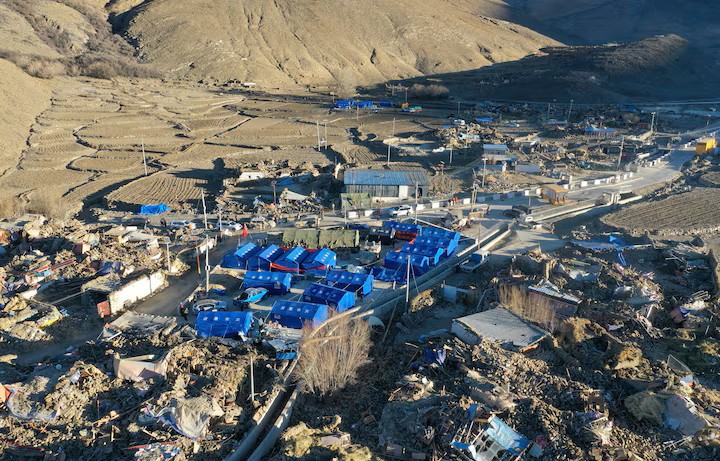
 A magnitude 7.0 earthquake struck China’s southwestern region of Tibet at around 10:33 p.m. (1433 GMT) on Thursday, ​the China Earthquake Networks Center (CENC) said.

Local authorities have ‌found at least two people injured in a village near the epicentre, with some houses in villages closest to the epicentre showing cracks, ​the state broadcaster said. The quake is the strongest ​to hit China since January 2024.

The epicentre was in ⁠a sparsely populated, high-altitude county in Nagqu, northern Tibet, at ​a depth of 10 km (6.2 miles). The average elevation within ​5 km of the epicentre is about 4,864 metres (15,960 feet), CENC data showed.

Videos released by local officially run media showed people leaving their homes ​and seeking shelter outside or in their cars parked on ​the street. One resident reported being awakened by the strong quake and ‌heard ⁠the house squeaking in the tremor.

The quake was clearly felt in the local area, CENC said. The epicentre was around 400 km from the Tibetan capital of Lhasa.

Local fire and rescue ​teams have mobilised ​and are ⁠heading to the affected region, state media said.

A string of smaller tremors of around magnitude ​3 and 4 have been recorded in surrounding ​regions following ⁠the magnitude 7 quake, CENC data showed.

In 2010, a magnitude 7.1 tremor struck Yushu in neighbouring Qinghai province, killing at least ⁠2,698 ​people and leaving nearly 300 people ​missing. (Reuters)

Flash-flood warning issued for western Barbados

0

A flash-flood warning is in effect for western and northwestern districts of Barbados until 6 p.m. today, as moderate to heavy showers and isolated thunderstorms affect the island.

The Barbados Meteorological Services issued the warning at 1:15 p.m. on Thursday, October 22, amid excessive rainfall across western sections of the island.

The forecast indicates rainfall accumulations of one to three inches in affected districts as the showers persist throughout the afternoon.

Possible impacts include flooding along roads and at the foot of hillsides, soil erosion and land slippage, rising water levels in ponds, and fast-moving water carrying debris from higher elevations. Traffic delays are also possible.

The public is advised to follow recommendations from the Department of Emergency Management and monitor updates from the Barbados Meteorological Services, DEM, the Government Information Service and local media.

The warning is scheduled to end at 6 p.m. or earlier if conditions warrant. (BMS)

Fernandes to remain Man Utd captain despite outburst

0

Bruno Fernandes will remain as Manchester United captain and will not be disciplined for his post-match criticism of Michael Carrick after the 4-1 Champions League defeat by Como.

The United skipper criticised Carrick’s tactics for the game, then said it was up to the United head coach and his backroom team, not the players, to spot any issues and change them.

It was seen by many externally as a challenge to Carrick’s authority, just eight days after United defender Lisandro Martinez criticised director of football Jason Wilcox and the club’s summer recruitment.

Inside Old Trafford, there is sympathy for Fernandes for the position he found himself in.

The Portugal midfielder did 10 post-match interviews in Como, despite being replaced by Joshua Zirkzee midway through the second half.

While there is disappointment at some of his comments, it is acknowledged Fernandes’ annoyance was understandable given the manner of the loss, which was one of the worst in United’s European history.

It remains to be seen whether Fernandes will be picked for Sunday’s Premier League encounter with Bournemouth at Old Trafford. Carrick will be asked about the situation when he holds his pre-game news conference at 13:30 BST on Friday.

More to follow. (BBC Sport)

Barbados helping to spearhead US$500m disaster emergency fund

0

Barbados is playing a leading role in an international effort to secure a major new financial lifeline if the island is hit by a climate-related disaster.

The Lifeline Fund, which Barbados and participating countries are aiming to jointly fund with US$500 million initially, would buttress the country’s existing disaster insurance and emergency financing arrangements by providing rapid financial assistance secondary to the existing multilateral system.

Central Bank Governor Dr The Most Honourable Kevin Greenidge, who is chairing the V20 Central Bank Governors Working Group that is leading the work to turn this idea into a functioning financial institution, called it a “groundbreaking” undertaking where those involved “are working towards initially capitalising the fund at US$500 million, with a longer-term objective of at least US$1.6 billion”.

“The intention is to create a substantial pool of financial resources that participating countries can access when climate shocks place pressure on their economies,” he told the DAILY NATION.

Key initiative

“This is a very important initiative, not just for Barbados but internationally. The Lifeline Fund is something quite groundbreaking. We are developing what would be the world’s first climate-focused, multi-regional financial arrangement, designed specifically to provide rapid financial assistance to countries experiencing economic and financial difficulties following climate-related disasters.

“It is being developed under the Climate Vulnerable Forum and V20, a grouping that now comprises 77 countries across the Caribbean, Africa, Asia, Latin America and the Pacific. These countries are among the most vulnerable to climate change, despite contributing relatively little to the problem.”

Greenidge explained: “The idea is relatively simple. When a hurricane or other major climate event strikes, countries can experience an immediate loss of foreign exchange earnings, increased import costs and pressure on their international reserves.

“Yet international emergency financing does not always arrive quickly enough. Lifeline is intended to provide rapid access to foreign currency financing so countries can stabilise their economies while recovering from the shock.”

The Governor was in Bangkok, Thailand, last week for the annual meetings of the International Monetary Fund and World Bank, where he chaired the sixth meeting of the V20 Central Bank Governors Working Group.

During the meeting, Barbados, Guyana, Bhutan, The Gambia, Ghana and Papua New Guinea signed a Statement of Endorsement, formally signalling their interest in helping establish the Lifeline Fund.

Greenidge said this was “another major breakthrough” and that other countries have indicated support, subject to their domestic approval processes.

The fund is not yet operational, with participating countries targeting April 2027 for signature of the founding treaty, after which the necessary legal, financial and institutional arrangements must be completed. All endorsements to date are non-binding and do not yet commit a portion of countries’ foreign reserves to it.

Greenidge saw significant potential benefits for Barbados, considering that “our economy is highly vulnerable to hurricanes and other climate events, particularly given our dependence on tourism and imports”.

“Having access to additional foreign exchange liquidity following a disaster would help protect our international reserves, support the stability of our exchange rate and ensure we can continue paying for essential imports during recovery,” he said.

“It would complement, rather than replace, our existing disaster insurance and emergency financing arrangements. Importantly, this is not a grant facility or a fund for direct payments to individuals. It is designed to provide repayable financing to countries facing external financial pressures following climate shocks.

“But there is also something much bigger here for Barbados. We are not simply participating in an international initiative designed by others. Through my chairmanship and the work of the Central Bank, Barbados is helping lead the development of an entirely new component of the international financial safety net. We are helping shape an institution that could eventually serve climatevulnerable economies across five regions of the world,” he noted.

“For me, what makes this particularly meaningful is that we are moving beyond simply calling for reform of the international financial system to actually helping build something new. Something designed by vulnerable countries, for vulnerable countries, that could make a real difference when the next major climate disaster strikes,” he stated. (CMC)

25 suspected illegal immigrants detained off western Trinidad

0

Police in Trinidad and Tobago have detained 25 people suspected of being in the country illegally after stopping a vessel along the western peninsula during a late-night operation.

The Trinidad and Tobago Police Service (TTPS) said the Coastal and Air Support Unit, assisted by officers from the Western Division, conducted the operation at about 11:30 p.m. on Tuesday.

The exercise, known as Operation BLAST (Bringing Land, Air and Sea Together), involved drone technology to search coastal and forested areas.

Police said officers subsequently stopped and searched a vessel, where they found the 25 people suspected of being illegal immigrants. The individuals were detained, and the vessel was seized.

The operation was conducted under the direction of Assistant Commissioner of Police (ACP) Tactical Support and sanctioned by Deputy Commissioner of Police Operations Suzette Martin. It was coordinated by ACP Collis Hazel and supervised by Assistant Superintendent of Police Ronny Rampallard and Inspector Fabian Brisbane.

Investigations are continuing with support from the Trinidad and Tobago Coast Guard and the Immigration Division. (CMC)

Cancer could not steal her future

0

When Kashamra “Kay” Hamilton-Steede was diagnosed with cancer and relayed that information to her teenaged son, his first question was: “Mum are you going to die?”

Without missing a beat, her answer was a firm “no.” She told him she was going to live to see him become a man and to even help raise her grandchildren.

Having told her son that, Kay knew she had a promise to keep and that she had to fight for her life.

Prior to her diagnosis in 2022, Kay was enjoying life. Her partner at the time lived abroad and she was used to travelling back and forth. She was, essentially, doing everything a healthy person would do.

In August 2021, she began paying more attention to her breasts. It all started as a result of her visit that year to Girlfriends Expo. While there, she had visited a booth where demonstrations were being made on how to search for lumps in the breasts.

Kay remember telling the young woman at the booth that everything in her breast felt like a lump, as she had fibrocystic breasts and could not tell the difference.

“I remember her showing me a diagram and telling me to know my breasts.”

After that encounter, Kay made the conscious decision to periodically check her breasts.

While checking one day, she felt an unusual lump – which, according to her, was not there before.

About a month after finding the lump, Kay decided to visit the doctor. She went to four different doctors, all of whom told her she was fine and that she simply had fibrocystic breasts. However, Kay was not convinced that all was well.

One doctor after checking her breasts, simply told her to go home and relax as she was way too young to be diagnosed with breast cancer. Kay was 36 years old at the time.

Still not satisfied that all was well, Kay went to a local health facility and asked to have an ultrasound performed on her breasts.

She was told that that was not possible unless she had a doctor’s referral.

Still determined, she remembered she had a female doctor friend whom she felt at that stage she should turn to . . . if only to get the referral letter she so badly needed.

However, this doctor decided to first carry out her own examination.

“My gut was telling me that something was wrong. When she felt my breasts, she confirmed what I had felt all along. There was indeed a lump.”

Kay was advised to make the appointment to have the ultrasound done right away. Not wanting to alarm her parents or her teenaged son, the only person she told about the test was her then partner.

“I recall the doctor asking me why I did not come in sooner to get the ultrasound. I told her I had been to a few doctors and none of them had recommended I have an ultrasound,” Kay told Easy.

After the ultrasound was performed, Kay asked the bold question: “Do I have cancer?”

The response was simply, “It looks like cancer.” However, she was also told that further discussions with her doctor would be necessary.

She was also advised to have a biopsy performed on her breast.

Kay left the doctor’s office and immediately scheduled an appointment for the biopsy. Not wishing to have her parents worry about her diagnosis, she simply asked her dad to drive her “to a doctor’s appointment.”

She was expecting just her dad to accompany her, but her mum decided she was going along as well.

It was only minutes before she reached her destination that Kay informed her parents – after being pressed by her mother – that she was there to have a biopsy.

The results came back positive.

Kay knew she had her parents’ support as well as that of her boss and son whom she next informed. She also knew she had to act fast.

She was diagnosed with breast cancer in July 2022 and had surgery performed in September.

Always the jovial type who would make a joke of everything, Kay was relatively fine throughout the tests she had to endure following her diagnosis. But two weeks prior to the scheduled surgery, everything hit her like a ton of bricks.

Before she was officially diagnosed, she had felt brave. After the diagnosis, she had remembered sitting in the doctor’s office with a smile on her face.

“The doctor could not understand it. He asked me if I had heard what he had said, that I was diagnosed with breast cancer. I told him I did and that all I wanted to know was the plan going forward.

“He told me I had a good spirit and that I should do everything he asked me to me do, as a qualified doctor capable of treating cancer patients.

“I remember going into my bathtub before the surgery and crying my heart out. I called my boss because I had already gone through so much – the tests and doctor visits. They had taken a toll on me. Now there was the surgery.

“My boss just listened and I needed that.”

She had made up her mind to have a double mastectomy. . .  that is, to have both breasts removed.

“ . . . . There was a 99 per cent chance that the cancer could reach the other breast. I made that decision on my own. I was not going to hold on to something that could take my life.”

Chemotherapy treatment began at the Queen Elizabeth Hospital in 2023, and apart from initially losing her hair, all went well for Kay. She also underwent daily radiation treatment from Monday to Friday for five weeks and as part of her healing process, must now be on medication “for a number of years”. 

Kay faced another surgery last year to address ovarian cancer.

Along the way, the personal assistant and her partner parted ways. But Kay who got engaged last year, tied the knot in April this year, having found love, even after her double mastectomy.

She praises the team at Cancer Support Services for their care, counselling and general help during her cancer journey.

Today, she has a message for women especially: “If you are diagnosed with cancer, do not give up the fight. It is the mind that will take you. I had Stage 2 cancer, but I never gave up at any point. Work through what you are feeling and communicate with the persons close to you.

“Cancer is a diagnosis, not a death sentence. Get checked. Not knowing your status is what you should be afraid of. Once you know your status you can do something about it.

“I have known persons who had Stage 4 breast cancer and are still fighting. God has been in everything I have gone through and He will be there for you too. Don’t ever give up.”

In her fight, Kay has kept her promise to her son – to be there when he becomes a man and to meet her grandchildren somewhere down the road. (CH)