Home Blog Page 89

Roll, rain and high drama as King of the Hill roars into action

0

The 2026 edition of the First Citizens King of the Hill event got underway this morning as drivers jockeyed for seeding for next week’s BCIC Rally Barbados.

Unfortunately for the drivers, the heavens opened and made conditions slippery at Tree House.

Jeffrey Ullyett, Mark Kinch, and Ahmed Esuf dazzled the crowd at the Tree House section of the stage with excellent car control.

Zane Maloney, who is teaming up with accomplished European rally driver Kevin Abbring to help him with the Porsche, was smooth and precise.

Kevin Proctor, in the Ford Fiesta, was the first casualty. He hit the cut rock, lost a fender liner and a wheel, but dragged his car to the finish.

Unfortunately, the team of Kyle Gregg, the BCIC Rally Barbados defending champion, and Barbados’ Kreigg Yearwood, in their FIA R5 Ford Fiesta Rally2, were not so lucky, and they rolled the car.

Spectators ran to the vehicle to lend assistance, while the ambulance, wrecker, and roving response teams arrived, and the pair were extracted safely and intact.

There will be a race against time to get the car ready for Rally Barbados. At the end of the first run, Stuart Maloney was the fastest man with a time of 2:02.75. (SW)

Police warn public over fake traffic penalty scam notice

0

The Barbados Police Service is warning the public about a fraudulent notice currently circulating online, which falsely claims to be a “Final Notice of Administrative Penalty for Traffic Violations.”

According to the police, the message purports that a violation record has been verified and entered into the Barbados Police database, and instructs recipients to make online payments to settle alleged fines.

However, authorities have confirmed that the notice is not genuine.

Police stressed that at no time does the Barbados Police Service issue requests for payment of money via such notices or online links.

They are urging members of the public to disregard the message and not to share any personal or financial information in response to it.

The police also confirmed that a full investigation will be carried out into the origin and circulation of the scam notice.

Suspect killed after opening fire on Secret Service near White House

0

A gunman who shot at a White House security checkpoint was killed in an exchange of fire with Secret Service agents on Saturday evening, officials have confirmed.

The BBC’s US media partner CBS named the suspect as Nasire Best, a 21-year-old man who was known to the agency and had a documented history of mental health conditions.

Gunfire rang out just after 18:00 local time (23:00 GMT) – reporters filming outside ducked and ran for cover inside the White House.

US President Donald Trump was at the White House but was unharmed. He thanked officers for their “swift and professional action”.

The shooting comes a month after a gunman opened fire at the White House Correspondents’ Dinner.

The incident began when a man pulled a gun from his bag and “began firing” outside the White House at the intersection of 17th Street and Pennsylvania Avenue NW in Washington DC, near the Eisenhower Executive Office Building.

Secret Service officers posted on the corner returned fire, striking the gunman. He was then taken to hospital, where he was pronounced dead.

A bystander was also wounded in the shooting, but the Secret Service did not give further details on their condition. No officers were injured in the attack.

Trump was at the White House at the time, but officials said no “protectees” or operations were impacted.

The suspect was later identified in US media as Nasire Best, who had been known to both the Secret Service and the Metropolitan Police Department, law enforcement sources told CBS.

He used a revolver during the shooting, the sources said.

A source familiar with the investigation told CBS that Best had attempted to gain entry to the White House in July 2025 and had been arrested by officers nearby, after which he spent time at a psychiatric facility. He had been living in Washington DC for 18 months.

“Thank you to our great Secret Service and Law Enforcement for the swift and professional action taken this evening against a gunman near the White House,” Trump wrote on social media.

Noting that the shooting had occurred since the White House Correspondents’ Dinner was disrupted by a different shooter, he said it showed how important it was “for all future Presidents, to get, what will be, the most safe and secure space of its kind ever built in Washington” – a reference to his planned White House ballroom.

On Sunday morning, US House Speaker Mike Johnson said: “We live in a heightened threat environment, it’s a very serious issue.”

Johnson said he spoke to Trump after the shooting but the president did not mention it, adding he “accepts it” as a “risk of the job”.

Writing on X, Senate Majority Leader John Thune praised the Secret Service’s “decisive actions” to protect the president and others.

“Thank you to our great Secret Service and Law Enforcement for the swift and professional action taken this evening against a gunman near the White House,” Trump wrote on social media.

Noting that the shooting had occurred since the White House Correspondents’ Dinner was disrupted by a different shooter, he said it showed how important it was “for all future Presidents, to get, what will be, the most safe and secure space of its kind ever built in Washington” – a reference to his planned White House ballroom.

On Sunday morning, US House Speaker Mike Johnson said: “We live in a heightened threat environment, it’s a very serious issue.”

Johnson said he spoke to Trump after the shooting but the president did not mention it, adding he “accepts it” as a “risk of the job”.

Writing on X, Senate Majority Leader John Thune praised the Secret Service’s “decisive actions” to protect the president and others.

Aaron Navarro, a CBS News reporter, told the BBC he had been on the North Lawn when he heard gunshots, “at points sounding like they were coming from different guns, just outside the grounds”.

“As soon as we heard it, we ducked down and I started to see other reporters starting to run, and you shortly heard Secret Service officers saying ‘get inside, get inside’,” he said.

Once inside, he said reporters were locked down in the press briefing room for around 30 minutes. Outside, they saw Secret Service officers and then, just beyond the grounds, they eventually saw ambulances.

Navarro said it was unclear exactly where Trump was inside the White House when the shooting took place and “whether he even heard it, as it was a good distance [away]”.

He said the shooting took place in a busy area with a cafe and restaurants, but that it was not as busy as it could have been since the shooting occurred on a weekend evening. (BBC News)

Work on cultural facility at standstill

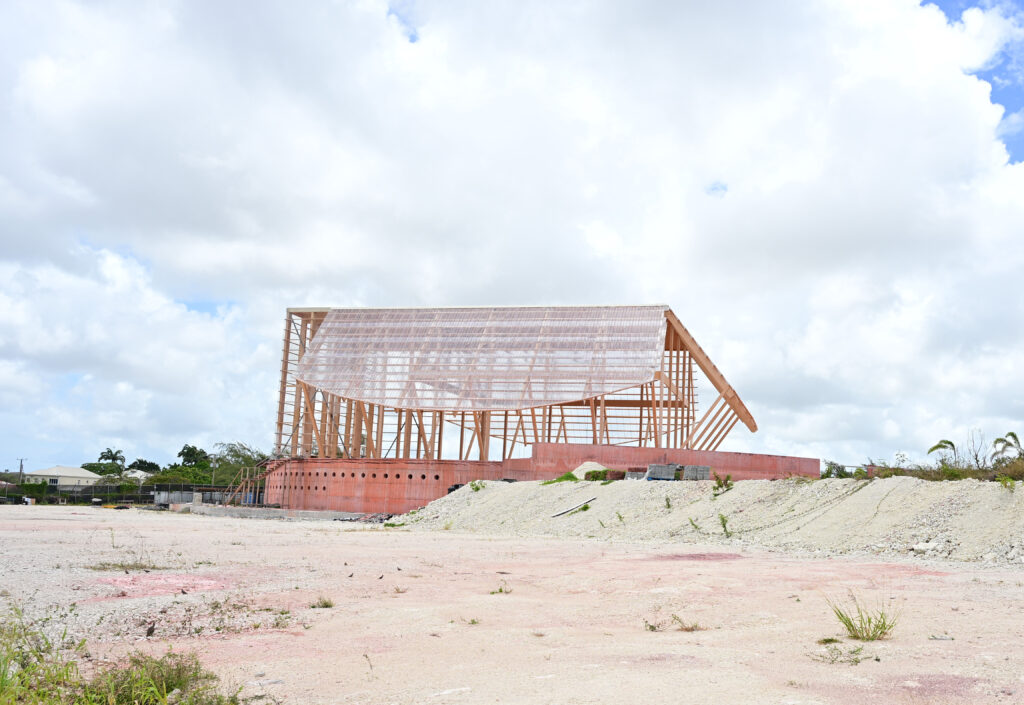
Questions are mounting over the Barbados National Performing Arts Centre in Newton, Christ Church, (at right) as work at the multimillion-dollar facility appears to have stalled.

Government previously indicated the project was scheduled for completion in 2026.

The first phase of the centre was unveiled with much fanfare during CARIFESTA XV, opening with the Ghanaian theatrical production Mansa Musa. At the time, the 35 000 square-foot structure was described as a temporary but fully functional events pavilion while work continued on the larger permanent development.

Barbados National Performing Arts Centre in Newton, Christ Church. (Picture by Reco Moore)

Nearly a year later, however, the facility has remained inactive since the CARIFESTA showcase, with evidence of construction material on site, but no work taking place.

Equally concerning for many in the cultural community is the absence of clear updates from Government on the status of the ambitious project, which was touted as a transformative space for Barbados’ arts and entertainment sector.

Efforts to get a comment from Trevor Prescod, Minister in the Prime Minister’s Office with responsibility for Pan African Affairs and Heritage were unsuccessful. (NS)

Finger injury ends Bethell’s IPL season

0

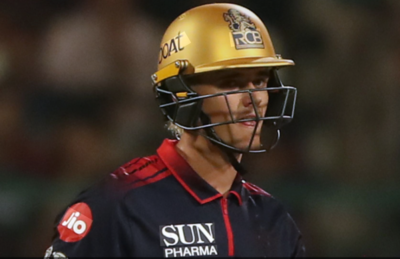
Barbadian Jacob Bethell has been ruled out for the remainder of the Indian Premier League (IPL) after sustaining a finger injury while playing for Royal Challengers Bengaluru (RCB).

Bethell, hurt the finger on his left hand while diving to save a boundary in the final over of RCB’s win over Punjab Kings on Sunday.

He was ruled out of their final group game against Sunrisers Hyderabad on Friday night as a result and was seen in the dugout with some strapping on his left hand.

According to a report by ESPNcricinfo, Bethell is now in a race against time to recover ahead of England’s first Test of their home summer against New Zealand on June 4.

The ECB said in a statement that they have agreed with RCB that Bethell should return home, and that he will be “fully assessed and monitored” by England’s medical team to “determine his availability for selection” for the first Test at Lord’s.

“Everyone at RCB wishes Jacob a speedy recovery and the very best for his rehabilitation process,” the franchise said in a statement.

Bethell is due to bat at No. 3 in the first Test after scoring his maiden hundred in England’s most recent Test innings, against Australia at the SCG in January.

However, he struggled for form in the IPL, scoring just 96 runs in seven innings. (CMC)

Caribbean Airlines cutting regional routes, reducing flights to some destinations

Regional carrier, Caribbean Airlines has announced plans to discontinue several regional routes and reduce service on others as part of efforts to maintain a more sustainable and commercially viable network.

In a statement , the airline said effective June 1, it will end service on routes connecting Dominica, Saint Kitts and Nevis and from the  Eugene F. Correia International Airport in Guyana to Suriname.

Caribbean Airlines also announced that flights to Martinique and Guadeloupe will be reduced to twice weekly service.

Passengers holding bookings on affected routes beyond the discontinuation dates will be contacted directly by the airline or through their travel agents.

According to the airline,  affected customers will be offered alternative travel arrangements where possible, including rebooking on other regional services, connections through airline partners, full refunds for unused ticket portions, or future travel credits subject to fare conditions.

The airline said it is also working toward finalising a codeshare agreement with another regional carrier to provide customers with expanded destination options through coordinated schedules and integrated ticketing.

Caribbean Airlines stated that the network adjustments form part of broader efforts to maintain strong regional connectivity while focusing on operational reliability, customer service and long-term financial stability. (CMC)

Weed worry due to confusing laws, says Ras Simba

0

Rastafarian elder and activist Paul “Ras Simba Akomba” Rock says he is disturbed by the growing openness with which some people smoke marijuana in public, even as he argues that Barbados’ cannabis laws remain confusing, restrictive and inconsistent.

Speaking in response to recent comments by Acting Inspector Ryan Brathwaite about increasing complaints of marijuana use in public spaces and at events, Ras Simba said while he understood police concerns, the legislation itself had created uncertainty among the public.

“I don’t agree with smoking openly in certain places,” he said.

“I am not going to walk down Swan Street smoking herb because I understand not everybody wants to smell that, the same way I don’t want to smell cigarette smoke wherever I go.”

He said responsible use and public education were urgently needed, particularly as younger people increasingly viewed open smoking as an act of rebellion against laws they felt unfairly targeted cannabis users for decades.

“What we are seeing is a kind of open rebellion, especially by young people,” he said. “It is an expression of liberty from being unfairly persecuted.”

Ras Simba argued that one of the biggest issues facing authorities was the inability to distinguish between medicinal cannabis and marijuana obtained illegally.

No distinction

“If I go and get a prescription and collect cannabis from a therapeutic facility and another person gets cannabis from the street and both of us are standing there smoking, there is no way for police to distinguish which is legal and which is illegal,” he said. “The only thing police can do is ask whether you have a permit or prescription.”

He maintained that cannabis itself was inherently medicinal and said authorities were “not speaking from an informed place” when attempting to separate medicinal and non-medicinal marijuana solely by appearance or use.

Ras Simba pointed to his constitutional case before the courts concerning sacramental use of cannabis within the Rastafari faith.

He is awaiting a ruling from Justice Michelle Weekes on Wednesday on whether his home can legally be recognised as a place of worship, allowing him to cultivate and use marijuana privately for sacramental purposes.

He stressed that sacramental use did not necessarily mean smoking.

“Not all Rastas smoke,” he said. “Some use it sacramentally by eating it, making teas or through steaming applications.”

Attorney Rasheed Belgrave clarified the provisions of the Sacramental Cannabis Act 2019, explaining that Rastafarians are only legally permitted to use marijuana sacramentally within approved places of worship or at specially permitted events.

“Just claiming to be Rasta or having locs does not qualify you to use cannabis,” he said. “You must be part of and practising the Rastafarian religion.”

According to Belgrave, only authorised leaders of Rastafarian places of worship can apply for permits allowing sacramental use of cannabis.

 The Sacramental Cannabis Act does not allow for consumption outside the place of worship, so not in your private house or in public spaces or events unless an exempt event permit has been granted,” he explained.

“In summary, if you are not practising Rastafari under the Act or a medicinal marijuana card holder, possession of marijuana remains illegal,” he said.

Belgrave explained that medicinal marijuana is legal under Section 25(1) of the Medicinal Cannabis Industry Act 2019 once it is prescribed by a licensed medical practitioner.

Under the law, medicinal cannabis can only be accessed by a patient or caregiver with a valid prescription issued through authorised medical practitioners, pharmacies or therapeutic facilities.

Not clear

He noted, however, that while medicinal marijuana is legal, the legislation does not clearly specify where it may be consumed.

“The Act does not explicitly suggest where the medical marijuana can be used, whether in private homes or public spaces,” Belgrave said. “But generally the use or consumption of recreational marijuana is prohibited islandwide, at home, outside, in a gully or at the top of Mount Hillaby.”

The attorney added that the Drug Abuse (Prevention and Control) Act amendment merely decriminalised possession of up to 14 grammes of marijuana through a $200 fixed penalty ticket system, but did not legalise recreational use.

“In short, 14 grammes of recreational marijuana or medicinal marijuana without a prescription from a registered supplier remains illegal,” he said, adding that possession of 15 grammes or more could still result in criminal charges including possession, intent to supply and trafficking.

Ras Simba also criticised what he described as Barbados lagging behind other Caribbean territories which have adopted broader cannabis reforms.

He pointed to Grenada’s recent moves towards decriminalisation and developments in Antigua, where cannabis farming and Rastafarian tourism had become growing industries.

Place for pot

“I am seeing so much good being done in Antigua,” he said. “Cannabis has found a place in their society and even tourism is benefiting from it.”

Ras Simba argued cannabis was often used therapeutically by ordinary people seeking relaxation after work or stress relief.

“When people say recreational use, that is really therapeutic use,” he said. “It is people trying to ease stress after a long day.”

At the same time, he warned against mixing marijuana with alcohol and harder drugs, saying that combination often contributed to negative behaviour associated with parties and public events.

“If youngsters only used cannabis and not alcohol and other substances, violence would be reduced,” he said.

Ras Simba also questioned whether the current $200 penalty for possession of 14 grammes or less was acting as any deterrent.

“Young people will pay the $200,” he said, adding that the reduced penalties had created a sense of liberation among many users even though cannabis technically remained illegal.

When contacted Lalu Hanuman, who is representing Ras Simba, said he would speak on Wednesday after the outcome of the case. (NS)

Lawman: Smoking weed still arrestable offence

0

The growing number of people smoking marijuana in public is troubling.

So much so that acting Inspector and communications and public affairs officer Ryan Brathwaite reminded Barbadians that possession of marijuana remains illegal and warned members of the public against openly smoking the drug in public spaces despite recent legislative reforms surrounding cannabis use.

Brathwaite stressed that while certain possession offences have been decriminalised and medicinal cannabis is now regulated, people should not interpret the changes as permission to smoke openly on the streets.

Warning

“Marijuana is still illegal. Having cannabis in your possession in Barbados is illegal. Persons should not be smoking marijuana in public,” he said.

“Don’t walk through Bridgetown smoking marijuana. Don’t walk along the streets of Barbados smoking marijuana.”

Addressing marijuana use at public events, he made it clear that smoking in public spaces remains an arrestable offence.

“If you are at an event and you are smoking what is commonly called a spliff, can you be arrested for that? Of course. Definitely,” he said.

“A lot of people say they go to events and this is happening and that is happening but one must be very careful,” he said.

“Police will take action. People cannot believe they can do these things in public spaces and get away with it,” he said.

Brathwaite said it seemed that many members of the public remained confused about the changes made to Barbados’ drug laws and what is legally permitted.

He outlined that under the amended Drug Abuse Prevention and Control Act, individuals found with 14 grammes or less of marijuana are no longer automatically charged before the courts once they admit possession. Instead, they are issued a fixed penalty ticket.

“There’s nothing called recreational marijuana, you’re allowed to have this amount. If you have that amount, it’s illegal.

“What we’ve moved away from is criminalising persons who have 14 grammes or less in their possession,” he explained.

Under the system, individuals found with the specified amount are issued a $200 fixed penalty ticket, which must be paid within 30 days. Failure to pay the fine can still result in prosecution before the magistrates’ courts, he pointed out.

Brathwaite noted that this process differs significantly from the previous system where offenders were formally charged, taken before the courts and potentially left with criminal convictions attached to their names.

“Before, the police would hold you, charge you and you would appear before the magistrate. Now, once it is 14 grammes or less and you admit it is yours, you are issued a fixed penalty ticket instead,” he said.

However, he stressed that possession above the legal threshold still carries serious legal consequences.

“If you are held with 15 grammes or more, you can still be charged for possession, possession with intent to supply, or trafficking and placed before the courts,” Brathwaite warned.

He added that repeat offenders might also face harsher treatment under the law indicating that authorities remain concerned about growing substance abuse, particularly among young people.

The acting inspector said the legislation also allows intervention measures for people believed to be struggling with marijuana dependency.

“At the point where officers recognise that someone may be addicted, there are avenues for counselling and assistance through the National Council on Substance Abuse,” he explained.

He added that counselling becomes mandatory for offenders aged 18 and under.

Brathwaite also addressed public confusion surrounding medicinal cannabis and the operation of cannabis dispensaries in Barbados.

He explained that medicinal cannabis is governed under separate legislation and is strictly regulated through licensed dispensaries approved by authorities. Those using medicinal cannabis are required to have authorisation through the proper medical and legal channels, allowing law enforcement officials to determine whether they are legally permitted to possess and use the substance for medical purposes.

Not permitted

He stressed, however, that medicinal cannabis users were not permitted to smoke marijuana openly in public spaces.

“Once we venture into medicinal use, let me make it clear that it cannot be for the purpose of smoking,” he said. “Neither is it an edible. It comes in small packages.”

“Only certain doctors have the authority to issue prescriptions for medicinal marijuana,” he said. “This medicinal marijuana is then collected at a therapeutic facility.”

Emphasising the distinction, he added: “Notice I said a therapeutic facility. I didn’t say a dispensary and I didn’t say a pharmacy.”

He further noted that patients approved for medicinal marijuana must always carry proof of authorisation.

“Persons who are on medicinal marijuana must have an ID card indicating this and it must be kept on them at all times,” he said.

The discussion also comes amid continued public debate over cannabis reform in Barbados following the passage of the Sacramental Cannabis Reform Act.

That legislation, passed in 2019, allows Rastafarians and approved religious groups to legally use cannabis for sacramental and religious purposes under regulated conditions.

The law also established a framework permitting authorised religious entities to cultivate cannabis for spiritual rites without fear of prosecution.

Despite those reforms, Brathwaite said the public should not assume cannabis had been fully legalised.

“People have to understand the distinction,” he said. (NS)

Arsonist awaits fate

Next Friday is decision day for self-confessed arsonist Kimberly Shantelle Brathwaite.

This Content Is Only For Subscribers

Please subscribe to unlock this content. Enter your email to get access.
Your email address is 100% safe from spam!

DLP: Law too soft on money behind gangs

The Democratic Labour Party (DLP) says while it is backing Government’s proposed anti-gang legislation, the bill in its current form does not go far enough to dismantle the financial and organisational structures driving violent crime in Barbados.

DLP spokesman on legal affairs Corey Greenidge said the proposed Criminal Gangs Prevention and Control Bill represented an important step forward, but cautioned that it was too heavily focused on punishment and frontline offenders while failing to adequately target the deeper infrastructure behind organised crime.

“Let me say right off the bat that the Democratic Labour Party supports the introduction of the anti-gang legislation and in fact any legislation which is geared towards rescuing a nation from the crime situation that we have,” Greenidge stated. “Our role here . . . is not mere criticism. Our role is to add our voice to the debate.”

Speaking during Thursday’s press conference on crime at party headquarters on George Street, Belleville, St Michael, the attorney stressed that crime was no longer confined to isolated communities but had now spread into virtually every area of national life, “on the beaches, in our neighbourhoods, next to our schools”.

While commending provisions relating to witness protection, child recruitment and modern evidentiary rules, Greenidge said the bill remained overly enforcement-driven.

“It’s very strong on offences, very strong on arrests, imprisonment, detention powers and punishment.”

According to Greenidge, the proposed law aggressively targeted the “soldiers” of organised crime – the young men directly involved in shootings and gang violence – but failed to sufficiently dismantle the criminal enterprises behind them.

The Christ Church South candidate in the last General Election argued that modern organised crime was fundamentally sustained by money and that successful anti-gang models internationally focused not only on imprisoning offenders, but on economically dismantling criminal enterprises.

He said the legislation needed stronger powers to freeze bank accounts, trace gang assets, confiscate vehicles and property, disrupt suspicious financial flows and target front businesses allegedly tied to criminal activity.

“The bill as it stands does not expressly create any mandatory financial investigations alongside gang investigations. It is not strong on unexplained wealth provisions linked to gang activity.”

He noted that while Barbados already possessed proceeds of crime legislation, the DLP believed those laws were not sufficiently integrated into the anti-gang framework in a proactive way.

The spokesman also criticised the proposed definition of a gang within the legislation, which reportedly required five or more people.

Drawing comparisons with legislation in Jamaica and Trinidad and Tobago, Greenidge stated: “In Jamaica the threshold is two persons. In Trinidad the threshold is three persons. We are encouraging the Government to reduce the threshold to three persons. We know that within Barbados sometimes these gang-related activities are very decentralised, they’re within communities and therefore if the legislation is going to be able to capture that activity, we believe that the threshold of five may be too much.”

At the same time, he warned against allowing the legislation to infringe on civil liberties or criminalise mere association. “So it’s not just about association, it has to be about intentional participation in criminal activity.” (CLM)