Home Blog Page 64

Call to better fund reintegration

0

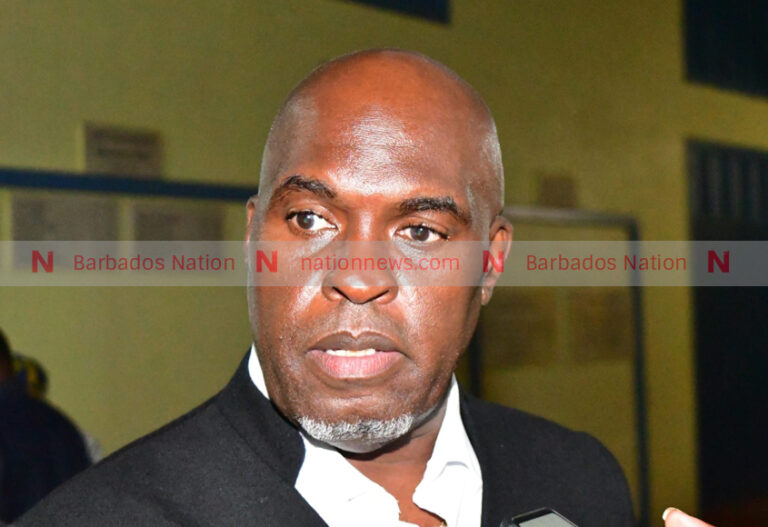
University of the West Indies Professor Dwayne Devonish wants to see Barbados’ reintegration programme “strongly resourced” and an “all-of-country approach” to helping people released from prison.

He was addressing yesterday’s opening of a two-day symposium being held in celebration of the Barbados Probation Service’s 80th anniversary at the Lloyd Erskine Sandiford Centre.

“Rehabilitation and reintegration must go hand in hand, and if we still have a punitive style in our justice system . . . we need to do better. Once that individual leaves the system to go back into society, they have to be able to function.

“If they’re not functioning or not being provided with the resources and the support system, the stigma is still there and employers don’t want to take them on,” he said.

Devonish, a professor of management and organisational behaviour at the Cave Hill Campus, said recidivism data showed that “many of them go back to a life of crime”.

He praised ARME, the Alliance for Reformed Minded Entrepreneurs, an organisation which assists formerly incarcerated individuals with reintegration into society, but also highlighted the need for stakeholders to invest in proper monitoring and evaluation of these individuals.

Despite volunteerism, “which is good”, he said, Government needed to follow up on what was needed in the rehabilitation programme.

“It is the only way to know if our programmes are working,” he said.

The forum, titled Modern Perspectives On Sentencing And Penal Reform, brought together personnel from the judiciary, Probation Department, Dodds Prison, National Council on Substance Abuse, Caribbean Development Bank and non-governmental organisations. (SD)

Report warns Caribbean democracies face a convergence of structural pressures

 A new report is warning that the future quality of Caribbean democracies will depend on the region’s ability to integrate economic resilience, climate change adaptation, and social cohesion into an institutional framework capable of protecting human development in an increasingly uncertain global environment.

At the same time, the report has also noted that Caribbean democracies face a convergence of structural pressures that simultaneously strain their economic stability, social cohesion and capacities.

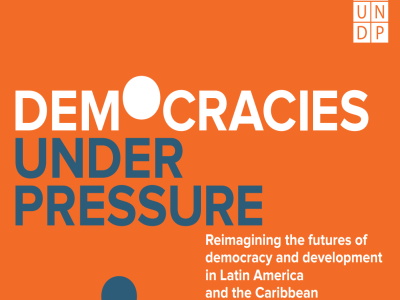
The United Nations Development Programme (UNDP) Monday launched its report ”Democracies Under Pressure: Reimagining the Futures of Democracy and Development in Latin America and the Caribbean”.

It said Latin America and the Caribbean (LAC) is today the most democratic region among developing regions and the third worldwide and that more than four out of five citizens live under regimes elected through elections.

“However, this strength coexists with growing tension: democracies that endure, but face pressures that threaten their ability to represent, manage conflict, and generate development outcomes.

“Long-standing structural challenges, such as economic and gender inequality and the crisis of political parties, are now combined with emerging threats: polarization, misinformation, the acceleration of technology, the climate crisis, and the expansion of organized crime. Together, these factors erode institutional trust and weaken the link between democracy and citizens’ well-being.”

With respect to the Caribbean, the report notes that beyond challenges shared across the region, the Caribbean exhibits distinctive characteristics rooted in its colonial history, including the predominance of Westminster style institutional arrangements, including parliamentary and semi-parliamentary systems, as well as persistent structural vulnerabilities.

“Caribbean democracies face a convergence of structural pressures that simultaneously strain their economic stability, social cohesion and capacities. Small and highly open economies, heavy dependence on sectors such as tourism, fiscal constraints, high levels of public debt, recurring exposure to natural disasters and growing security challenges generate constant pressure on State capacities and institutional legitimacy”

The report notes that each shock–whether climatic, economic or security related–affects human development and puts democratic resilience to the test.

“In most of the Caribbean, however, electoral democracy remains stable, preserving its institutional continuity, procedural soundness and consolidated international legitimacy. The region is not facing a widespread erosion of electoral democracy.

“On the contrary, it has been recognized as a bastion of representative democracy, underpinned by respect for the rule of law and strong institutional traditions,” the report states, noting that “these characteristics are reflected in consistently high performance on the core dimensions of the V-Dem Electoral Democracy Index, including free and fair elections, elected officials, inclusive suffrage, and freedoms of association and expression.”

The report noted that this institutional strength is also expressed in comparatively lower levels of political polarization than those observed in Latin American countries.

“Nevertheless, sustaining democracy in the Caribbean will require strengthening State capacity, improving security governance, and consolidating mechanisms of transparency, participation and accountability.”

The UNDP report notes that while these challenges also affect Latin America, they unfold in the Caribbean under tighter fiscal constraints and greater vulnerability to external shocks.

“The future quality of Caribbean democracies will therefore depend on the region’s ability to integrate economic resilience, climate change adaptation, and social cohesion into an institutional framework capable of protecting human development in an increasingly uncertain global environment.

“This task is conditioned by the unique characteristics of the Caribbean: small scale economies, high levels of indebtedness, acute climate vulnerability, and the profound influence of transnational migration and security dynamics all generate governance challenges distinct from those experienced in Latin America.

The 323 page report notes that democracy in LAC has demonstrated a remarkable capacity for endurance, yet faces mounting pressures that affect both its functioning and legitimacy.

“The challenge is not only to protect democracy from the risks of erosion, but also to renew it so that it can effectively channel citizens’ demands, manage conflict and generate human development outcomes in contexts of growing uncertainty. No single actor can offer a comprehensive solution to democracy’s challenges. Responses emerge through the interaction between diverse actors and the construction of agreements in complex settings.”

The report does not present a rigid blueprint; rather, it proposes elements to guide debate and action in contexts characterized by high institutional and political complexity.

According to the UNDP, reimagining democracy involves understanding how its processes interact with State capacity and human development outcomes.

“Democracy cannot be sustained solely on electoral rules; it requires States capable of implementing decisions and producing results that reinforce legitimacy. At the core of these challenges lies a fundamental issue: the unequal distribution of political influence within the democratic system.

“Different forms of power–economic, coercive, informational or institutional–translate into unequal capacities to shape collective decisions, distorting political competition and limiting democracy’s ability to represent and manage social conflict fairly.”

The UNDP said that the report calls for safeguarding and renewing democracies. It identifies one strategic priority and five critical areas of intervention. While these do not resolve every challenge facing democracy, they focus on key dynamics capable of generating broader systemic effects.

“Rather than pursuing immediate and comprehensive transformations, the objective is to identify areas where strategically targeted actions can drive positive dynamics, break vicious cycles and contribute to rebuilding the legitimacy of the democratic system.

“At the center of this agenda is the need to preserve the minimum conditions for political competition, particularly in the electoral sphere. Strengthening the autonomy of electoral bodies and rebuilding public trust in electoral processes are essential tasks.

“Free and fair elections are a fundamental pillar of democracy, as is the ability to contain dynamics that jeopardize the peaceful alternation in power or undermine the foundations of the democratic system.”

The report notes that a strong democracy requires arbiters who are independent and are also perceived as such by citizens.

“It is critical thus to ensure that electoral authorities act with and are recognized as guarantors of transparency and fairness, even in contexts of polarization and disinformation.

The report reiterates that the future of democracy in LAC will depend on its ability to transform pressure into renewal and promises into results.

“Democracy will prove resilient if it succeeds in reconnecting the legitimacy of democratic processes with meaningful human development outcomes–a democracy capable of channelling demands and conflicts, building collective projects and, delivering concrete improvements in people’s lives.

“This balance ultimately rests on the quality of governance. Effective governance–able to anticipate risks, adapt to change, and respond with resilience–is the central enabler of human development, agency, and social legitimacy, and an indispensable condition for sustaining democracy, protecting freedoms and preventing democratic setbacks,” the report noted. (CMC)

Fire forces closure of two schools

0

Both Daryll Jordan Secondary School and St Lucy Primary School, in Trents, St Lucy, will remain closed today after they were impacted by a large grass fire.

The closure of Daryll Jordan was announced just after 6 a.m. yesterday and plans were put in place for those writing external exams to do so at Alexandra School in Speightstown, St Peter.

Students writing the Caribbean Secondary Education Certificate today are asked to report to Alexandra School again and to be on time.

St Lucy Primary was closed around 8 a.m. and a source told the DAILY NATION several parents opted to keep children at home when they heard about the fire. Classrooms were affected by smoke and ash, and the fire burned along the periphery of an area where the children play.

It is understood that an elderly man living near Trents had to be forcibly removed from his home after he refused to leave.

Acres of land have been hit by the fire which affected farmers at Spring Hall, as well as the communities of Trents, Hannays, Swampy Town and Pickering.

The Barbados Fire Service also deployed crews to the fire. (SAT)

‘More support needed’ for victims

0

Barbados must move beyond simply prosecuting offenders and place greater focus on supporting victims.

That was the case put by Minister of Legal Affairs and Criminal Justice Michael Lashley, as Government moves to strengthen the country’s criminal justice system through major reforms.

Speaking at the opening of a two-day National Consultation On Victim Support at the Radisson Aquatica Resort, St Michael, yesterday, he said victims often faced significant emotional, psychological and practical challenges after crimes were committed against them, yet there was no coordinated national mechanism dedicated to guiding and supporting them through the process.

“I understand and fully support the need to have a coherent national framework and ultimately a unit to spearhead the cause and spearhead a national response. It does not mean that a unit will be all things to people, but it can assist in pointing persons in the right direction, advocate where necessary and fill some of the gaps that need to be filled by the State,” he said.

Lashley told stakeholders from Government agencies, law enforcement, social services, nongovernmental organisations and the legal fraternity that victim support was a critical component of the criminal justice system and must be treated as such.

While Barbados has traditionally focused on investigating crimes and prosecuting offenders, he argued that the needs of victims had not received the same level of attention.

“We have built our criminal justice system around the investigation of offences and the prosecution of offenders. That is natural, and one thing we can say about our system is that it is fair and impartial, but we have not focused centrally on victims. Victims are a crucial part of the criminal justice system because they are often the ones who begin the process by making complaints and giving statements,” he said.

Lashley, a King’s Counsel with many years of experience as a criminal defence attorney, said victims were frequently required to relive traumatic experiences while giving evidence and might face intense cross-examination during court proceedings.

“It is not an easy task because victims have to revisit painful experiences in order to give statements and participate in the process. They then have to go into court and sometimes face rigorous cross-examination. We have to ask ourselves what happens to a victim after the police report is made and whether there is adequate support available to them throughout the journey.”

The minister recounted instances from his legal practice which highlighted the vulnerabilities victims continued to face, particularly in domestic violence matters.

He told of speaking to a woman who had obtained legal protection from an abusive partner but remained fearful for her safety.

“She had already sought protection through the law, but she was still living in fear because the perpetrator was able to find her. She had to seek additional protection and alternative arrangements. Those experiences showed me that legal orders alone are not enough. Victims also need practical support systems that help ensure their safety and well-being.”

He submitted that victims should have access to clear pathways for assistance, whether through counselling, emergency accommodation, support organisations or dedicated victim services.

“Where is the mechanism that allows a victim to say, ‘I can go here for help, I can call this agency, I can access this support’? There must be something tangible that ensures the safety and welfare of victims. Those are important issues that we have to address,” he said.

Lashley revealed that a series of criminal justice reforms were already under way, including legislative changes aimed at strengthening protections for victims and witnesses.

He also hinted at significant changes to the Magistrates’ Courts and wider criminal justice framework, saying further details would be announced in due course.

He said victims who lose confidence in the justice system were less likely to engage with it, making support services an essential element of public trust.

“We have learned that victim services currently exist in many places, but they are not always connected. Without coordination, people can feel that the system is not there for them. They can lose confidence in the criminal justice system and in the agencies that are meant to protect them,” he said.

Lashley pointed to international examples, including victim support systems in England, where compensation mechanisms exist for some victims of crime. While stopping short of proposing such a programme for Barbados, he said the idea was worthy of future consideration.

“It is something we can look at in the future because there are victims who suffer life-changing injuries and are unable to work again. We have to think about how society supports those individuals, particularly when they do not have strong family networks behind them.”

The minister pledged that the consultation would not become another exercise ending with recommendations that are never implemented.

Chair of the proceedings, Marilyn Rice-Bowen, said the consultation was taking place because Barbados could no longer ignore the realities faced by victims of crime.

“Every crime has a visible victim, but its aftershocks travel through households, workplaces and entire communities, often in silence and often without support. That silence is what we are here to end,” she said.

Rice-Bowen told participants the objective was not to determine whether a national victim support framework was needed but to collectively design one.

(TRY)

Reports of a stabbing in The City

0

Update

Police at Central Station are investigating a stabbing incident that occurred around 5:45 p.m. on Monday, at the junction of Nelson Street and Fairchild Street in Bridgetown, St Michael.

Investigators say a dispute between a man and a woman escalated, resulting in the female sustaining multiple stab wounds.

The victim was transported by ambulance to the Queen Elizabeth Hospital, where she is receiving medical treatment.

Police confirmed that a suspect is in custody assisting with investigations.

Anyone with information is asked to contact the Criminal Investigation Department (Central) at 430-7189 or 430-7190, Police Emergency at 211, or Crime Stoppers at 1-800-8477.

****

Earlier story

There are reports reaching The Nation of a stabbing incident in The City.

More details as they come to hand

Bajan chef preps for Shanghai

0

Barbadian WorldSkills cooking competitor, Reese-Ann Alleyne, has completed an intensive international training camp in Atlanta, Georgia, United States, as part of her preparation for WorldSkills Shanghai 2026 in September.

Held during the SkillsUSA National Leadership & Skills Conference, the training camp brought together culinary competitors from Barbados, Canada, the US and Ireland. It provided a unique opportunity for participants to sharpen their skills in a competition-style environment, while building international connections ahead of the world’s largest skills competition.

Chief expert for cooking at WorldSkills Shanghai 2026 and Canadian representative, Sean Kettley, said the camp was designed to expose competitors to the pressures and expectations of international competition.

“We’re using the SkillsUSA facilities and competition as our backdrop, but what we have is a friendly training camp. It’s an opportunity for competitors to practise in a competition environment, receive feedback from experienced judges and become comfortable with the demands of international competition,” he explained.

Kettley noted that while technical development was important, relationship-building was equally valuable.

“They’re building relationships with competitors they’ll see again in Shanghai. When they arrive and see familiar faces, it makes the experience much less intimidating. That’s just as beneficial as the practice they’re getting.”

He added that because the official WorldSkills competition project remains unknown until closer to the event, competitors are currently focusing on strengthening fundamental culinary skills.

“We’re concentrating on the basics – knife skills, hygiene, organisation, time management and adaptability. These are the foundations they’ll rely on when the competition details are released.”

For WorldSkills Barbados cooking expert, Chef Angela Garraway-Holland, the training camp represented both a learning opportunity and an important milestone in Reese-Ann’s development.

“So far, it has been a very interesting and informative experience,” she said. “As a new expert, I’ve had the opportunity to learn from experienced international experts about judging criteria, assessments and the standards expected at WorldSkills.”

Garraway-Holland described the camp as an ideal preparation exercise for Barbados’ competitor.

“This was an excellent opportunity for Reese-Ann. She has never been exposed to an arena of this scale before, so this serves as an important stepping stone to Shanghai.”

Supporting both the competitor and expert throughout the experience was former WorldSkills Barbados cooking expert and executive chef at Caribbean Cuisine Culinary Institute, Peter Edey.

He emphasised the importance of exposing competitors to large-scale international environments before arriving in China.

“When you look at the size of this competition, it immediately gives you an understanding of the magnitude of what lies ahead,” he said. “In Barbados, we might have six or seven stations. Here, there are dozens. Shanghai will be even larger.”

Edey said experiencing the scale and pressure of an international event was a critical part of preparation.

“You don’t want your first exposure to that level of competition to be in Shanghai. Here, Reese-Ann can see what it’s like to be constantly assessed, surrounded by judges, competitors and activity. It’s helping her understand the physical and mental demands of the competition.”

He also spoke of the stamina required to compete at the highest level.

“WorldSkills isn’t just about cooking. It’s about concentration, endurance, organisation and consistency. Competitors can spend seven hours a day in the kitchen over multiple days. Experiences like this help them understand what’s required and to prepare accordingly.”
(BGIS)

Probation pressure

0

Nearly 300 young Barbadians, many of them teenagers, were under the care of the Probation Service last year, and more than half of those cases involved violent or threatening offences. 

This was revealed by Minister of Home Affairs and Information Gregory Nicholls as he addressed the 80th anniversary thanksgiving service of the Barbados Probation Service, at the Sanctuary Empowerment Centre, Country Road, St Michael, yesterday.

Nicholls said he was using the occasion not for comfortable celebration, but for a candid conversation about what the service means to Barbados in 2026 and what the country is asking it to do. 

“Let us not pretend that this anniversary is happening in easy times,” he told the congregation. “Crime is real in our communities.”

Citing 2025 probation statistics, the minister noted that of the 295 people under the department’s supervision, 138 were placed on probation for violent or threatening offences. They ranged from acts causing bodily harm to sexual offences and property crimes involving violence. 

He stressed that these were not convicted people but Barbadian children, and the question before the nation was not simply how to punish them, but what comes next.

Nicholls paid tribute to probation officers whose work he said takes place largely out of public view – in offices, courtrooms, family homes and communities – managing heavy caseloads and navigating complex human situations with little public recognition.

The statistics he cited illustrated an institution under pressure: 492 pre-sentencing reports, 519 progress reports, 203 community service reports and 117 domestic reports produced in 2025 alone. 

“That is not sustainable,” he said, while noting it spoke to the character of those doing the work.

The minister highlighted several of the department’s programmes as evidence of a more mature understanding of what rehabilitation requires. However, he warned that programme growth could not outpace institutional capacity.

“If you are serious about rehabilitation as a national strategy, then we have to be serious about resourcing the institution that delivers it,” Nicholls stated.

Chief Probation Officer Dr Angela Dixon echoed that sentiment, telling staff their decades of service had shifted rehabilitation to the centre of national life. 

“The work of diverting, rehabilitating and reintegrating people is no longer on the periphery. It is in the heart of how Barbados rebuilds lives and strengthens communities,” she said. (DDS)

Police warn public of viral fake message

0

It has been drawn to our attention that there is a notice circulating purporting to be from The Barbados Cyber Crime Security Authority, under the direction of the National Commissioner of Police.

It states that “we have identified all of your online activities which go against the Barbados cyber security laws 2025 amended”. It further states “the police commission request your immediate response to the Cyber Crime File” and lists a file number. It goes on to state that serious action will be taken within twenty-four (24) hours. The notice bears the name Richard Boyce Barbados Commissioner of Police and gives the address Roebuck Street, Bridgetown, St. Michael.

Please note that this is NOT an official notice or document from the Barbados Police Service. At no time will The Barbados Police Service send any such messaging online. A full and thorough investigation will be conducted into this matter.

Fogging Schedule: June 8 to 12

0

The Vector Control Unit will be fogging four parishes this week in its continuing mosquito eradication programme.

Today, it will visit communities in St Thomas and St Andrew, including Sunset View, Farmer’s Tenantry, Farmer’s, White Hill, Turners Hall, Hillaby, 1st and 2nd Avenues Church Gap, Harewood Road, Mount Hillaby, and White Hill Tenantry.

Tomorrow, the team will spray the following districts in St Thomas: from the corner of Shop Hill and White Hall Road to the junction at Bridgefield inclusive of White Hall Village and Cane Garden Development Nos 1 to 4, Vaucluse, Valley View Development, Lion Castle Tenantry, Duke’s Tenantry and surrounding areas.

The Unit will return to St Thomas on Wednesday in Arch Hall, Christie Village, Grand View Heights, Grand View, Shop Hill, Hill View Drive, Mess Hill, Nazarene Gap, Edgehill Terrace, Edgehill Heights, and Melrose Nos 1 and 2.

It will be the turn of districts in St James on Thursday. They will include Fitts Village along Prospect Road to the corner of Johnson Road inclusive of Appleby Gardens Nos 1 to 5, Risk Road, 1st and 2nd Avenues Risk Road, Miller Development, Vaughn’s Road, Lashley Road, Berbice Nos 1 and 2, Piggott Road, Jordan’s Road, Joe’s Drive, Nos 1 and 2 Joe’s Drive, and Nos 1 and 2 Johnson Road.

The fogging will conclude on Friday in St James and parts of St Michael – Prospect Road No 2, Prospect Main Road, Crusher Site Road, Prospect Road A, Prospect Road 1A to 1F, Walmer Lodge Road, Pile Bay, Brandons Road North and South, Brighton Crescent, Brighton Road, Carlton Terrace, Ashdeane Village, Brighton Terrace 1 to 3 and their environs.

Fogging takes place from 4:30 p.m. to 8:30 p.m. daily. Householders are reminded to open their windows and doors to allow the spray to enter. (BGIS)

Regional Security Leader receives international award

0

Deputy Executive Director of the Regional Security System (RSS), Atlee Rodney, has been honoured with the National Organization of Black Law Enforcement Executives (NOBLE) International Presidential Award.

Rodney received the prestigious award from NOBLE President, retired Police Chief Renee Hall, during the 2026 NOBLE International Training Summit held in Saint Thomas on June 5.

In presenting the award, Hall highlighted Rodney’s significant contributions to law enforcement throughout the Caribbean. These included his service as Commissioner of Police of the Royal Police Force of Antigua and Barbuda, President of the Caribbean Association of Commissioners of Police, and Regional Director on the Board of the International Association of Chiefs of Police.

Emphasising the importance of international cooperation and recognising the contributions of law enforcement professionals beyond the United States, Hall noted that NOBLE International, which is celebrating its 50th anniversary this year, was proud to honour Rodney as an exceptional member of the organisation. She described him as a distinguished law enforcement executive whose legacy of leadership, mentorship, service, and regional cooperation has had a lasting and meaningful impact on public safety professionals and communities throughout the Caribbean and beyond.

Chairperson for NOBLE International Affairs, Trebor Randle, also commended Rodney, stating that the award recognised his extraordinary leadership and unwavering commitment to law enforcement across the Caribbean over more than four decades of exemplary service.

In accepting the award, Rodney said he was deeply humbled by the recognition and expressed sincere appreciation to NOBLE for the honour. He also thanked the many individuals and organisations that contributed to his professional development, including his family, mentors, colleagues, and the institutions that supported him throughout his career in law enforcement. Rodney further reaffirmed his commitment to continuing to contribute to the safety and security of the Caribbean region.

Meanwhile, Executive Director of the RSS, Errington Shurland, extended heartfelt congratulations to Rodney, noting that the recognition reflects Rodney’s outstanding service, leadership, and dedication to advancing public safety and regional security throughout his distinguished career. He described the award as a proud moment for both the RSS and the wider Caribbean law enforcement community.